

Mindset Reframer Tool
Reframe Your Thoughts
Enter a negative thought you often have. This tool will help you reframe it into a more realistic, constructive perspective based on evidence.
Remember: This isn't about pretending everything is perfect. It's about finding truth in the middle.
Changing your mindset isn’t about positive affirmations in front of a mirror or reading a motivational quote before bed. It’s not something that happens overnight. It’s a quiet, daily practice of noticing how you think - and then choosing to think differently. If you’ve ever felt stuck, overwhelmed, or like you’re repeating the same mistakes, it’s not because you lack willpower. It’s because your mindset is running on old software - and no one told you how to upgrade it.
What your mindset really is
Your mindset is the collection of automatic thoughts you have about yourself, other people, and the world. It’s not your personality. It’s not your IQ. It’s the voice in your head that says things like, "I’m not good enough," "I always mess this up," or "Why bother?" These aren’t facts. They’re habits. And habits can be rewired.
Psychologist Carol Dweck’s research on fixed vs. growth mindset showed that people who believe their abilities can improve - even slightly - outperform those who think talent is fixed. But here’s the catch: you don’t need to believe you’re going to become a genius to shift your mindset. You just need to believe that effort matters more than innate ability. That’s it.
Step 1: Catch your negative self-talk
Start by listening to yourself. Not in a judgmental way. Just observe. When you fail at something - maybe you missed a deadline, said something awkward, or didn’t get the result you wanted - what’s the first thing you say to yourself?
Write it down. Seriously. Keep a small notebook or use your phone’s notes app. For a week, record every time you think something like:
- "I’m such a failure."
- "I’ll never get this right."
- "Everyone else is better than me."
You’ll be shocked at how often these thoughts show up. And you’ll notice patterns. Maybe you say "I’m not good enough" after every mistake. Or maybe you blame yourself even when it’s not your fault. That’s your mindset talking.
Step 2: Flip the script - not with optimism, but with truth
Don’t try to replace "I’m a failure" with "I’m amazing!" That’s fake. And your brain knows it. Instead, replace it with something more accurate - and harder to argue with.
Here’s how:
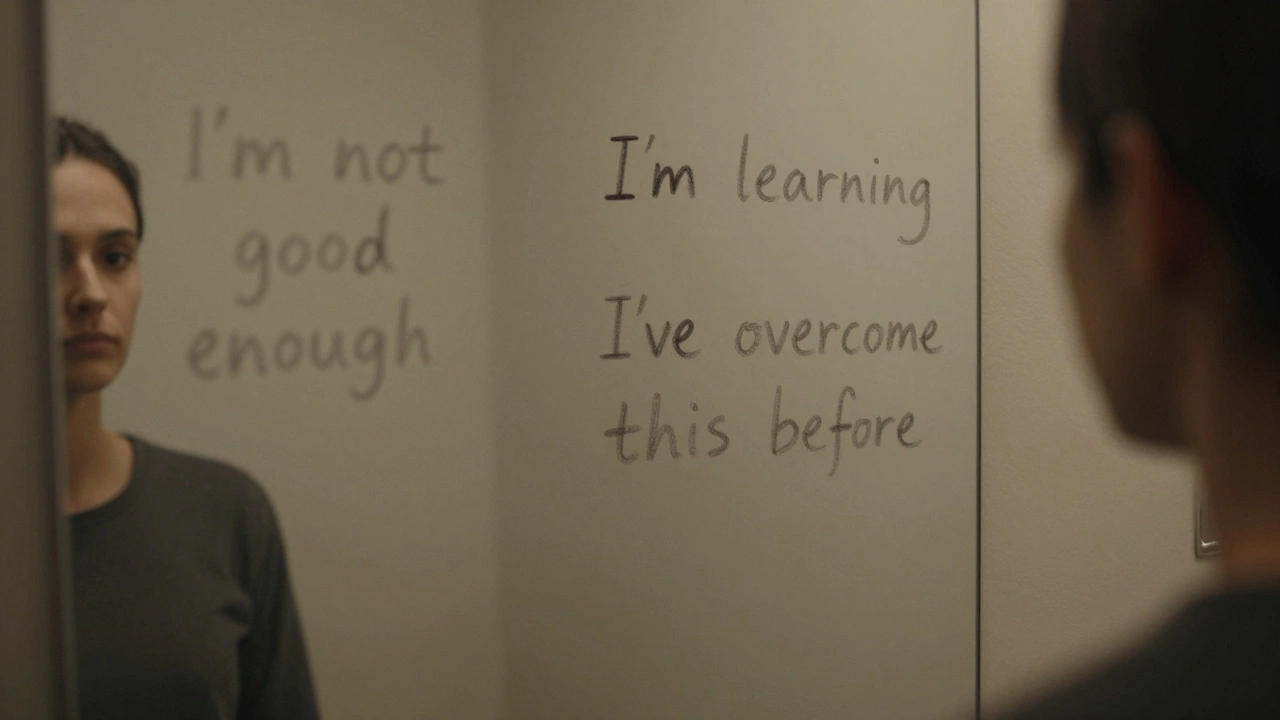
- Instead of: "I’m a failure." → Try: "I made a mistake. I’ve made mistakes before, and I learned from them."
- Instead of: "I’ll never get this right." → Try: "This is hard right now. I don’t know how to do it yet."
- Instead of: "Everyone else is better than me." → Try: "They’ve had different experiences. I’m on my own path."
This isn’t about being positive. It’s about being honest. You’re not a failure. You’re a person who tried and didn’t get the outcome you wanted. That’s human. Not broken.
Step 3: Change your environment - even slightly
Your mindset doesn’t exist in a vacuum. It’s shaped by what you see, hear, and do every day. If you’re constantly scrolling through social media showing "perfect" lives, you’re training your brain to compare. If you’re surrounded by people who talk about how "things are just tough," you’re absorbing that energy.
You don’t need to quit your job or move cities. Just make small changes:
- Mute one account that makes you feel worse about yourself.
- Listen to a podcast or audiobook that focuses on learning, not just motivation.
- Start your morning with 5 minutes of silence - no phone, no news, just breathing.
- Read one page of a book that challenges your assumptions.
Environment shapes thought. If you want to think differently, you need to change the inputs.
Step 4: Take action - even tiny action
Here’s the secret most people miss: mindset shifts don’t happen in your head. They happen in your actions.
Think of it like this: if you want to learn to swim, you don’t read a book about water physics and then feel confident. You jump in. You get wet. You splash. You panic. You try again.
Same with mindset. If you believe you’re "not a morning person," don’t just think about being one. Set your alarm 10 minutes earlier. Get up. Walk outside. Don’t do anything else. Just be there. Do that for 5 days. Now ask yourself: "Am I still not a morning person?"
Small actions build new neural pathways. They prove to your brain that your old beliefs aren’t true. You don’t need to overhaul your life. You just need to do one thing differently - and repeat it.
Step 5: Accept that setbacks are part of the process
There will be days when you slip back. You’ll catch yourself thinking the old thoughts. You’ll feel discouraged. That’s normal. It doesn’t mean you failed. It means you’re human.
Instead of beating yourself up, ask: "What did I learn?" Maybe you learned that stress triggers your old mindset. Maybe you noticed you fall back into old patterns when you’re tired. That’s valuable information. It’s not a setback. It’s data.
Changing your mindset isn’t about being perfect. It’s about becoming aware. And awareness is the first step to real change.

Real examples - not theory
I know someone who believed she was "bad with money." She’d always overspent, felt guilty after buying anything, and avoided checking her bank account. She thought it was just who she was.
She started small: every time she bought something over £10, she wrote down why she bought it. Was it because she needed it? Or because she felt bad? After two weeks, she saw a pattern: she spent when she felt lonely. Not because she was bad with money - because she was trying to feel better.
That’s when her mindset shifted. She didn’t start budgeting. She started asking herself: "What am I really feeling right now?" That simple question changed everything. She stopped blaming herself. She started caring for herself.
Another person believed he wasn’t "a public speaker." He avoided meetings, hated presenting, and felt sick before any group talk. He started by speaking up once in every team meeting - just one sentence. No slides. No prep. Just one thing. After 12 meetings, he didn’t feel nervous anymore. He didn’t become a TED speaker. He just stopped believing he couldn’t do it.
What doesn’t work
Here’s what doesn’t change your mindset:
- Reading a book once and expecting a miracle.
- Listening to a 10-minute podcast while commuting.
- Buying a journal and writing "I am confident" on the first page.
- Waiting until you "feel ready."
Change doesn’t come from inspiration. It comes from repetition. From small, consistent actions that slowly rewrite your internal script.
How long does it take?
There’s no magic number. But most people notice a shift after 30 days of consistent effort. Not because they became perfect. But because they stopped fighting themselves. They stopped seeing their thoughts as truth. And that’s where freedom begins.
You don’t need to believe you can change everything. Just believe you can change one thought today. And then tomorrow, another. That’s how mindsets change - one quiet choice at a time.