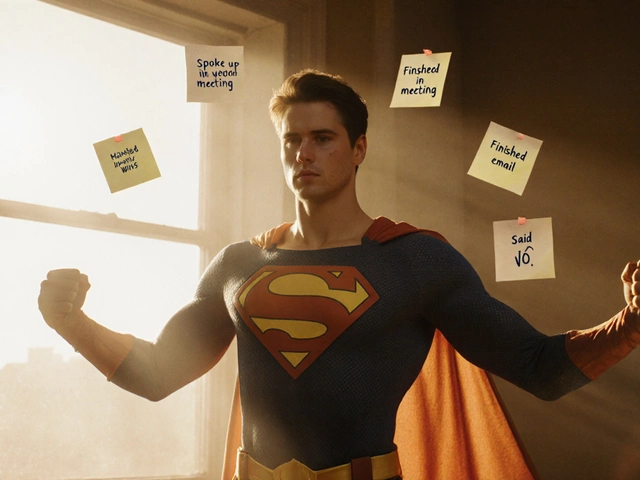
Emotional Awareness Tracker
Log your emotions daily using this simple tracker. Name your emotion, describe the situation, and reflect on your response. Over time, you'll build awareness and emotional intelligence.
- Start with just 2 minutes before bed
- Be specific: "I felt frustrated when my coworker interrupted me"
- Review your entries weekly to spot patterns
Your Log
Last 7 daysStart logging your emotions to track your progress.
This helps build emotional awareness—just like the article recommends.
Most men are taught to hide their feelings. "Be strong." "Don’t cry." "Keep it together." But what happens when you bury your emotions for years? Anger builds. Loneliness grows. Relationships crack. Emotional intelligence isn’t about being soft-it’s about being real. And for men, learning it might be the most powerful thing you ever do.
What emotional intelligence actually means for men
Emotional intelligence (EI) isn’t some buzzword from a corporate workshop. It’s the ability to recognize your own emotions, understand how they affect your thoughts and actions, and respond to others with empathy. It’s not about being emotional-it’s about being in control of your emotions.
Think of it like this: A man who can name his frustration instead of exploding at his partner? That’s emotional intelligence. A man who notices his friend is quiet and asks, "You good?" instead of brushing it off? That’s emotional intelligence. It’s not weakness. It’s precision.
Studies from the University of Cambridge show that men with higher emotional intelligence have lower rates of depression, fewer workplace conflicts, and stronger long-term relationships. It’s not about changing who you are. It’s about unlocking the part of you that’s been buried under years of "man up" culture.
Start with self-awareness
You can’t manage what you don’t notice. Most men go through days without ever asking, "How am I really feeling?"
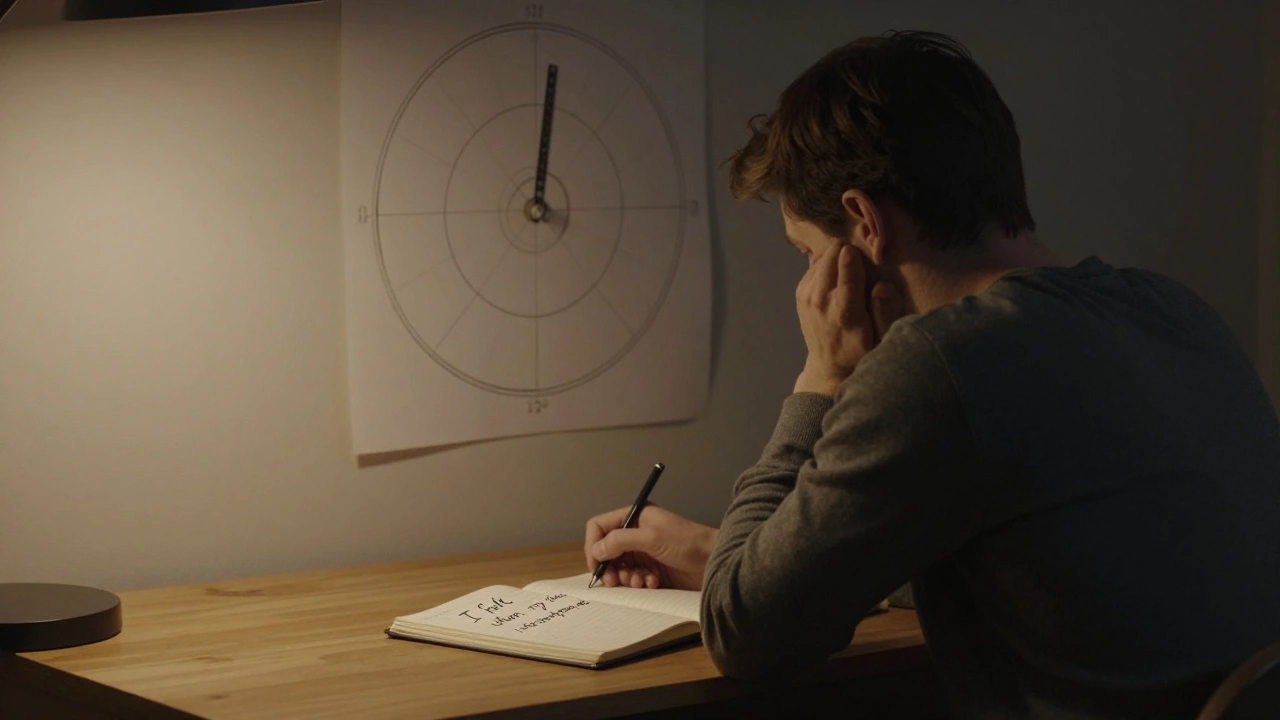
Try this: Every night, spend two minutes writing down one emotion you felt that day. Not "I was stressed." Be specific. "I felt resentful when my boss interrupted me." "I felt proud when I helped my brother fix his car."
Why does this work? Because naming emotions shrinks their power. A 2023 study in the Journal of Personality and Social Psychology found that men who regularly labeled their emotions showed a 34% drop in impulsive reactions over six weeks. You’re not analyzing your life-you’re just noticing it.
Use a simple emotional wheel if you’re stuck. Google one. Print it. Tape it to your mirror. It’s got words like "disappointed," "overwhelmed," "distant," "grateful." Most men only know four emotions: mad, sad, tired, and fine. Expand your vocabulary. Your feelings aren’t strange-they’re data.
Learn to pause before reacting
Anger is a signal, not a command. When you feel your jaw tighten, your chest get hot, or your voice rise-that’s your body saying, "Something’s off." But you don’t have to act on it.
Here’s a trick that works: The 6-second rule. When you feel triggered, count to six slowly. Breathe in for three. Breathe out for three. That’s all it takes to break the automatic reaction loop.
Why six seconds? Because that’s how long it takes for your prefrontal cortex-the part of your brain that thinks, plans, and controls impulses-to catch up with your amygdala, which screams "attack!" Most men react before their brain even gets a say. You can change that.
Try it next time someone cuts you off in traffic. Or when your kid throws a tantrum. Or when your partner says something that stings. Pause. Breathe. Then respond. Not react.

Practice active listening
Most men listen to reply, not to understand. We’re waiting for our turn to speak. To fix. To give advice. But real connection happens when you just… listen.
Here’s how to do it:
- Put your phone down. Full stop.
- Make eye contact. Not intense. Just steady.
- Don’t interrupt. Even if you know what they’re going to say.
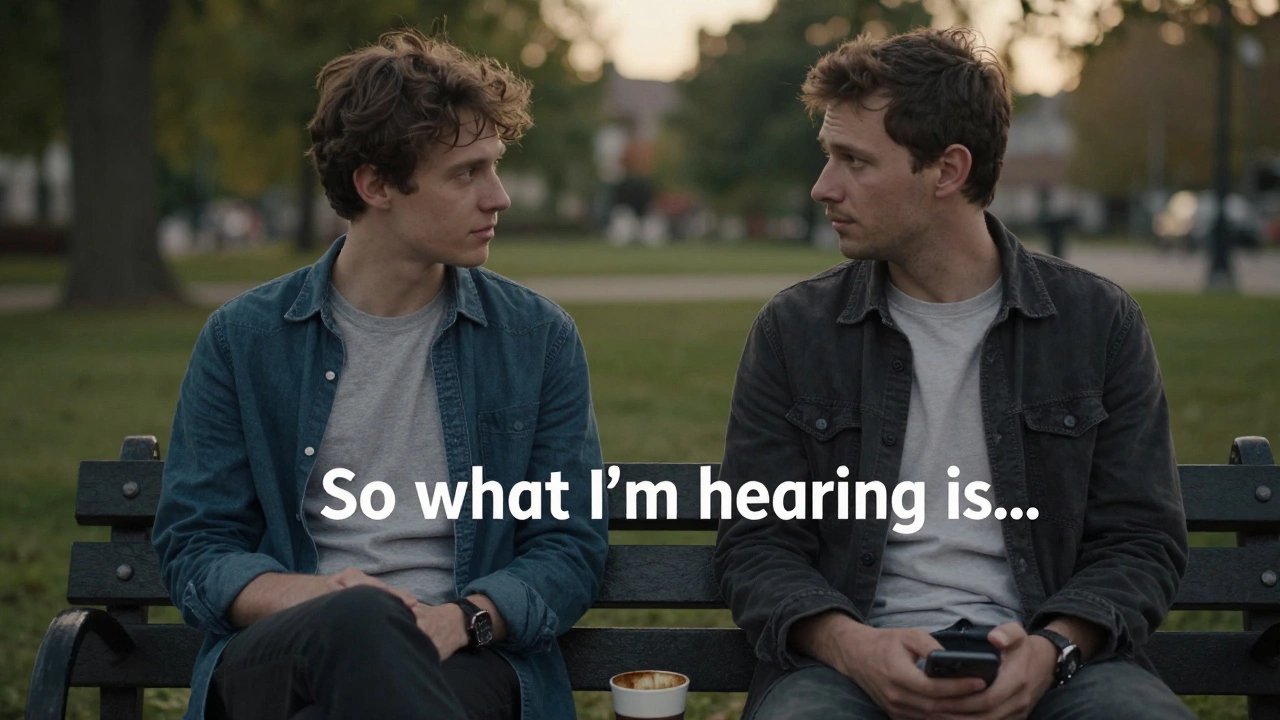
- After they finish, say: "So what I’m hearing is..." and repeat it back in your own words.
This isn’t therapy. This is basic human respect. A 2024 survey of 2,000 men in the UK found that those who practiced active listening reported a 52% increase in relationship satisfaction-with partners, friends, even coworkers.
Try it with your dad. Your brother. Your best mate. You don’t need to fix their problem. You just need to let them feel heard. That’s more powerful than any solution you could offer.
Build empathy by stepping into someone else’s shoes
Empathy isn’t feeling sorry for someone. It’s imagining what it’s like to be them.
Start small. When your colleague is quiet, ask: "What’s it like to be in their position?" When your son is angry after school, wonder: "What did he feel today that he couldn’t say?"
One simple habit: Every week, pick one person you interact with-cashier, neighbor, bus driver-and spend one minute thinking about their life. What’s their morning like? What are they worried about? What do they want that they never say?
Empathy isn’t about being nice. It’s about seeing people as real. And when you do that, you stop seeing them as obstacles or problems. You start seeing them as humans.
Accept vulnerability as strength
There’s a myth that emotional intelligence means never showing pain. But the opposite is true. The most emotionally intelligent men are the ones who say, "I’m struggling," or "I need help," or "That hurt."
Think of it like this: A soldier who admits he’s scared doesn’t become weak. He becomes smarter. He asks for backup. He plans better. It’s the same with emotions.
Start by sharing one small thing you’re feeling-with someone you trust. Not your whole story. Just one sentence: "I’ve been feeling pretty alone lately." "I’m scared I’m not doing enough as a dad."
Watch what happens. Most people will respond with, "Me too." Or, "Thank you for saying that." Vulnerability isn’t the enemy of masculinity. It’s its foundation.
Track your progress
Emotional intelligence isn’t a switch you flip. It’s a muscle. You need to train it.
Keep a simple log for 30 days:
- What emotion did I feel today?
- How did I respond?
- What could I have done differently?
After 30 days, look back. You’ll see patterns. You’ll notice what triggers you. You’ll see where you improved. You won’t be perfect. But you’ll be aware. And that’s the whole point.
Men who track their emotional habits are 70% more likely to maintain progress over time, according to data from the Men’s Health Research Network. You don’t need to be a therapist. You just need to pay attention.
What emotional intelligence doesn’t look like
It’s not about being a people-pleaser. You can still say no. You can still set boundaries. Emotional intelligence means saying no with respect.
It’s not about never getting angry. Anger is valid. But emotional intelligence means knowing why you’re angry-and choosing how to express it.
It’s not about fixing everyone else. You don’t need to solve your friend’s problems. You just need to sit with him while he figures it out.
It’s not a one-time achievement. It’s a daily practice. Some days you’ll nail it. Other days you’ll snap. That’s okay. You’re not trying to be perfect. You’re trying to be present.
Can emotional intelligence be learned after 30?
Absolutely. The brain doesn’t stop changing when you turn 30. Neuroplasticity-the brain’s ability to rewire itself-continues throughout life. Men in their 40s and 50s who start practicing emotional intelligence report deeper relationships, better sleep, and less stress. It’s never too late to begin.
Is emotional intelligence the same as being sensitive?
No. Sensitivity is about reacting to emotions. Emotional intelligence is about understanding, managing, and using them wisely. A man can be emotionally intelligent and still be tough, decisive, and strong. He just doesn’t let his emotions control him.
What if my family thinks I’m changing too much?
Some people feel threatened when someone they know starts growing. They might say you’re "not the same." That’s not a sign you’re doing it wrong-it’s a sign you’re doing it right. Stay calm. Keep showing up. Over time, they’ll adjust. Your consistency becomes their new normal.
How long until I see results?
Most men notice small shifts within two weeks: fewer arguments, better sleep, less tension. Deeper changes-like improved relationships or reduced anxiety-usually show up between 6 and 12 weeks. It’s not magic. It’s repetition.
Do I need therapy to develop emotional intelligence?
No-but it helps. Therapy isn’t just for crisis. It’s a tool for growth. Many men in the UK use workplace EAP programs or low-cost counseling services to build emotional skills. You don’t need to be broken to benefit. You just need to be ready.
Next steps
Start tomorrow. Not next week. Not Monday.
Do one thing:
- Write down one emotion you felt today before bed.
- Use the 6-second rule the next time you’re triggered.
- Ask one person, "How are you really doing?" and mean it.
Emotional intelligence isn’t about becoming someone else. It’s about becoming more of who you already are-just less afraid to show it. And that? That’s the bravest thing a man can do.