
Mature Skin Color Calculator
Find Your Best Colors for Age 50+
Select your skin tone to see which colors enhance your appearance and which to avoid. Based on expert advice from the article on mature men's style.
Recommended Colors
These colors work because they balance your undertones while adding vitality to your appearance.
Colors to Avoid
These colors can make your skin appear tired and aged, reducing your professional appearance.
Turning 50 doesn’t mean you have to trade in your jeans for plaid shirts and loafers with socks. It means you get to finally dress like the man you’ve become-confident, intentional, and comfortable in your own skin. Too many men in their 50s fall into the trap of either clinging to their 30s style or going full retirement uniform. Neither works. The truth? Your 50s are when your style starts to matter more than ever.
Stop chasing trends. Start building a wardrobe that lasts.
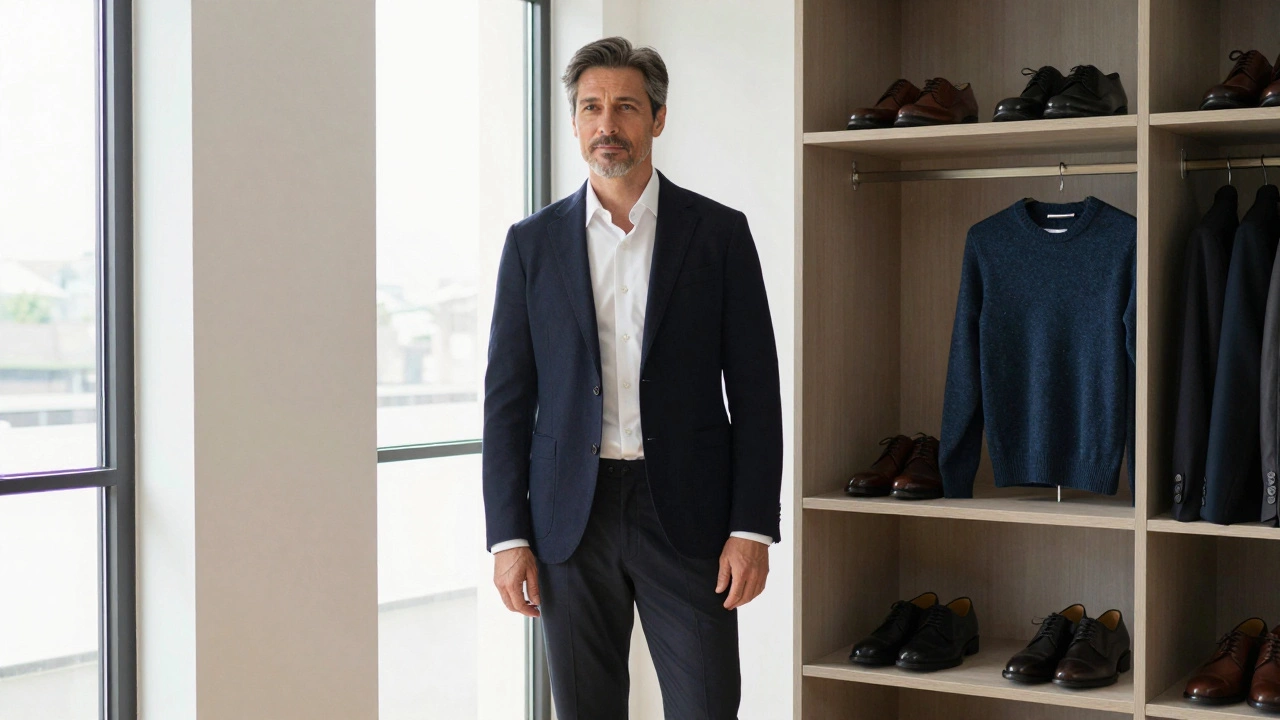
At 50, you don’t need 20 pairs of distressed jeans or neon sneakers. You need fewer pieces, but each one has to earn its place. Think of your wardrobe like a well-built toolshed: every item should be reliable, fit properly, and do its job. A navy blazer that fits your shoulders? That’s a tool. A white dress shirt that doesn’t gap at the buttons? That’s a tool. A pair of dark chinos that don’t bag at the knees? That’s a tool too.
Start by auditing what you own. Take everything out of your closet. Keep only what fits well, is in good condition, and you’ve worn in the last year. If you’re unsure, ask yourself: would I wear this to a dinner with my kids’ in-laws? If the answer is no, it’s time to let it go.
Invest in five core items:
- A well-tailored navy or charcoal blazer
- Two pairs of dark, tailored trousers (one wool, one cotton)
- Three high-quality button-down shirts (white, light blue, and a subtle pattern like micro-check)
- A pair of dark, slim-fit jeans (no rips, no fading)
- Two pairs of leather shoes: one oxford, one loafer
That’s it. You can build everything else around these. No need for 15 sweaters. One fine-gauge merino wool sweater in charcoal or navy does more than five cheap ones.
Fabric matters more than brand
At 50, your skin changes. Your body changes. What felt fine at 30 now feels itchy, tight, or cheap. That’s not about age-it’s about quality. Avoid polyester blends. They trap heat, look shiny under lights, and wrinkle like a crumpled paper bag. Instead, look for natural fibers: cotton, wool, linen, and silk.
Wool is your best friend. A 100% wool suit doesn’t just look sharp-it breathes, holds its shape, and lasts for years. Cotton shirts should be at least 100s or 120s thread count. Anything lower feels thin and wears out fast. Linen is perfect for summer, but only if you accept the natural wrinkles. Trying to iron linen flat? That’s not style-that’s a battle you’ll lose.
When you touch fabric, you should feel weight and texture. Not slickness. Not stiffness. Real material. If a shirt costs less than £40 and claims to be "100% cotton," it’s probably not. You get what you pay for.
Fit is non-negotiable
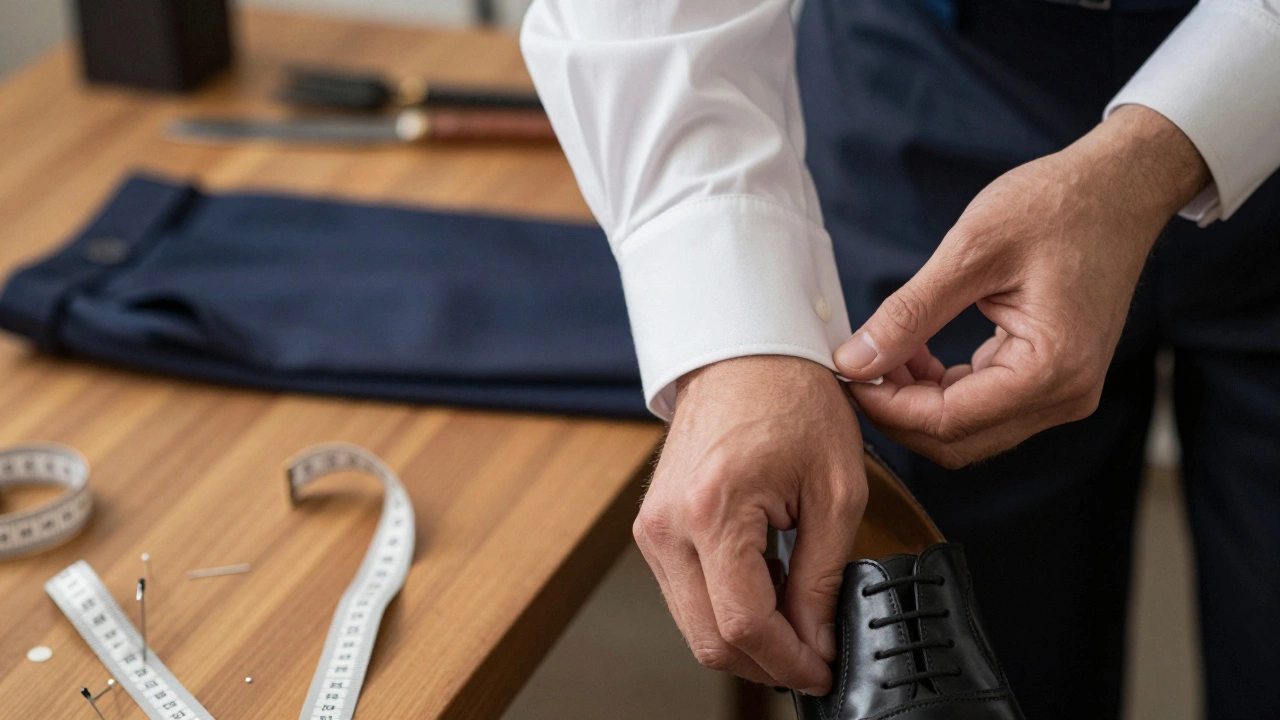
Here’s the biggest mistake men make after 50: wearing clothes that are too big. They think "looser is more comfortable" or "it hides a few pounds." But oversized clothes make you look tired, sloppy, and older. Tailoring isn’t luxury-it’s necessity.
Check these three points:
- Shoulders: The seam of your jacket should sit right where your arm meets your shoulder. If it hangs over, it’s too big.
- Sleeves: Your shirt cuff should show about half an inch past your jacket sleeve. No more, no less.
- Pants: They should break slightly at the top of your shoe-not puddle, not hover. If you’re wearing loafers, a slight break is fine. With oxfords, a clean break is better.
If you’ve gained weight around the middle, don’t buy bigger pants. Get them taken in. A tailor can adjust the waist, taper the legs, and shorten the inseam for under £50. That’s cheaper than buying new clothes every year.
Color isn’t about being bold-it’s about being intentional
You don’t need to wear black every day. But you also don’t need to wear khaki with a mustard sweater. Stick to a palette that works with your skin tone and doesn’t scream "I’m trying too hard."
For most men over 50, the best colors are:
- Navies and charcoals
- Medium grays
- Deep greens and burgundies
- White and light blue (for shirts)
- Black (only for shoes and belts)
Avoid pastels, neon accents, and anything labeled "youthful" or "trendy." If a color makes you look washed out, skip it. Test it in natural light. If you look tired in it, it’s not the color’s fault-it’s the wrong match for you.
Pattern is fine, but keep it subtle. A micro-check shirt, a thin pinstripe suit, or a quiet herringbone sweater? All excellent. A loud plaid or a shirt with a cartoon logo? That’s not style-that’s a costume.
Accessories are your silent confidence boosters
At 50, your accessories do the heavy lifting. They’re the difference between looking put-together and looking like you rolled out of bed.
Start with these three:
- Watches: A simple leather-strapped watch in stainless steel. No smartwatches unless you need them for health tracking. If you’re wearing a suit, a classic dress watch (like a Seiko 5 or a Hamilton Khaki) says more than any branded logo.
- Belts: Match your belt to your shoes. Always. No black belt with brown shoes. No brown belt with black shoes. If you’re wearing navy trousers, black or dark brown works.
- Sunglasses: Wayfarers or Clubmasters. Avoid oversized frames or mirrored lenses. You’re not at a music festival-you’re at a business lunch.
Keep ties simple. If you wear them, go for solid colors or subtle textures. Silk or wool. No novelty ties. No cartoon characters. No "I’m a dad who loves golf" prints.
Shoes: the foundation of your look
Shoes are the first thing people notice. And the first thing that betrays you if they’re worn out.
Two pairs is enough:
- Oxford shoes: For work, weddings, formal events. Black or dark brown. Polish them once a month.
- Loafers: For casual Fridays, dinners out, weekend errands. Penny loafers or tassel loafers in brown or burgundy leather.
Never wear sneakers with a suit. Ever. Not even "dress sneakers." They look cheap and out of place. If you want casual, wear chinos with loafers. That’s the modern 50+ uniform.
Replace shoes when the soles wear thin or the leather cracks. Don’t wait until they fall apart. A good pair of leather shoes lasts 5-8 years with care. Cheap ones last six months.
What to avoid like the plague
Here’s the short list of style sins men over 50 still commit:
- Wearing cargo pants with a belt that’s three holes too tight
- Pairing athletic shorts with flip-flops and a hoodie
- Wearing socks with sandals (yes, people still do this)
- Choosing shirts with huge logos or slogans
- Letting your belt buckle be the brightest thing in the room
- Wearing a jacket that’s too short and exposes your midriff
These aren’t "old man" mistakes. They’re lazy mistakes. And they’re easy to fix.
Style isn’t about looking young-it’s about looking like you
There’s no magic formula for dressing at 50. But there is a mindset: clarity over chaos. You’re not trying to impress anyone. You’re trying to feel like yourself-calm, capable, and in control.
Men who dress well at 50 don’t follow influencers. They follow their own standards. They don’t buy what’s on sale. They buy what fits. They don’t wear what’s trendy. They wear what lasts.
Look at the men you admire-actors, writers, architects, even your own father if he had style. Notice how they don’t try to be young. They look timeless. That’s the goal.
Style after 50 isn’t about hiding age. It’s about honoring it. And that’s something no 25-year-old can replicate.
What colors should a 50-year-old man avoid?
Avoid pastels, neon shades, and anything overly bright like electric blue, hot pink, or lime green. These colors clash with most skin tones after 50 and can make you look tired or out of place. Stick to deep, muted tones like navy, charcoal, olive, burgundy, and gray. These colors complement mature skin and create a calm, confident look.
Should I wear jeans at 50?
Yes-but only if they’re dark, slim-fit, and in good condition. Avoid rips, excessive fading, or baggy styles. A pair of well-fitted dark denim works with a tailored shirt and loafers for a smart-casual look. Keep them clean and avoid wearing them to formal events. They’re your weekend staple, not your office uniform.
Do I need to wear a suit to work after 50?
Not necessarily. Many workplaces today are smart-casual. A tailored blazer with dress pants, a button-down shirt, and leather shoes is perfectly professional. Save the full suit for client meetings, weddings, or formal events. The key is consistency-don’t mix a blazer with sweatpants. Keep the level of formality even across your outfit.
What’s the best way to update my wardrobe without spending a fortune?
Start by tailoring what you already own. A £30 alteration can make an old jacket look brand new. Then, replace one worn-out item at a time with a high-quality version. Buy a new pair of shoes, then a shirt, then a sweater. Avoid big shopping trips. Focus on durability over quantity. A £120 wool coat that lasts 10 years is cheaper than five £40 coats that fall apart in two.
Are sneakers okay for men over 50?
Only if they’re minimalist and clean-think white leather low-tops like Common Projects or Axel Arigato. Avoid bulky running shoes, neon colors, or ones with giant logos. Wear them with jeans or chinos, never with a suit. They’re for weekends, errands, or casual walks-not for work or dinner out. Keep them spotless. Dirty sneakers look sloppy at any age.
Next steps: Start small, think long-term
Don’t try to overhaul your whole wardrobe in one weekend. Pick one thing to improve this week. Maybe it’s getting your trousers hemmed. Or replacing your old belt with a leather one. Or tossing that faded polo shirt you’ve worn since 2018.
Each small change adds up. In six months, you’ll look back and wonder why you waited so long. Because style at 50 isn’t about looking like someone else. It’s about becoming the man you’ve always wanted to be-without trying to be someone younger.