

Skill Progress Tracker
How It Works
Based on the article's key insight: Small actions, done daily, build up faster than big bursts.
Track your daily practice time and see how small consistent efforts create meaningful progress over time.
Your Progress
Small actions matter. Look what you've accomplished:
Why This Works
As the article says: "The brain learns through repetition, not volume."
Here's what your practice time means:
- 30 days of 10 minutes = 5 hours = 1 short book's worth of practice
- 60 days of 10 minutes = 10 hours = 1 hour of focused learning per week
- 90 days of 10 minutes = 15 hours = 30% improvement in most skills
Everyone wants to get better at something. Whether it’s speaking up in meetings, coding a website, or cooking a meal without burning it - growing skills isn’t about talent. It’s about doing the same things smart people do, day after day. And most of them aren’t complicated. You don’t need a degree, a coach, or a 10-hour daily routine. You just need consistency, the right feedback, and a little patience.
Start with something small, not grand
Too many people try to learn a whole skill at once. They say, "I’m going to become fluent in Spanish" or "I’m going to master Excel." That’s like trying to run a marathon before you’ve walked a mile. Instead, pick one tiny part of the skill and focus on that.
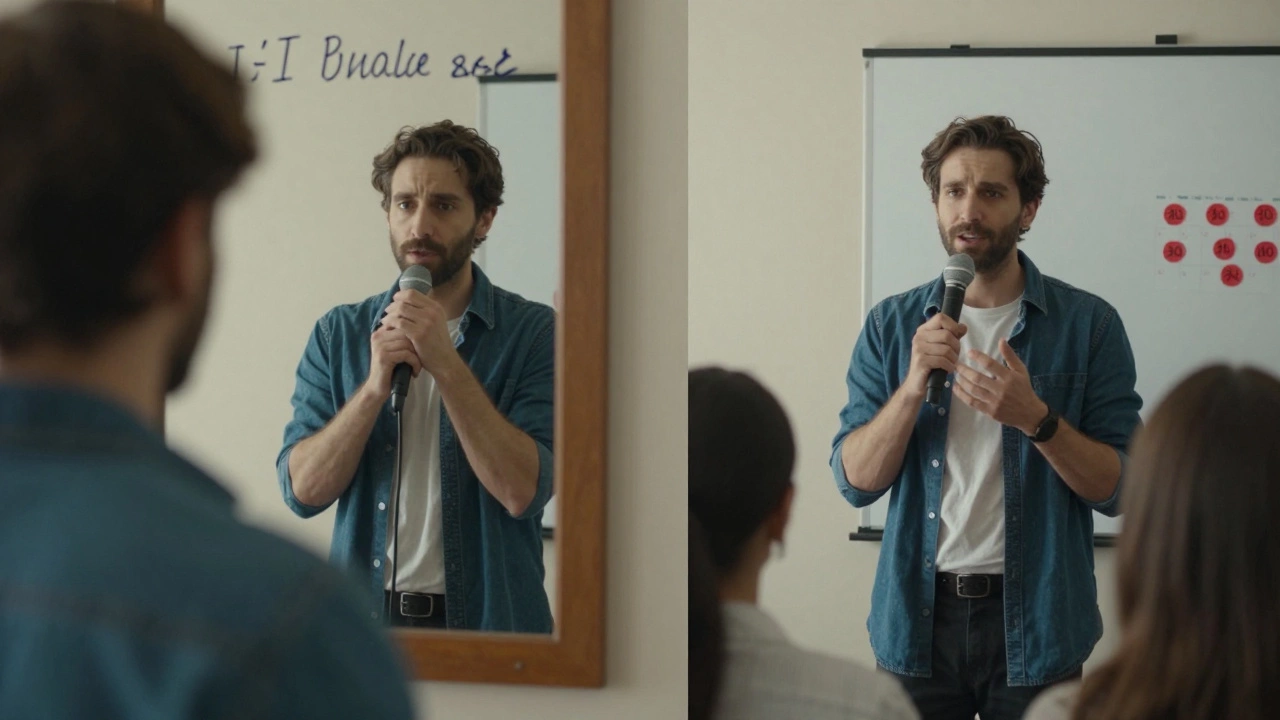
Want to write better? Don’t try to write a novel. Just write one clear email a day. Want to be better at public speaking? Don’t sign up for a TED Talk. Practice saying one sentence out loud in front of a mirror every morning. The brain learns through repetition, not volume. Small actions, done daily, build up faster than big bursts.
Here’s how to pick your starting point:
- What’s the smallest action that still counts as practicing the skill?
- Can you do it in under 10 minutes?
- Will you actually do it tomorrow?
If the answer to all three is yes, you’ve got your starting point.
Practice with feedback - not just repetition
Practicing the same thing over and over without feedback is like spinning your wheels in the snow. You’re moving, but not going anywhere. You need to know what you’re doing wrong - and fast.
Think about learning to ride a bike. You don’t just pedal for hours hoping to get better. You fall. Someone catches you. You adjust. That’s feedback. The same applies to every skill.
For writing: Record yourself reading an email aloud. Listen. Where did you stumble? Where did it sound unclear? That’s your feedback.
For coding: Use a tool like GitHub Copilot or ask a friend to glance at your code. Ask: "What’s the first thing that looks off?"
For cooking: Taste your dish. Then ask someone else to taste it. Ask: "What’s missing?"
Feedback doesn’t have to be from a coach. It can be from a recording, a friend, a free online tool, or even just asking yourself: "Would I understand this if I read it for the first time?"
Track progress with numbers - not feelings
Feeling like you’re improving isn’t enough. You need data. Without numbers, you can’t tell if you’re getting better or just busy.
Here’s what tracking looks like in real life:
- Writing: Count how many words you write each day. Aim for 200. After 30 days, you’ve written 6,000 words - that’s a short book.
- Public speaking: Time how long you can speak without saying "um" or pausing. Track it weekly. Even a 0.5-second improvement matters.
- Programming: Track how many bugs you fix per hour. Or how fast you can deploy a simple feature.
- Music: Time how long it takes to play a scale perfectly. Reduce it by 2 seconds each week.
You don’t need fancy apps. A notebook or a single spreadsheet works. The goal isn’t perfection - it’s to see the trend. If your numbers are going up, you’re growing. If they’re flat, something’s broken. Fix it.
Learn from people who’ve already done it
You don’t have to invent your own path. Someone else has already figured out how to get good at what you want to learn. Find them.
Look for people who:
- Do what you want to do - not just talk about it
- Have results you can see (published work, clients, projects, videos)
- Share how they got there - not just their final result
Watch how they break down their process. Read their old emails. Study their mistakes. Most experts don’t hide their process - they just don’t shout about it.
For example:
- If you want to write better, read the first drafts of famous authors. Many are published online.
- If you want to design websites, reverse-engineer sites you admire. What’s the structure? How is the text laid out? What’s missing?
- If you want to be more confident in meetings, watch videos of people who speak clearly under pressure. Notice how they pause. How they breathe. How they start sentences.
Learning from others doesn’t mean copying. It means reverse-engineering success.
Build a habit loop - not motivation
Motivation fades. Habits stick. You can’t wait to feel like practicing. You have to make it automatic.
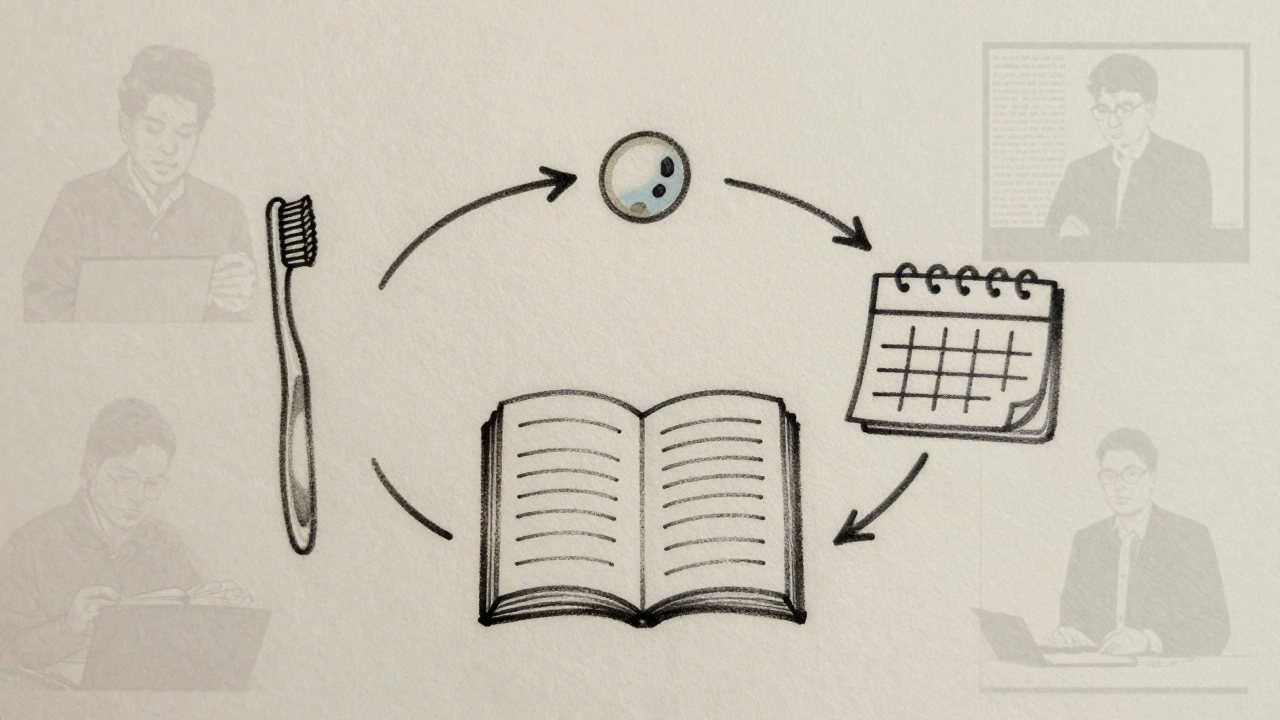
Here’s how to build a habit loop:
- Trigger: Do it right after something you already do. Example: After brushing your teeth, open your notebook and write for 5 minutes.
- Action: Keep it tiny. 5 minutes. One sentence. One line of code.
- Reward: Celebrate the done. Not the quality. Just the act. Say "Done." Or put a sticker on your calendar.
After 7 days, you’ll start to feel strange if you skip it. That’s the habit forming. After 30 days, it’s part of your identity. You’re not "someone who tries to improve." You’re someone who writes. Who codes. Who speaks up.
Embrace the 80/20 rule - focus on what moves the needle
Not all practice is equal. 20% of what you do gives you 80% of the results. Find that 20%.
For example:
- For sales: It’s not about how many calls you make. It’s about how well you listen in the first 30 seconds.
- For design: It’s not about using fancy tools. It’s about spacing, contrast, and hierarchy.
- For fitness: It’s not about doing 10 exercises. It’s about mastering 3 foundational movements.
Ask yourself: "What one thing, if I got better at it, would make everything else easier?" Then focus there.
Stop doing things that look like progress but aren’t. Watching 10 tutorials without practicing? That’s not learning. Reading about time management? That’s not time management. You have to do the thing.
Give yourself permission to suck
The biggest blocker to growing skills isn’t time. It’s fear. Fear of looking stupid. Fear of failing. Fear that you’ll never get there.
Here’s the truth: Everyone starts bad. Everyone. The best writers in the world wrote terrible first drafts. The best coders wrote code that crashed on day one. The best speakers forgot their lines.
Give yourself permission to be bad. For at least 30 days. Write badly. Code badly. Speak badly. And keep going.
Progress doesn’t come from being perfect. It comes from showing up when you feel like quitting.
It’s not about being great - it’s about being consistent
You don’t need to become the best. You just need to be better than you were yesterday. And then better than you were last week. That’s it.
Skills grow in silence. No one sees you practicing at 6 a.m. No one sees you rewriting your third email. No one sees you replaying a video to catch your next "um." But those moments add up.
After six months, someone will say: "How did you get so good?" And you’ll smile. Because you know the truth: You didn’t get lucky. You just kept showing up.