Personalized Movement Plan Calculator
Your Movement Profile
Answer a few quick questions to get a personalized plan
Your results will appear here
After 40, your body starts sending signals you can’t ignore. Your joints creak more. Recovery takes longer. That 5K you used to crush on weekends now leaves you sore for days. It’s not aging-it’s biology. But here’s the truth: staying active after 40 isn’t about chasing youth. It’s about keeping your body working so you can keep doing the things you love-playing with grandkids, hiking trails, carrying groceries, or just getting up from the couch without groaning.
Move More, Not Harder
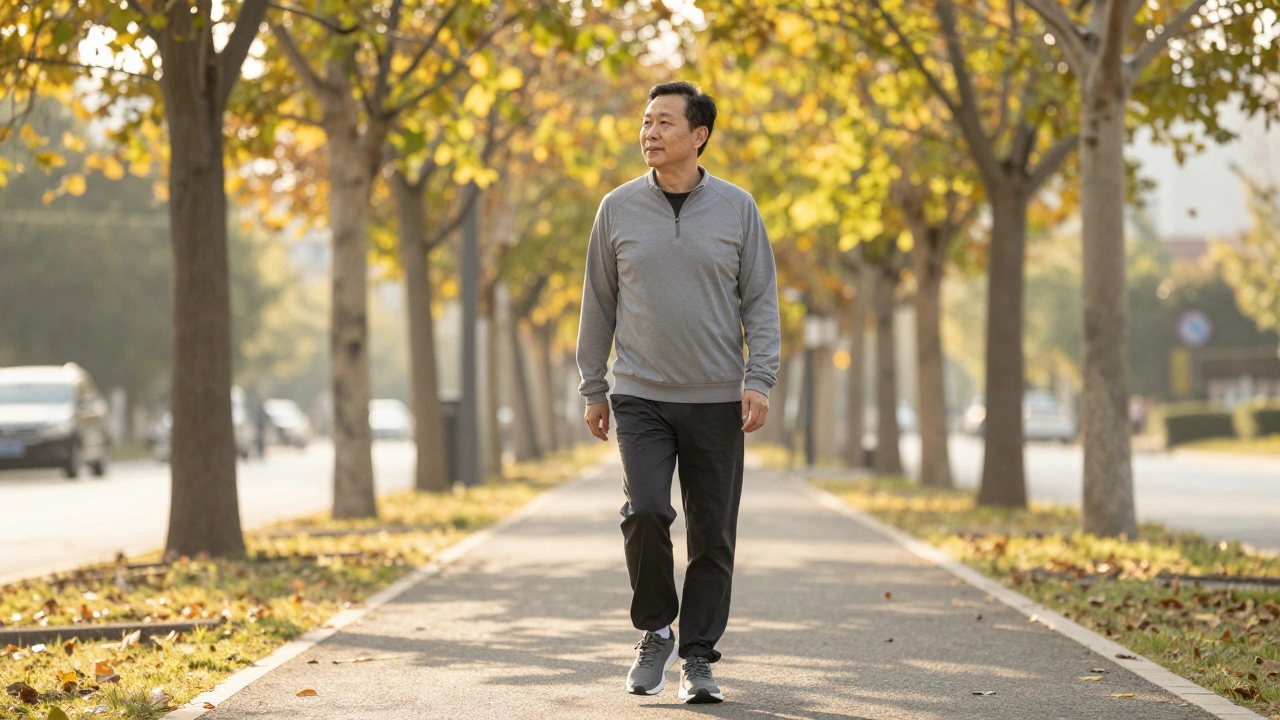
You don’t need to run marathons or lift heavy weights to stay strong after 40. In fact, pushing too hard too fast is one of the biggest reasons people quit. Studies show that people over 40 who stick with movement do so because it feels good, not because it hurts. The goal isn’t to burn calories-it’s to keep your muscles, joints, and heart working smoothly. Start with walking. Not a power walk. Just walking. Aim for 30 minutes most days. Do it in the morning before coffee. Do it after dinner. Break it into three 10-minute chunks if you need to. Walking lowers blood pressure, improves sleep, and keeps your knees from stiffening up. It’s free. It’s easy. And it works better than most people think.Strength Training Isn’t Optional-It’s Survival
After 40, you lose about 1% of your muscle mass each year if you don’t do anything. That might sound small, but over 10 years, that’s 10% of your strength gone. That’s the difference between carrying your own suitcase and needing help. It’s the difference between climbing stairs without stopping and needing to rest. You don’t need a gym. Start with bodyweight moves: squats, wall push-ups, step-ups onto a sturdy chair, and planks. Do three sets of 8-12 reps, two or three times a week. If you can’t do a full push-up yet, do them against a kitchen counter. Progress slowly. Focus on form, not speed. If your back hurts during a squat, stop. Adjust your stance. Widen your feet. Lower your depth. Your body will tell you what it needs if you listen.Flexibility Isn’t Just for Yogis
Tight hips, stiff shoulders, aching lower back-these aren’t normal parts of aging. They’re signs your body isn’t moving enough in all directions. Stretching isn’t about touching your toes. It’s about keeping your joints moving freely. Try this: every morning, spend five minutes moving each joint slowly. Roll your shoulders. Circle your ankles. Gently twist your torso. Reach one arm across your chest. Hold each stretch for 20-30 seconds. No bouncing. No pain. Just slow, calm movement. Do this for two weeks, and you’ll notice you’re not wincing when you reach for something on a high shelf.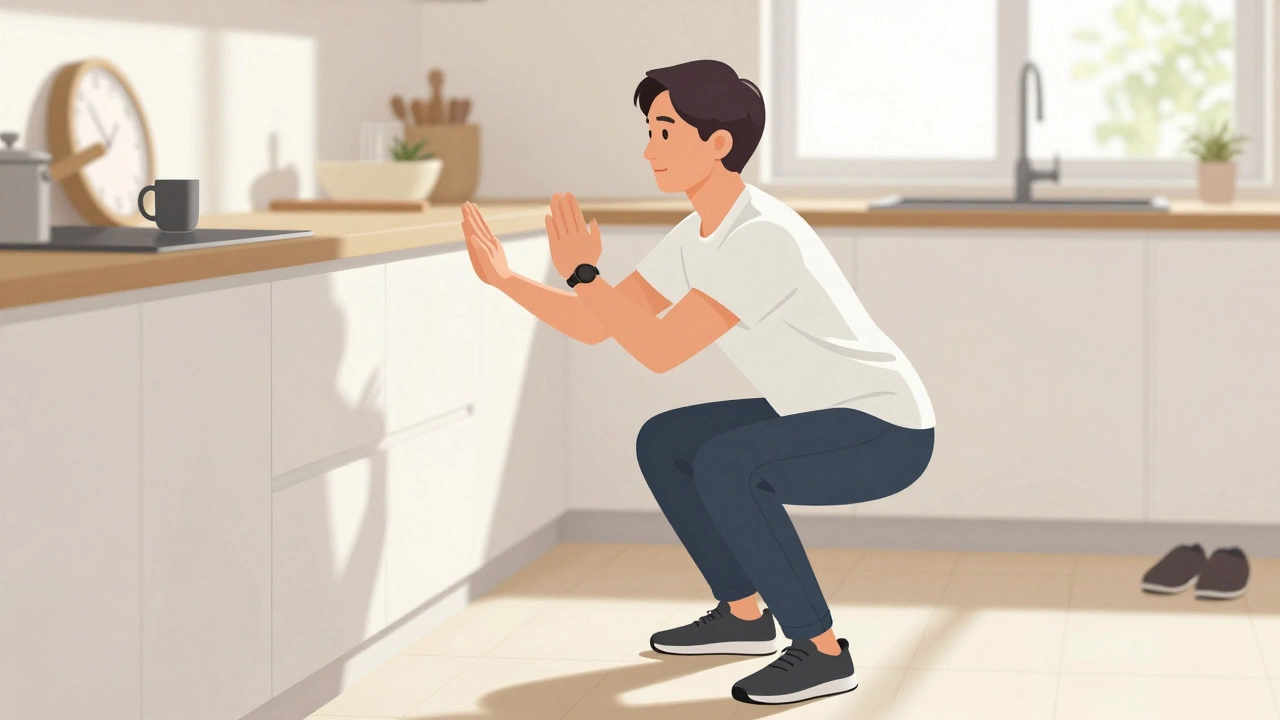
Balance Training: The Secret Weapon
Falls are the leading cause of injury in people over 65. But most of those falls happen because balance faded slowly-over years-and no one noticed. You don’t need fancy equipment. You don’t need a class. You just need to stand on one foot. Try this: while brushing your teeth, stand on your left foot for 30 seconds. Then switch. If you wobble, hold onto the sink. That’s fine. Do this every day. After a week, try it without holding on. After a month, try it with your eyes closed. Simple? Yes. Effective? Absolutely. Balance training reduces fall risk by nearly 50% in older adults, according to research from the National Institute on Aging.Find Your Why
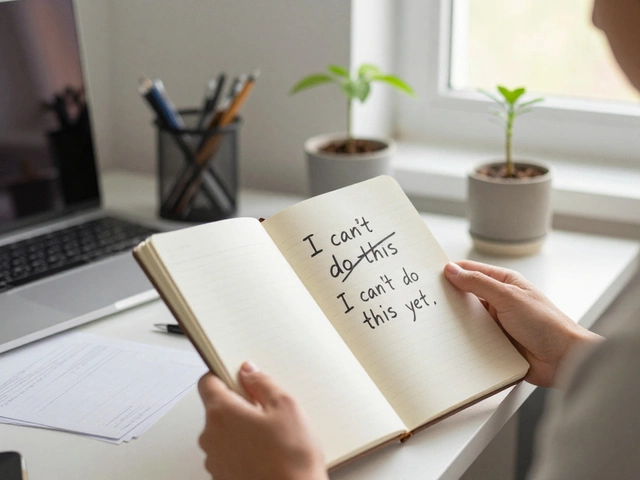
Why do you want to stay active? Not because you should. Not because your doctor said so. But because you want to. Maybe you want to dance at your daughter’s wedding. Maybe you want to play catch with your grandson without your knees giving out. Maybe you just want to walk through the grocery store without feeling exhausted. When your reason is personal, not generic, you stick with it. Write it down. Put it on your mirror. Say it out loud when you’re tempted to skip a day. “I move so I can play with my grandkids.” “I walk so I don’t need help getting up.” That’s your fuel.Listen to Your Body-Not the App
Fitness apps tell you to hit 10,000 steps, burn 500 calories, or do 100 squats. Your body doesn’t care about those numbers. It cares about how you feel. If your knee throbs after a walk, rest. If you’re exhausted after a workout, take a day off. If you feel energized after 20 minutes of stretching, do more of that. Pain isn’t a badge of honor. It’s a warning. Soreness? Normal. Sharp, stabbing, or joint-specific pain? Stop. See a physical therapist. Don’t wait. Early intervention keeps small issues from becoming big ones.
Make It Social
People who move with others stick with it longer. You don’t need to join a gym. Start a walking group with neighbors. Take a low-impact class at your local community center-water aerobics, tai chi, or seated yoga. Many libraries and senior centers offer free classes designed for people over 40. One woman in her early 50s started walking with her neighbor after her husband passed away. Two years later, they started a weekly group of six people. They call themselves the “Slow and Steady Crew.” They don’t race. They chat. They laugh. And they’ve all lost weight, improved their sleep, and stopped needing painkillers for back pain.What to Avoid
Don’t ignore your core. A weak core leads to bad posture, back pain, and poor balance. Even light planks or seated marches help. Don’t skip sleep. Recovery happens when you rest. If you’re not sleeping well, fixing that matters more than adding another workout. Don’t compare yourself to 25-year-olds. Or even your 35-year-old self. Your body now needs different things. Respect that.Small Changes, Big Results
You don’t need to overhaul your life. Just add one thing. Walk 10 minutes a day. Do two squats while brushing your teeth. Stand up every hour. Stretch for five minutes before bed. Do that for 30 days. Then add one more. That’s how you build a habit that lasts. Not with intensity. Not with pain. With consistency. After 40, staying active isn’t about looking younger. It’s about feeling stronger, freer, and more in control of your own body. It’s about keeping your independence. And it’s absolutely possible-if you start where you are, move in ways that feel good, and keep showing up.Is it too late to start exercising after 40?
No, it’s never too late. Studies show that even people in their 70s and 80s who start walking, doing light strength training, or stretching see improvements in strength, balance, and mood within just 6-8 weeks. The body adapts at any age. What matters is consistency, not intensity.
What’s the best type of exercise for someone over 40?
The best exercise is the one you’ll actually do. Walking, swimming, cycling, tai chi, and light strength training are all excellent choices. The key is combining movement types: cardio to keep your heart healthy, strength to maintain muscle, and balance to prevent falls. Aim for a mix-don’t focus on just one.
Should I lift weights after 40?
Yes, but start light. Lifting weights-even with dumbbells or resistance bands-slows muscle loss, strengthens bones, and improves metabolism. Begin with bodyweight moves or 2-5 pound weights. Focus on controlled movements. Two sessions a week are enough to make a difference. Ask a trainer for a basic routine if you’re unsure.
I have joint pain. Can I still be active?
Yes, but choose low-impact options. Swimming, cycling, elliptical machines, and water aerobics are gentle on joints. Avoid high-impact activities like running or jumping if your knees or hips hurt. Always warm up first. If pain lasts more than 48 hours after exercise, talk to a physical therapist. Movement helps joint health-it doesn’t hurt it, when done right.
How often should I work out after 40?
Aim for at least 150 minutes of moderate activity per week-that’s 30 minutes, five days a week. Add two days of light strength training. But if that feels overwhelming, start with three days a week. Even 10 minutes a day adds up. The goal is to move regularly, not to do a lot at once.
Staying active after 40 isn’t about becoming someone else. It’s about becoming the best version of yourself-stronger, steadier, and more alive than you were last year. Start small. Stay consistent. Listen to your body. And keep moving.