

Men's Supplement Planner Calculator
Your Lifestyle Profile
Supplement Selection
Your Personalized Supplement Plan
Recommended Schedule
Morning: Omega-3 with breakfast (1,000 mg EPA/DHA)
Midday: Zinc with lunch (15-25 mg)
Evening: Magnesium & Vitamin D3 with dinner (300 mg magnesium, 2,000 IU D3)
Anytime: Probiotic (10 billion CFUs)
Why This Works For You
- Better Sleep Expected in 1-2 weeks
- Reduced Inflammation Expected in 4-6 weeks
- Improved Mood Expected in 6-8 weeks
Important Safety Notes
Check with your doctor if taking medication
Start slow with magnesium to avoid stomach issues
Most men don’t realize how much their daily habits-sleep, stress, diet, movement-wear them down over time. By their late 30s, many start feeling sluggish, moody, or just not quite themselves. It’s not aging. It’s missing nutrients. The right supplements can fill those gaps, but not all are created equal. You don’t need a cabinet full of pills. You need a few proven ones, taken consistently.
Omega-3 Fatty Acids (EPA and DHA)
Most men get too little omega-3 and too much omega-6, thanks to processed foods and fried snacks. This imbalance fuels inflammation, which quietly damages joints, the heart, and even the brain. Omega-3s-specifically EPA and DHA-help reset that balance.
Studies show men who take 1,000-2,000 mg of combined EPA and DHA daily have lower triglycerides, better mood stability, and less joint stiffness. One 2023 analysis of over 15,000 adults found that men with the highest omega-3 levels had a 22% lower risk of heart attack. You won’t feel a difference overnight, but after three months, many report fewer aches, better focus, and less brain fog.
Look for fish oil with at least 500 mg of EPA and DHA per capsule. Krill oil works too, but it’s pricier. Vegans can use algae-based DHA, which delivers the same benefits without fish.
Vitamin D3
Over 40% of men in the UK are deficient in vitamin D, especially from October to March. Your skin makes it from sunlight, but most men spend too much time indoors. Low vitamin D isn’t just about bone health-it’s tied to low testosterone, poor immunity, and even depression.
A 2024 study in the Journal of Clinical Endocrinology & Metabolism found that men who took 2,000 IU of D3 daily for six months saw a 20% average increase in free testosterone. That’s not a miracle, but it’s meaningful. You’ll sleep better, recover faster from workouts, and feel more energized.
Get your levels checked if you can. If you’re not sure, 2,000 IU daily is safe for most men. Take it with food-fat helps absorption. Avoid D2; it’s less effective. Stick with D3.
Zinc
Zinc is one of the most overlooked minerals for men. It’s critical for testosterone production, sperm health, immune function, and even your sense of taste and smell. Many men don’t get enough from diet alone, especially if they eat a lot of grains or dairy, which block zinc absorption.
Men need about 11 mg daily. A supplement of 15-25 mg of zinc picolinate or zinc citrate fills the gap. Don’t go over 40 mg a day-too much can mess with copper levels and cause nausea.
Men who lift weights or train hard often benefit most. Zinc helps with muscle recovery and reduces inflammation after intense exercise. One 2022 trial showed that athletes taking 25 mg of zinc daily had 30% lower cortisol (the stress hormone) after training compared to placebo.
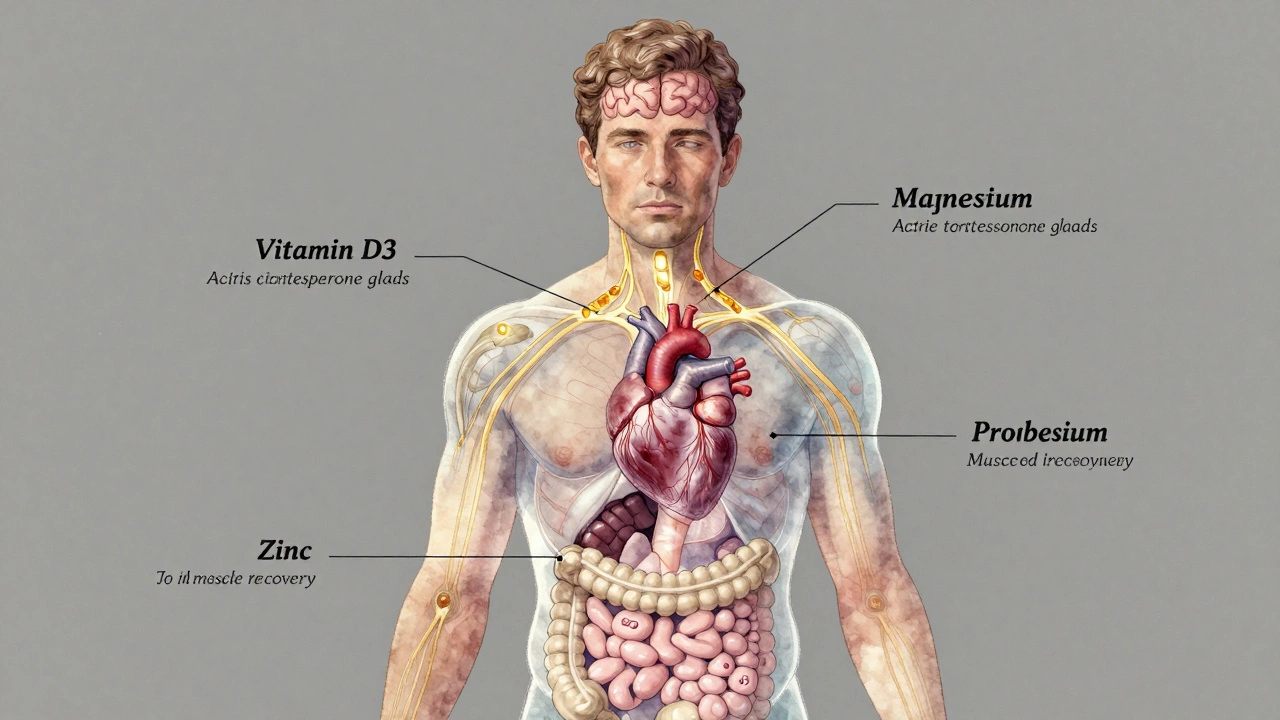
Magnesium
Stress, coffee, alcohol, and processed food drain magnesium. Most men are borderline deficient. That shows up as poor sleep, muscle cramps, irritability, or high blood pressure.
Magnesium glycinate is the best form for sleep and relaxation. Magnesium citrate helps with digestion. Take 200-400 mg at night. You’ll notice better sleep within a week. Studies show men who take magnesium regularly have higher testosterone levels and improved insulin sensitivity.
One man in Leeds, 42, told me he started taking 300 mg nightly after years of waking up tired. Within two weeks, he stopped hitting snooze. After a month, his blood pressure dropped from 138/88 to 122/76. He didn’t change his diet. Just added magnesium.
Probiotics
Your gut isn’t just for digestion. It’s linked to your mood, immune system, and even hormone balance. Men with poor gut health often have low energy, bloating, and frequent colds.
A 2023 review in Nutrients found that men taking a daily probiotic with at least 10 billion CFUs of Lactobacillus and Bifidobacterium strains reported fewer sick days and better mental clarity. Look for a blend with prebiotic fiber (like inulin) to feed the good bacteria.
You don’t need fancy strains. Just pick one with a few well-researched ones and take it consistently. Store it in the fridge if the label says so. Probiotics are alive-they need care.
Why Not Just Eat Better?
You’re right to ask. Food should come first. But let’s be honest: most men don’t eat enough fatty fish, leafy greens, nuts, or fermented foods. Work, travel, and convenience win out. Supplements aren’t magic. They’re insurance.
Think of them like a seatbelt. You hope you never need it, but you wear it anyway. Omega-3, vitamin D, zinc, magnesium, and probiotics aren’t optional extras. They’re foundational. They support systems that modern life constantly stresses.

What to Avoid
Not all supplements are worth it. Skip these:
- Multi-vitamins with iron-men don’t need iron unless diagnosed with deficiency. Too much iron can harm the liver and heart.
- Testosterone boosters with “proprietary blends”-if they won’t tell you the exact doses, avoid them. Most are just herbal fillers with no proof.
- High-dose antioxidants like vitamin E-over 400 IU daily may increase risk of prostate issues in some men.
- Collagen for joints-it’s trendy, but evidence for men’s joint health is weak. Focus on omega-3 and magnesium instead.
Simple Daily Routine
You don’t need to take five pills at once. Here’s a realistic plan:
- Morning: Omega-3 with breakfast
- Midday: Zinc with lunch
- Evening: Magnesium and vitamin D3 with dinner
- Anytime: Probiotic-best on an empty stomach, but it’s fine with food if you forget
That’s five supplements. One bottle for omega-3, one for D3, one for zinc, one for magnesium, one for probiotics. That’s it. No more.
Take them for 90 days. Track how you feel: sleep quality, energy, mood, recovery after workouts. If you feel better, keep going. If not, talk to a doctor. But most men do feel better.
When to See a Doctor
Supplements help, but they’re not a fix for serious issues. See a doctor if you have:
- Consistently low energy despite good sleep
- Loss of libido or erectile dysfunction
- Unexplained weight gain, especially around the belly
- Depression or anxiety that won’t lift
These could be signs of low testosterone, thyroid issues, or metabolic problems. Blood tests can tell you what’s really going on. Supplements won’t fix those-but they can support treatment.
Men’s health isn’t about quick fixes. It’s about showing up daily. A few smart supplements, paired with movement, sleep, and less stress, add up. You don’t need to be perfect. Just consistent.
Do men really need supplements if they eat well?
Even men who eat well often miss key nutrients. Vitamin D is hard to get from food alone in the UK. Zinc and magnesium levels drop with stress and alcohol. Omega-3s require fatty fish several times a week-which most don’t eat. Supplements fill these gaps without requiring a complete lifestyle overhaul.
Can I take all these supplements together?
Yes, but timing matters. Take omega-3 and zinc with meals for better absorption. Magnesium and vitamin D3 work best at night. Probiotics are fine with or without food, but some prefer them on an empty stomach. Don’t take zinc and calcium at the same time-they compete for absorption.
How long until I notice a difference?
It varies. Magnesium and probiotics often show effects in 1-2 weeks-better sleep, less bloating. Omega-3 and vitamin D take 6-8 weeks for noticeable changes in energy, mood, or joint comfort. Zinc may improve recovery and libido after 4-6 weeks. Give it 90 days to see the full picture.
Are there side effects?
At recommended doses, side effects are rare. Too much zinc (over 40 mg/day) can cause nausea or lower copper levels. High-dose magnesium may cause loose stools-switch to glycinate if this happens. Fish oil can cause fishy burps; choose enteric-coated capsules to avoid this. Always start with lower doses and increase slowly.
Should I get blood tests before starting?
Not required, but helpful. If you’re unsure, a simple blood test for vitamin D, zinc, and testosterone can show where you stand. It’s especially useful if you have symptoms like fatigue, low mood, or poor recovery. Otherwise, start with the basics and adjust based on how you feel.