Smartwatch vs Luxury Watch Decision Tool
Answer these questions to find out which timepiece suits your lifestyle best.
Your Perfect Match
Why this suits you:
Key Benefits for You:
Value Retention Outlook:
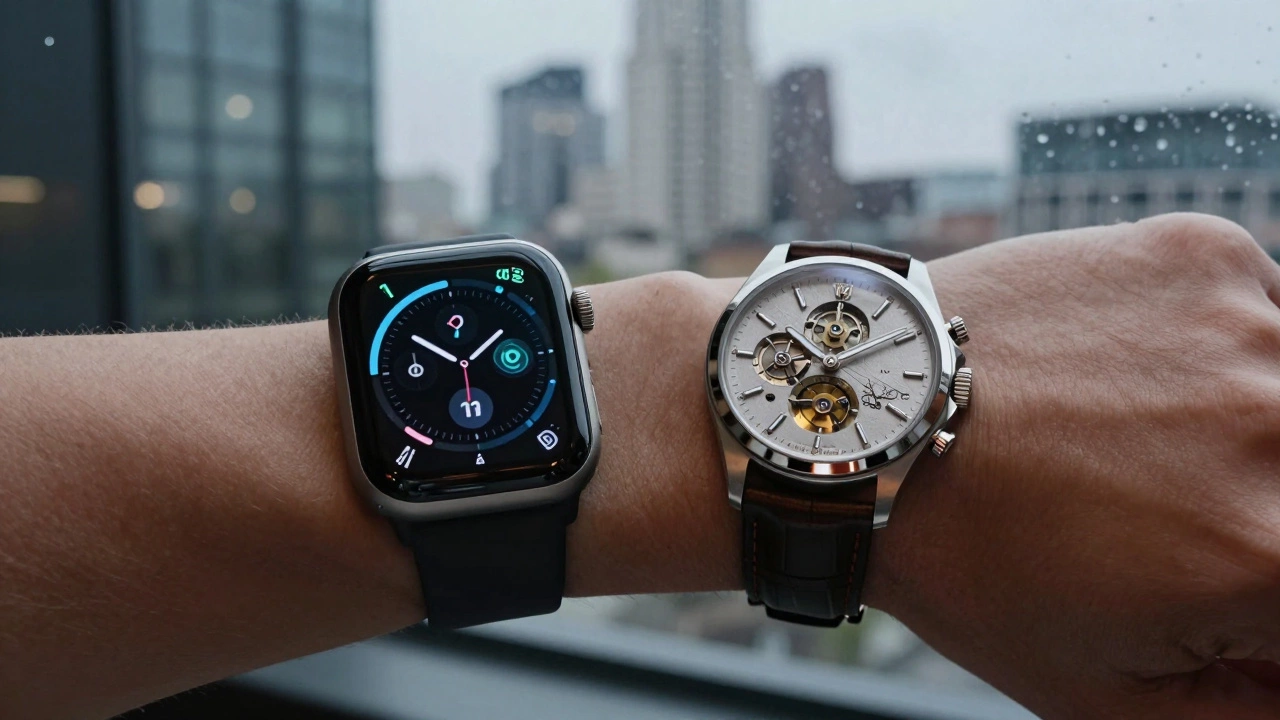
You check your wrist. Is it a notification? A heartbeat? Or just the quiet tick of a machine built fifty years ago? This split-second glance reveals more about your daily life than any social media profile could. The choice between smartwatches and luxury watches isn't just about fashion; it's about how you want to interact with the world.
In 2026, the gap between these two categories has narrowed in design but widened in purpose. One is a digital extension of your brain, tracking every metric of your existence. The other is a tangible heirloom, a statement of craftsmanship that defies the rapid obsolescence of modern tech. So, which one actually suits you? Let’s break down the reality of owning each, stripping away the marketing hype to look at what they do for your day-to-day life.
The Utility Argument: Why Smartwatches Win on Data
If your goal is optimization, there is no contest. Smartwatches are wearable computers designed to track health metrics, manage notifications, and control connected devices. By 2026, models like the Apple Watch Series 10 or the Samsung Galaxy Watch 7 have evolved from novelty gadgets into essential health monitors.
Think about the last time you felt 'off' but couldn't explain why. A smartwatch captures that data. It tracks your resting heart rate, blood oxygen levels, and sleep architecture with clinical precision. For many, this isn't vanity; it's early warning system. If you are training for a marathon or managing a chronic condition, the ability to see trends in your heart rate variability (HRV) or stress levels provides actionable insights that a doctor's annual visit simply cannot match.
Beyond health, consider convenience. You can pay for coffee, unlock your door, and answer calls without pulling out your phone. In a world where screen time is at an all-time high, a smartwatch allows you to stay connected while keeping your attention focused on the person standing in front of you. It filters the noise, letting you decide what deserves your full attention.
- Health Tracking: Continuous monitoring of heart rate, ECG, and sleep patterns.
- Connectivity: Instant access to messages, emails, and calendar alerts.
- Fitness Integration: Automatic workout detection and GPS mapping.
- Digital Payments: Contactless payments via NFC technology.
The Heritage Argument: Why Luxury Watches Endure
Now, imagine taking that same device off after three years. The battery is swollen, the screen is scratched, and the software is no longer supported. You toss it in a drawer. Now, imagine doing the same with a Luxury Watch, specifically a mechanical timepiece. You wind it up, clean the strap, and pass it to your child. It still works. That is the core value proposition of luxury horology.
A mechanical watch is a marvel of micro-engineering. Inside a brand like Rolex, Omega, or Patek Philippe, hundreds of tiny parts work in perfect harmony to keep time without a single drop of electricity. There is a tactile satisfaction in feeling the weight of the case, hearing the smooth sweep of the second hand, and understanding that you are wearing a piece of history. In 2026, as AI and automation dominate our lives, the human touch of craftsmanship becomes increasingly rare and valuable.
Luxury watches also serve as silent communicators. They signal status, taste, and appreciation for artistry without saying a word. Unlike a smartphone, which everyone carries, a watch is a personal accessory that reflects individual identity. Whether it’s a vintage Seiko or a new Audemars Piguet, the story behind the watch adds layers of meaning that a serial number on a circuit board never can.
Comparing Value: Depreciation vs. Appreciation
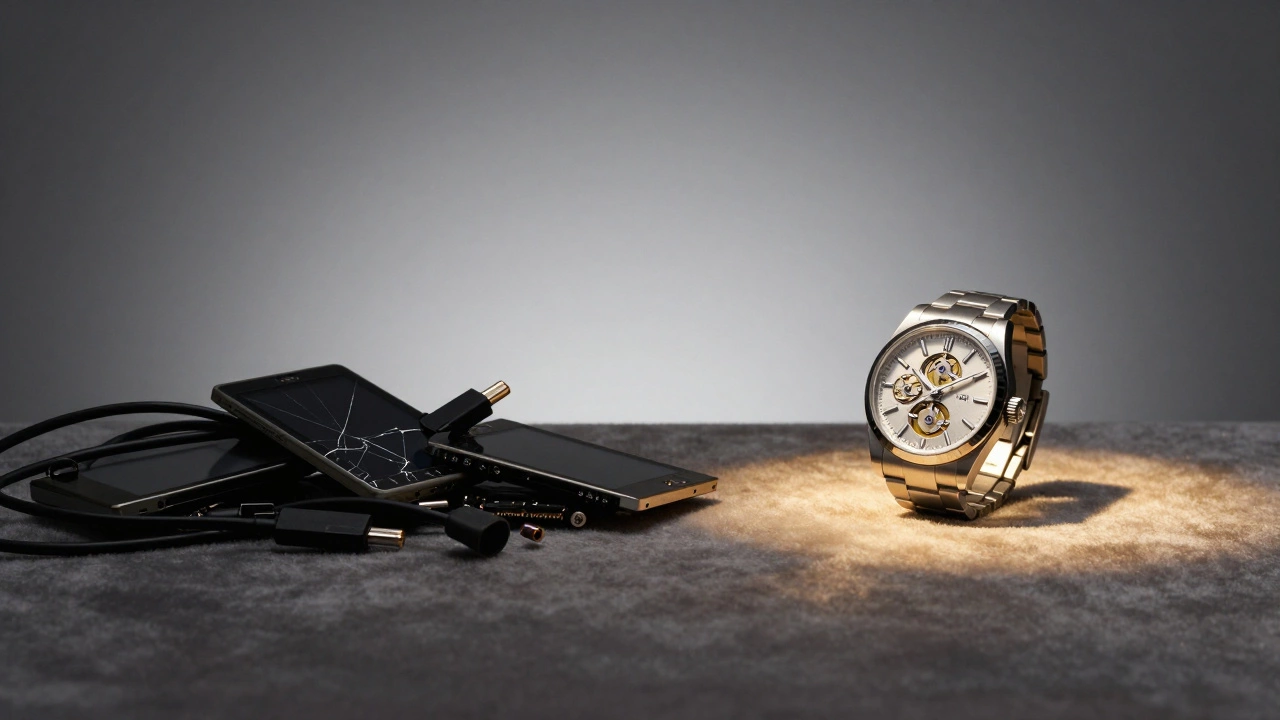
Let’s talk money, because that’s often the deciding factor. When you buy a flagship smartwatch for $800, you are buying a depreciating asset. Within months, a newer model will be announced with slightly better specs, rendering your current device 'last year’s tech.' Resale value drops sharply. You are paying for utility, not investment.
Luxury watches operate differently. While entry-level pieces may lose some value upon purchase, iconic models from brands like Rolex or Patek Philippe often hold their value or even appreciate over time. A well-maintained Submariner or Nautilus can be sold five years later for close to what you paid, sometimes more. You are buying an asset class that behaves more like fine art or real estate than consumer electronics.
| Feature | Smartwatch (e.g., Apple Watch) | Luxury Watch (e.g., Rolex) |
|---|---|---|
| Primary Function | Health & Connectivity | Timekeeping & Status |
| Lifespan | 3-5 years (tech obsolescence) | Decades (with maintenance) |
| Maintenance | Software updates, battery replacement | Periodic servicing ($500-$1000) |
| Resale Value | Rapid depreciation | Stable or appreciating |
| Power Source | Lithium-ion battery (daily charging) | Mainspring (manual/auto-wind) |
The Hybrid Middle Ground
Do you have to choose one extreme? Not necessarily. The market in 2026 offers compelling hybrids. Brands like TAG Heuer and Fossil have created smartwatches that mimic the aesthetic of traditional dress watches. Meanwhile, luxury brands like Garmin’s ultra-high-end lines offer rugged durability with premium materials.
However, true hybrids often struggle to satisfy purists. A smartwatch trying to look like a classic watch still requires daily charging and suffers from screen burn-in. A luxury watch with added smart features often compromises on water resistance or battery life. For most people, the best strategy is dual-wearing: a smartwatch for workouts and daily logistics, and a luxury piece for meetings, dates, and special occasions.
Decision Framework: Which One Fits Your Life?
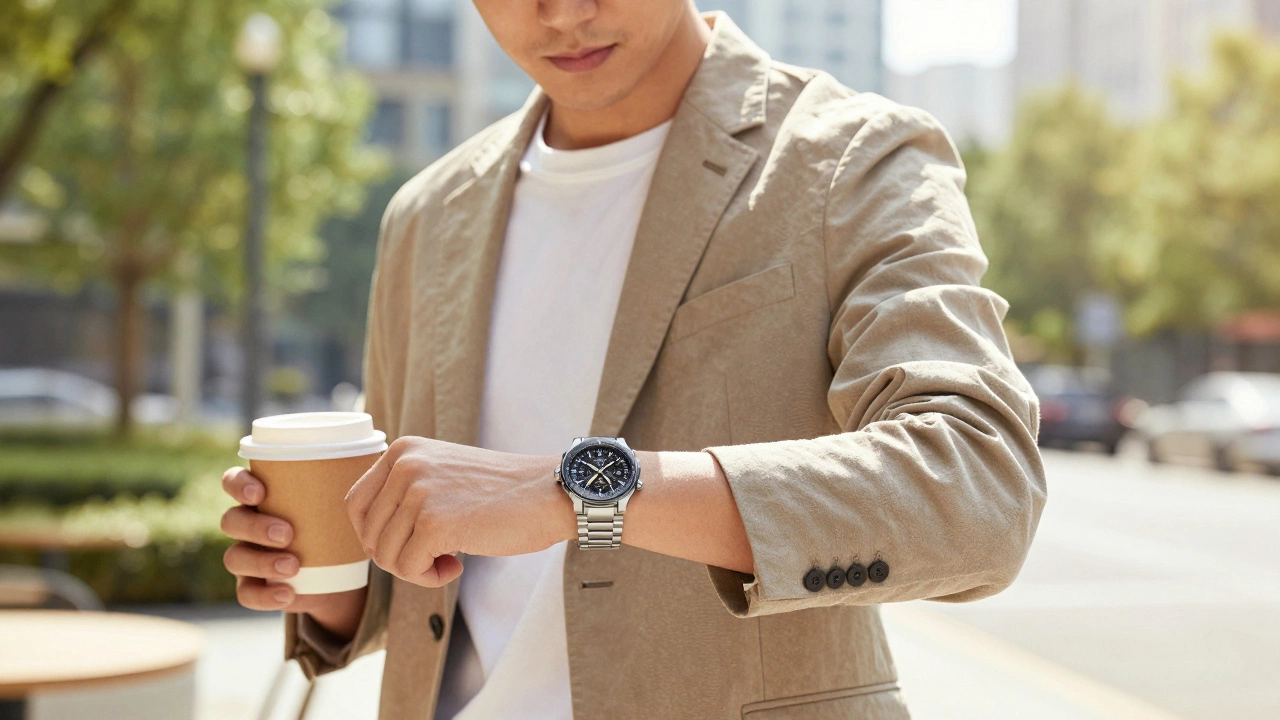
To make the right choice, ask yourself three questions. First, what is your primary relationship with time? Do you view it as a resource to be optimized, or a moment to be experienced? If you’re constantly checking metrics, a smartwatch aligns with your mindset. If you prefer to disconnect and focus on the present, a mechanical watch encourages mindfulness by removing distractions.
Second, consider your budget and long-term goals. Are you looking for a tool that solves immediate problems, or an object that holds sentimental and financial value over decades? Smartwatches are consumables; luxury watches are collectibles. If you plan to wear the same device for ten years, the mechanical option wins on durability alone.
Finally, think about your lifestyle. Do you swim, run, and hike regularly? A smartwatch is indispensable here. Do you attend formal events, work in client-facing roles, or value analog aesthetics? A luxury watch complements these contexts better. There is no wrong answer, only a mismatched one.
Troubleshooting Common Concerns
Many people worry that wearing a luxury watch looks pretentious. In reality, context matters. A understated steel sports watch paired with jeans and a t-shirt reads as confident, not arrogant. Conversely, wearing a bulky smartwatch to a black-tie event can seem out of place. Dress codes still exist, even in 2026.
Another concern is maintenance. Mechanical watches require servicing every 5-10 years, which can cost hundreds of dollars. Smartwatches need battery replacements every few years, plus potential screen repairs. Both require care, but the nature of that care differs. One is technical upkeep; the other is artisanal preservation.
Can I wear a smartwatch to a formal event?
It depends on the formality. For casual dinners or creative industries, a sleek smartwatch with a leather strap is acceptable. However, for black-tie events, weddings, or traditional business settings, a mechanical or quartz luxury watch is preferred. Smartwatches are generally viewed as tools, not accessories, in formal contexts.
Do luxury watches hold their value better than smartwatches?
Yes, significantly. Most smartwatches lose 50-70% of their value within the first year due to technological obsolescence. Iconic luxury watches from brands like Rolex, Patek Philippe, and Audemars Piguet often retain 80-100% of their value, with some models appreciating over time. Entry-level luxury watches may depreciate slightly but remain more stable than electronics.
What is the lifespan of a smartwatch vs. a mechanical watch?
A typical smartwatch lasts 3-5 years before becoming obsolete or requiring major repairs. Mechanical watches, if properly maintained, can last 50-100 years or more. They require periodic servicing every 5-10 years to replace oils and gaskets, but the core movement remains functional indefinitely.
Are hybrid watches a good compromise?
Hybrid watches offer a middle ground by combining analog dials with smart features like step counting and notifications. However, they often lack the advanced health metrics of pure smartwatches and the timeless appeal of pure mechanical watches. They are best suited for those who want basic connectivity without sacrificing traditional aesthetics.
Which watch type is better for fitness enthusiasts?
Smartwatches are far superior for fitness. They provide real-time heart rate monitoring, GPS tracking, workout analysis, and integration with fitness apps. While some luxury brands offer sports-oriented models, they rarely match the depth of data and convenience provided by dedicated smartwatches like the Apple Watch or Garmin Fenix series.