

Ever felt stuck because you thought you weren’t "good at" something? Maybe you gave up on learning guitar because you couldn’t play a song right away. Or avoided public speaking because you believed you were just "not the talking type". That’s not failure - that’s a fixed mindset talking. And it’s holding you back more than you realize.
What exactly is a growth mindset?
A growth mindset is the belief that your abilities, intelligence, and talents can be developed through effort, learning, and persistence. It’s not about being naturally gifted. It’s about believing that effort turns "I can’t do this" into "I can’t do this yet".
This idea was first studied by psychologist Carol Dweck at Stanford University in the 1990s. She noticed that some students thrived after failing tests, while others shut down. The difference wasn’t talent - it was belief. Students with a growth mindset saw mistakes as clues, not condemnations. They asked, "What can I learn from this?" instead of "Am I just bad at this?"
It’s not magic. It’s not positive thinking. It’s not telling yourself you’re amazing when you’re struggling. It’s simply choosing to see challenges as part of the process, not proof you’re inadequate.
How a fixed mindset holds you back
A fixed mindset believes abilities are set in stone. You’re either smart or you’re not. Good at math or you’re not. A natural leader or you’re not. This thinking creates fear - fear of looking dumb, fear of failure, fear of being judged.
Here’s what that looks like in real life:
- You avoid trying new things because you might fail.
- You quit when something gets hard - "This isn’t for me."
- You feel threatened by others’ success instead of inspired.
- You ignore feedback because it feels like criticism, not help.
- You hide mistakes instead of fixing them.
That’s not laziness. That’s fear in disguise. And it’s exhausting. People with fixed mindsets often burn out faster because they’re always trying to prove something instead of learning something.
What a growth mindset looks like in practice
Imagine two people learning to code. One says, "I’m terrible at this." The other says, "I haven’t figured this out yet." Who’s more likely to keep going? The second one.
Here’s how a growth mindset shows up daily:
- You try something hard - even if you’re scared you’ll mess up.
- You ask for help without feeling weak.
- You celebrate progress, not just perfection.
- You treat feedback like a map, not a verdict.
- You say "I’m not good at this... yet."
It’s not about being optimistic. It’s about being realistic. Everyone fails. Everyone struggles. The difference is what you do after.
Take a look at athletes. No one becomes an Olympic champion by being naturally talented. They train for hours, every day, through injuries, losses, and setbacks. Their mindset isn’t "I’m the best." It’s "I’m getting better." That’s growth.
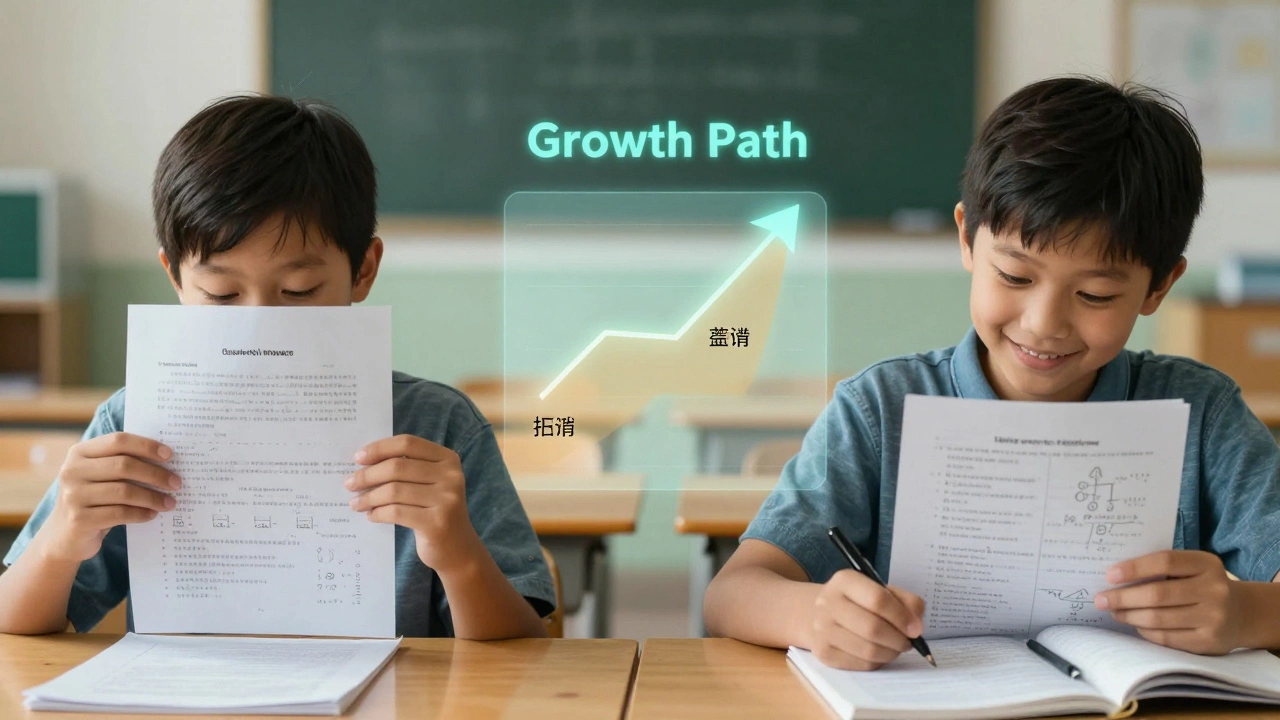
Why this matters more than ever in 2026
Technology, jobs, and even social norms are changing faster than ever. The skills you have today might be outdated in three years. The people who thrive aren’t the ones who knew everything yesterday - they’re the ones who keep learning.
Companies don’t just hire for skills anymore. They hire for adaptability. Schools are shifting from memorizing facts to solving real problems. Parents are teaching kids to embrace mistakes as part of learning, not something to avoid.
If you’re stuck in a fixed mindset, you’re not just limiting your potential - you’re falling behind. Not because you’re slow. But because you’re afraid to move.
How to start building a growth mindset today
You don’t need a big change. You need small, consistent shifts in how you talk to yourself.
- Replace "I can’t" with "I can’t yet". Just adding that one word changes everything. It opens the door to effort.
- Track your effort, not just results. Write down what you tried, not just what you achieved. "I practiced 10 minutes every day this week" is a win.
- Ask for feedback - and mean it. Instead of saying "Do you think I’m any good?" say "What’s one thing I could improve?"
- Find role models who struggled. Read stories of people who failed before they succeeded. Elon Musk lost money. J.K. Rowling got rejected 12 times. They didn’t give up because they believed growth was possible.
- Celebrate mistakes. When you mess up, say out loud: "That’s data. Now I know what not to do next time."
These aren’t tricks. They’re habits. And habits take time. But they compound.

What this doesn’t mean
A growth mindset isn’t about pretending everything’s fine when it’s not. It’s not toxic positivity. It’s not saying "Just believe in yourself!" and ignoring real obstacles.
It’s not about being perfect. It’s about being persistent.
It’s not about ignoring talent. Some people learn faster. But talent without effort fades. Effort without talent grows.
And it’s not a personality trait you’re born with. It’s a choice you make - over and over again.
Real people, real change
One teacher in Leeds started asking her students to write a "mistake journal" - every Friday, they wrote down one thing they got wrong and what they learned. At first, kids were embarrassed. After six weeks, they were competing to see who had the most interesting mistake.
A man in his 50s, who thought he was "too old to learn", started taking online language classes. He failed his first test. Instead of quitting, he watched the videos again, wrote notes, and tried again. Six months later, he was having coffee with a native Spanish speaker in Barcelona.
These aren’t extraordinary stories. They’re ordinary people choosing to believe they could change.
Final thought: Growth isn’t a destination
A growth mindset isn’t something you reach. It’s something you live. It’s waking up and choosing to learn, even when it’s hard. It’s showing up when you’re tired. It’s asking for help when you’re scared. It’s looking at failure and saying, "Okay, what’s next?"
You don’t need to be brilliant. You just need to be willing to keep going.
Is a growth mindset the same as being optimistic?
No. Optimism is hoping for the best. A growth mindset is about taking action, even when the outcome is uncertain. You can be realistic about how hard something is and still believe you can improve with effort.
Can you have a growth mindset in some areas and a fixed mindset in others?
Absolutely. Most people do. You might believe you can get better at cooking but think you’re just "not a math person." That’s normal. The goal isn’t to be perfect in every area - it’s to notice when you’re slipping into fixed thinking and gently shift back.
Does having a growth mindset mean I have to be good at everything?
No. It means you’re willing to try, even if you’re not good at it yet. You can love painting and still be bad at it - and that’s okay. Growth mindset isn’t about becoming the best. It’s about becoming better than you were yesterday.
Can a growth mindset fix everything?
No. Life has limits - time, resources, health, luck. But a growth mindset helps you make the most of what you have. It won’t make you rich overnight, but it will help you build skills that lead to better opportunities over time.
How long does it take to develop a growth mindset?
There’s no timeline. Some people shift in weeks. Others take years. It’s not a switch you flip - it’s a muscle you build. The more you practice noticing fixed thoughts and replacing them with learning-focused ones, the more natural it becomes.
If you’re reading this and thinking, "I’ve always been this way," - good. That means you’re ready to change. Because the moment you question your own limits, you’ve already started growing.