

Key Strength Finder Quiz
Find Your Key Strength
This assessment guides you through the 4-step process from the article to discover your natural strength. Answer honestly to get personalized insights.
Your Key Strength Insight
Why this matters
Your key strength isn't something you need to build—it's already within you. When you use it consistently, you'll experience greater confidence, reduced stress, and more meaningful opportunities.
Next step: Start small by applying this strength for 5 minutes daily. Notice how your energy changes when you use it authentically.
Most people spend years trying to fix what’s wrong with them. They read books about discipline, follow routines, track habits, and still feel stuck. Why? Because they’re working backward. Real change doesn’t start with fixing weaknesses-it starts with knowing your key strength.
What Exactly Is Key Strength?
Your key strength isn’t just something you’re good at. It’s not your ability to organize your desk or remember birthdays. It’s the one thing you do naturally, effortlessly, and with energy-even when you’re tired. It’s the skill or trait that makes others say, ‘You’re the only one who could’ve done that.’
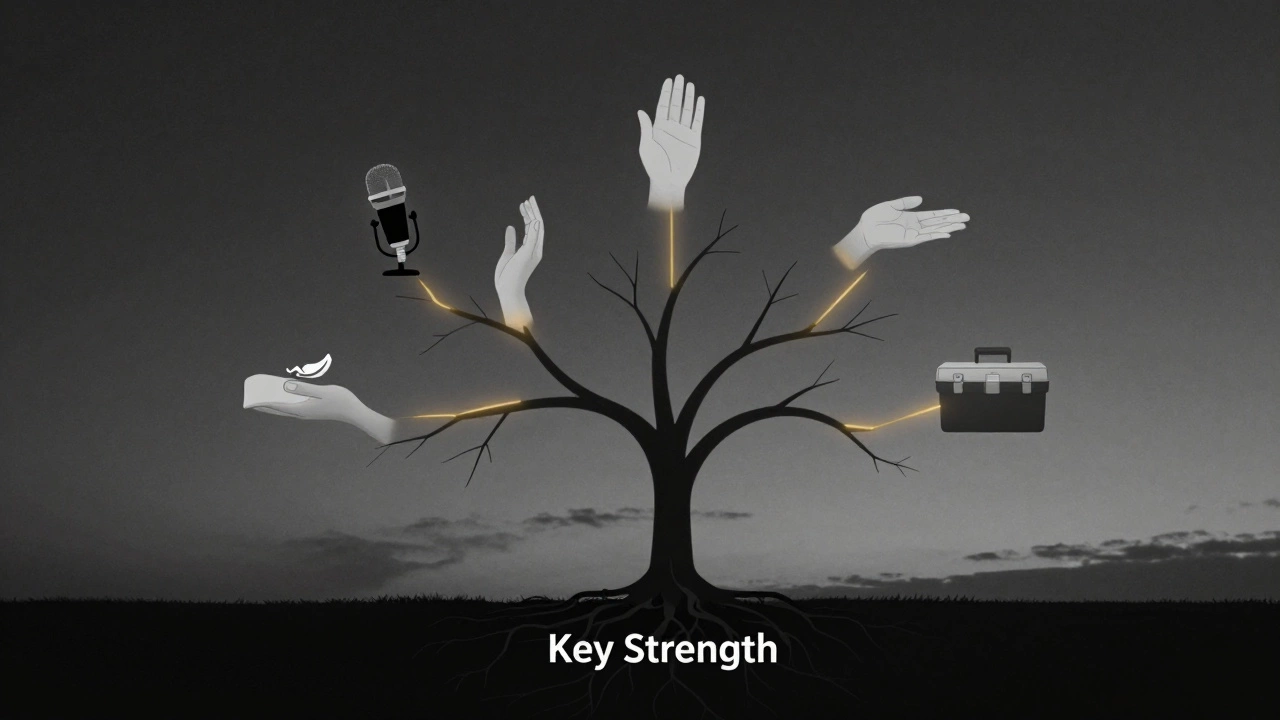
Think of it like a muscle you’ve been using since childhood. You didn’t train it. You didn’t force yourself. You just kept doing it because it felt right. Maybe you’re the person friends always turn to for advice. Or the one who can calm down a room with a single comment. Or the one who finishes projects others abandon. That’s your key strength.
Psychologists call this ‘signature strength.’ Martin Seligman, a founder of positive psychology, studied thousands of people and found that those who used their top strengths daily were significantly happier and more resilient. Not because they were perfect-but because they were operating in their natural zone.
Why Most People Miss Their Key Strength
You might be thinking, ‘I don’t have one.’ But that’s not true. You just haven’t looked the right way.
Most people confuse key strength with talent. Talent is something you’re born with. Key strength is something you keep choosing, even when it’s hard. Talent fades without use. Key strength grows with use.
Here’s why you miss it:
- You focus on what you’re bad at. School, work, and society train you to fix weaknesses. But your key strength isn’t found in your failures-it’s hidden in your flow.
- You assume it’s obvious. If it feels easy to you, you think everyone can do it. That’s why you don’t value it.
- You associate strength with loudness. The quiet person who listens deeply? That’s a key strength. The introvert who writes thoughtful emails? That’s a key strength.
One client I worked with-let’s call her Lisa-thought her key strength was ‘being productive.’ She tracked every hour. But when we looked closer, she spent hours doing tasks she hated. Then one day, she mentioned how coworkers always asked her to mediate their arguments. She didn’t even think it was a skill. But she had a gift for reading emotions, calming tension, and finding middle ground. That was her key strength. Once she started using it at work, her stress dropped 60% in six weeks.
How to Find Your Key Strength (A Simple 4-Step Test)
You don’t need a test or a coach. You just need to look back.
- Look for moments you lost track of time. When did you last do something and forget to check your phone? What were you doing? Writing? Helping? Building? Teaching? Those moments aren’t accidents.
- Ask three people who know you well. Don’t ask, ‘What am I good at?’ Ask, ‘What’s something I do that you wish more people could do?’ Write down their answers. Look for patterns.
- Notice what you do without being asked. Do you always fix broken things? Do you always send a follow-up message? Do you always explain things simply? Those actions aren’t chores-they’re signals.
- Check your emotional fuel. What tasks leave you energized? What drains you? Your key strength doesn’t tire you. It recharges you.
One man in Leeds, a retired mechanic, didn’t think he had any strengths. He’d spent 40 years fixing cars. But when we asked his grandkids, they said, ‘Grandad always turns every mistake into a story.’ He didn’t just fix engines-he turned failures into lessons with humor and warmth. That’s his key strength: turning hardship into meaning.

What Happens When You Use Your Key Strength
Using your key strength isn’t just about feeling good. It changes how you show up in the world.
- You become more confident-not because you’re perfect, but because you know what you bring. You stop comparing yourself to others who do things differently.
- You attract the right opportunities. People notice when you’re in your element. They start asking you to lead, speak, or help. That’s not luck. That’s alignment.
- You handle stress better. When you’re using your strength, your brain releases dopamine and serotonin. Stress hormones drop. You’re not just coping-you’re thriving.
- Your weaknesses shrink. You don’t need to be great at everything. You just need to be great at one thing-and let others cover the rest.
A teacher in Manchester told me she hated grading papers. She was burnt out. But she loved listening to students talk about their lives. She started letting them record voice notes instead of writing essays. Her students’ engagement shot up. Her stress dropped. She didn’t fix her weakness-she built her life around her strength.
What Your Key Strength Is Not
Let’s clear up some myths.
- It’s not your job title. You can be an accountant and your key strength is storytelling. You can be a nurse and your key strength is patience.
- It’s not your personality. Being ‘nice’ isn’t a strength. Being able to make someone feel heard-that’s a strength.
- It’s not something you can copy. You can’t become someone else’s key strength. That’s why trying to be ‘more like Elon’ or ‘more like Marie Kondo’ always fails.
- It’s not permanent. Your key strength can evolve. But it won’t disappear. It just gets clearer with time.
How to Build a Life Around Your Key Strength
Knowing your key strength is step one. Using it daily is step two.
- Start small. If your strength is helping people feel understood, spend five minutes a day listening to someone without fixing their problem.
- Protect it. Say no to tasks that drain you. Even if they pay well. Even if they look impressive.
- Share it. Don’t hide your strength out of modesty. When you use it openly, you give others permission to find theirs.
- Measure impact, not output. Don’t ask, ‘How many emails did I send?’ Ask, ‘How many people felt seen today?’
One woman in Leeds quit her corporate job after realizing her key strength was helping people reframe failure. She started a free weekly podcast called ‘Oops, Not Failure.’ Within a year, it had 20,000 listeners. She didn’t become famous. She became useful. And that’s the real power of key strength.
Key Strength Isn’t About Being Better-It’s About Being Real
You don’t need to be the strongest, fastest, or smartest. You just need to be you-fully, deeply, and consistently.
That’s the quiet revolution. Not grinding harder. Not hustling more. But recognizing what makes you, you. And then choosing to lean into it.
When you live from your key strength, you stop chasing validation. You start creating value. And that’s the only kind of success that lasts.
Can my key strength change over time?
Yes, but not often. Your key strength evolves as you grow, but it rarely disappears. For example, someone whose strength was ‘being the peacemaker’ in their family might later use that same skill to lead teams or mediate conflicts at work. The core ability stays the same-it just finds new places to show up.
What if I have more than one key strength?
Most people have one dominant key strength and two supporting ones. The dominant one is the one that gives you the most energy and feels most natural. The others are useful, but they don’t light you up the same way. Focus on the top one first. The others will naturally support it.
How do I know if I’m using my key strength at work?
Ask yourself: Do I look forward to doing this task? Do I lose track of time while doing it? Do people come to me for this? If you answer yes to all three, you’re likely using your key strength. If you’re dreading it, even if you’re good at it, you’re probably using a skill-not your strength.
Can I develop a key strength if I don’t have one?
No-you already have one. Everyone does. You might not have noticed it yet, but it’s there. It’s not something you build from scratch. It’s something you uncover. Look back at moments you felt alive. That’s your clue.
What if my key strength doesn’t pay well?
Many key strengths don’t come with a paycheck at first. But they attract opportunities. If your strength is helping people feel calm, you can start a blog, offer free workshops, or consult part-time. Money follows usefulness. Start by giving your strength away. The right people will find you.