
Work-Life Energy Balance Calculator
Based on the "Smartphone Battery" analogy from the article, this tool helps you visualize how much energy you have left for your partner after a day of work. Remember: Physical presence is cheap; emotional presence is expensive.
You know the feeling. It’s 8:30 PM on a Tuesday. You’re still answering emails, your brain is fried, and you just snapped at your partner for leaving a mug in the sink. That tiny moment wasn’t about the mug. It was about the fact that you haven’t had a genuine conversation with them in three days. We treat our careers like marathons we must win, but we treat our relationships like hobbies we can pause whenever work gets busy. Spoiler alert: you can’t pause people. If you stop investing time and energy, they drift away.
Work-life balance isn't about splitting your day into perfect 50/50 halves. It’s about managing energy and attention so that neither your career nor your personal life suffers from neglect. Most people fail because they confuse "being present" with "being physically there." Sitting on the same sofa while scrolling through Slack messages isn’t quality time. It’s co-existing. To fix this, you need to shift from managing time to managing focus. Here is how you actually make it work without quitting your job or breaking up.
The Myth of Perfect Balance
Let’s kill the idea that balance means everything feels easy all the time. In reality, balance is dynamic. Some weeks, work will demand 60 hours because you have a launch deadline. Other weeks, your relationship might need more care because one of you is going through a health scare or family crisis. The problem arises when "busy weeks" become your permanent state. Research from the Chartered Institute of Personnel and Development (CIPD) suggests that chronic overworking leads to decreased productivity and higher turnover, not just unhappy partners.
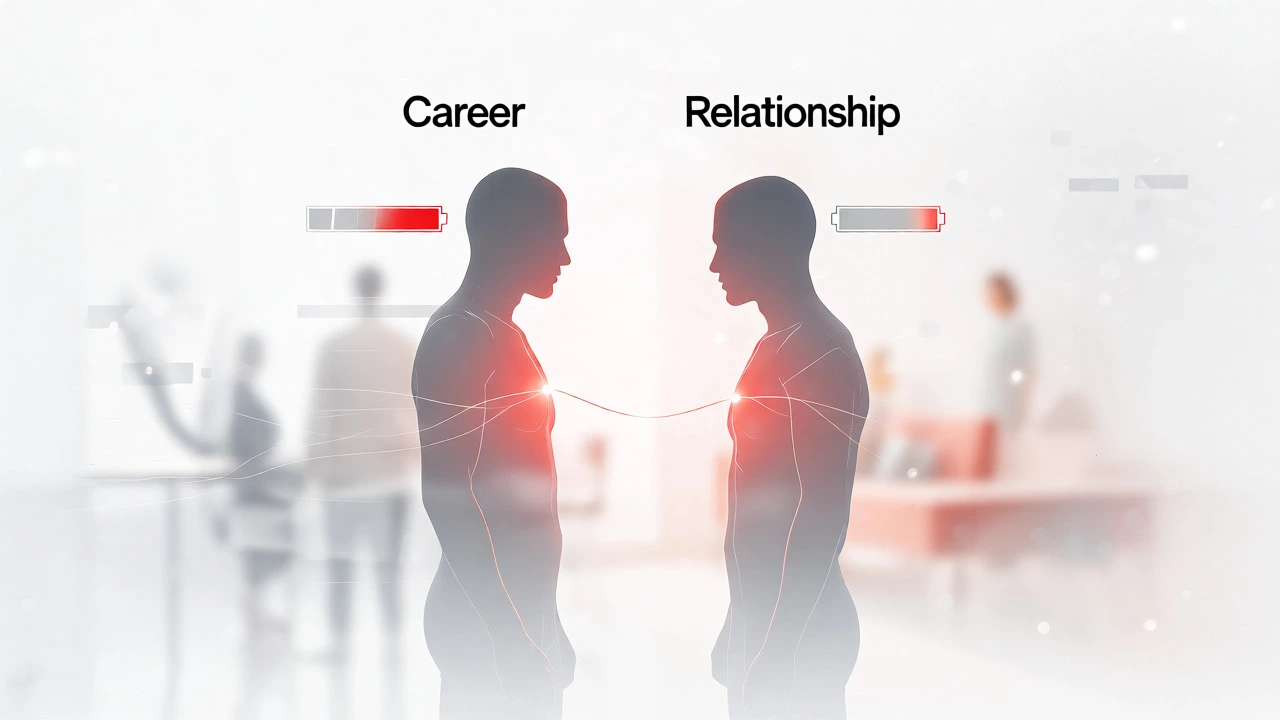
Think of your energy like a smartphone battery. You have two main apps running in the background: Career and Relationship. If you drain the battery by 90% on work by 6 PM, you have almost nothing left for the second app. You’ll charge overnight, sure, but if you do this every night, both apps eventually crash. The goal isn’t to never use the battery; it’s to ensure you don’t let it hit zero before you’ve engaged with the things that matter most outside the office.
Redefining Presence Over Proximity
Physical presence is cheap. Emotional presence is expensive. Many professionals think that spending ten hours together in the same house counts as bonding. It doesn’t. If you are mentally rehearsing tomorrow’s presentation while your partner talks about their day, you aren’t listening. You’re waiting for your turn to speak or escape.
To fix this, try the "Phone Down" rule. When you are with your partner, keep your phone out of sight-not just face down, but in another room. This simple act signals that the person in front of you is more important than the notification buzzing in your pocket. A study published in the Journal of Social and Personal Relationships found that even the mere presence of a mobile phone during a conversation lowers perceived empathy and closeness. Put the device away. Look them in the eye. Ask questions. Listen to the answers instead of formulating your response while they talk.
Creating Boundaries That Actually Stick
Boundaries are useless if they only exist in your head. You need to communicate them clearly to your employer and your partner. Ambiguity breeds resentment. If you tell your boss you’re available until 7 PM but answer emails at 10 PM, you teach them that your boundaries are flexible suggestions, not rules.
- Hard Stops: Set a non-negotiable end time for workdays where possible. If you finish at 6 PM, close the laptop. Do not reopen it.
- Transition Rituals: Create a small routine that signals the switch from "work mode" to "home mode." This could be changing clothes, taking a short walk, or listening to a specific playlist during your commute. This helps your brain decompress.
- Protected Time: Block out specific evenings or weekends as "relationship time" in your calendar. Treat these blocks with the same respect you’d give a client meeting. You wouldn’t cancel a CEO meeting to watch TV, right?
Communicate these boundaries to your partner too. If you have a high-stress project due next week, say so now. "I’m going to be distant for five days, but I want us to have a big date night on Friday." This sets expectations and prevents them from interpreting your stress as rejection.
The Power of Micro-Connections
You don’t need grand gestures to keep a relationship alive. Grand gestures are nice, but they are unsustainable if your schedule is packed. What sustains long-term connection is a series of micro-connections throughout the day. These are tiny moments of acknowledgment that say, "I see you, and I care about you," without requiring hours of free time.
Send a text mid-day that has no logistical purpose. Not "Did you buy milk?" but "Saw this meme and thought of you." Leave a sticky note on the bathroom mirror. Kiss goodbye properly, not a rushed peck on the cheek. These small actions accumulate interest in your relationship account. When you’re tired, these deposits make it easier to withdraw patience later. Conversely, if you never make deposits, you’ll go bankrupt emotionally at the first sign of conflict.
Navigating Different Work Styles
Conflict often stems from mismatched definitions of "busy." One partner might work 40 hours but feel drained by office politics, while the other works 50 hours but loves the flow state of coding. Neither is "right." You need to understand each other’s energy costs.
| Factor | High Drain Scenario | Low Drain Scenario | Mitigation Strategy |
|---|---|---|---|
| Commute | Unpredictable traffic, crowded trains | Remote work or bike-friendly routes | Use commute time for podcasts or calls, not email. |
| Task Switching | Frequent interruptions, meetings | Deep work blocks, minimal notifications | Batch administrative tasks to reduce cognitive load. |
| Emotional Labor | Client-facing roles, crisis management | Solo analytical tasks | Schedule "decompression" time before engaging with partner. |
If your partner is in a high-emotional-labor job, they may need silence after work, not immediate conversation. If yours is a low-social-intensity role, they might crave connection immediately. Discuss this. Ask: "What do you need from me when you’re exhausted?" Then honor that request, even if it’s different from what you want.

Quality Over Quantity: Making Time Count
When you do have time together, make it count. Avoid "passive hanging out" where you watch Netflix in silence unless that is explicitly what you both agreed to enjoy. Instead, aim for active engagement. Cook a meal together. Go for a hike. Play a board game. Engage in an activity that requires interaction.
Plan ahead. Spontaneity is romantic, but reliability builds trust. Schedule a recurring "date" that happens regardless of workload. It could be Tuesday dinner or Sunday morning coffee. Knowing that this time is safe and protected reduces anxiety for both parties. It creates a rhythm. When work chaos hits, you have an anchor to hold onto.
Dealing with Burnout Before It Breaks You
Burnout is the enemy of intimacy. When you are burned out, you become irritable, detached, and unable to empathize. Your partner becomes collateral damage. Recognizing the signs early is crucial. Are you sleeping poorly? Do you feel cynical about your job? Do you lack energy for sex or conversation?
If you spot these signs, take action before your relationship takes the hit. Take a sick day. Use your vacation allowance. Sometimes, stepping back professionally allows you to step forward personally. Remember, your career is a marathon, but your marriage or partnership is a lifetime commitment. Sacrificing the latter for short-term gains in the former is rarely worth it.
Is it normal to feel guilty when prioritizing work?
Yes, it is very common. Guilt often stems from societal pressure to be "present" parents or partners constantly. However, guilt is not a strategy. Acknowledge the feeling, then assess if your current workload is sustainable. If yes, communicate your temporary focus to your partner. If no, negotiate changes at work. Action cures guilt better than worrying does.
How do I handle a partner who doesn't understand my work demands?
Education is key. Invite them into your world briefly. Explain why a certain deadline matters or why a client is difficult. Often, partners resent work because it feels abstract and arbitrary. Making the stakes concrete helps them empathize. Also, ask them specifically what makes them feel neglected, rather than guessing.
Does remote work help or hurt work-life balance?
It depends entirely on boundaries. Remote work eliminates commutes, which saves time, but it blurs physical lines between office and home. Without strict routines, you may work longer hours because the laptop is always open. Successful remote workers create a dedicated workspace and stick to hard start/stop times to prevent "always-on" culture.
What if my partner also works long hours?
This requires intentional scheduling. You cannot rely on spontaneity. Plan your limited overlap time carefully. Focus on high-quality interactions rather than duration. Even 20 minutes of undivided attention is better than two hours of distracted co-presence. Consider hiring help for chores to free up your scarce shared time for connection rather than logistics.
How do I disconnect from work mentally?
Create a shutdown ritual. Write down tomorrow’s top three tasks, close your tabs, and physically leave your workspace. Change your clothes. Engage in a non-work hobby immediately. This signals to your brain that the workday is done. Mindfulness practices or brief meditation can also help reset your mental state before interacting with your partner.