

Personal Time Budget Calculator
Your time is like money—protect it wisely. This tool helps you visualize how you spend your time each week between relationship, personal activities, and other responsibilities. Balance isn't about equal time—it's about making sure you have enough for yourself.
Balance Assessment
Key Insights
Research shows maintaining personal interests outside relationships increases satisfaction in both your personal life and partnership. Try these tips:
- Schedule one personal hour this week
- Protect your morning quiet time like a budget
- Use the "I feel... I need..." communication formula
- Check in monthly without pressure
Ever feel like you’re disappearing in your relationship? You’re not alone. Many people wake up one day and realize they’ve stopped doing the things they love-hiking, reading, hanging out with friends-just to keep the peace or make their partner happy. But that’s not balance. That’s erosion. Real balance isn’t about splitting time 50/50. It’s about creating space where both you and your relationship can breathe.
Stop Trying to Be Perfect
You don’t need to be available 24/7 to prove you care. The myth of the perfect partner says you should drop everything when they text, remember every anniversary, and always know how they’re feeling. But humans aren’t robots. You have moods, energy dips, and personal goals. Trying to be flawless doesn’t strengthen your relationship-it exhausts you. And when you’re drained, resentment creeps in.
Instead, aim for consistency, not perfection. A quick text saying, “Thinking of you,” means more than a long speech you rehearsed because you felt guilty. Showing up reliably, even in small ways, builds trust better than grand gestures that leave you empty.
Protect Your Personal Time Like a Budget
Think of your time like money. You wouldn’t spend all your income on one thing and expect to survive. Your time is the same. If you give every hour to your partner, your friends, or your job, you’ll have nothing left for yourself. And when you have nothing left, you start to resent the very things you once loved.
Start by identifying three non-negotiables in your personal life. Maybe it’s 30 minutes of morning quiet with coffee, a weekly gym session, or Friday night calls with your sister. Write them down. Treat them like appointments you can’t miss. If your partner asks you to cancel, say, “I really want to be there for you, but this is my time to recharge. Can we plan something after?” Most people will respect that-if you’re clear and calm about it.
Emotional Boundaries Aren’t Cold-They’re Healthy
Boundaries get a bad rap. People think setting limits means being distant or unloving. But boundaries are the opposite. They say, “I love you enough to be honest about what I need.”
For example, if your partner constantly vents about work and you’re already emotionally drained, you can say: “I care about what you’re going through, but I need to be able to talk about my day too. Can we take turns?” This isn’t shutting them out-it’s making space for mutual support.
Healthy boundaries also mean saying no. If you’re invited to a party and you’re exhausted, it’s okay to say no. You don’t owe anyone your energy. And if your partner reacts badly, that’s a sign they need to work on their own emotional independence-not that you’re being selfish.
Don’t Let Your Identity Shrink
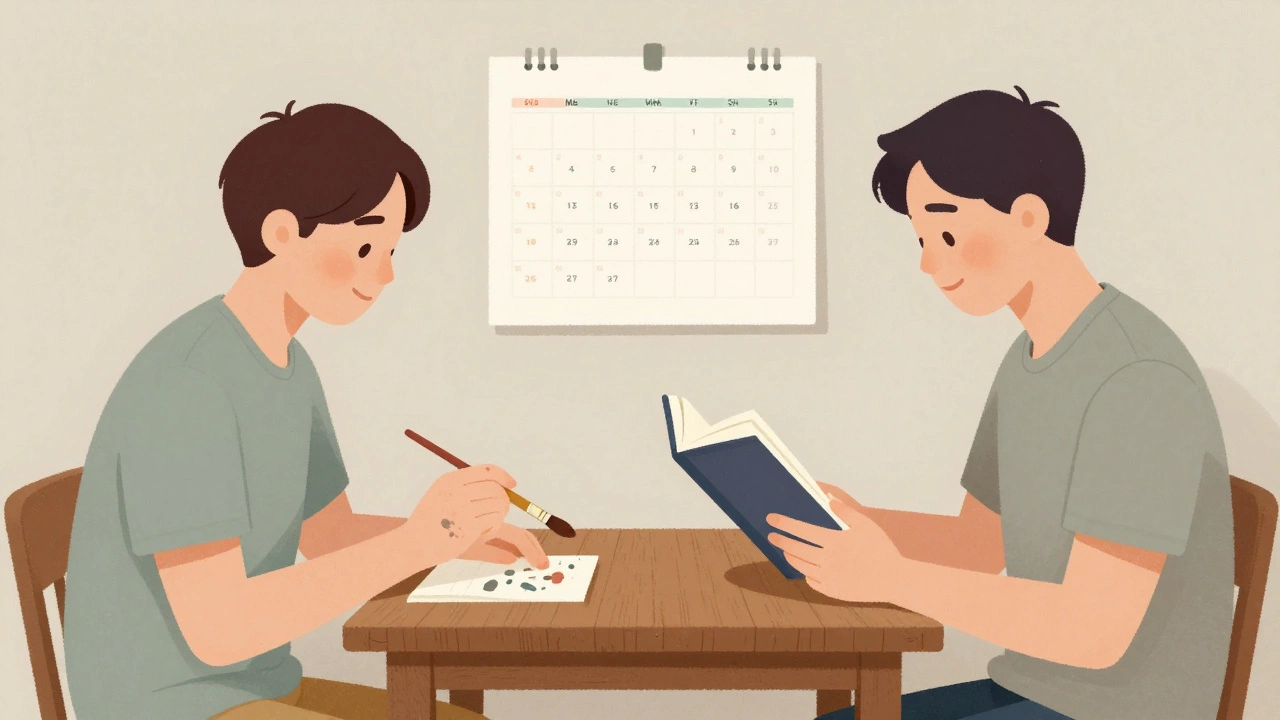
When you fall deeply into a relationship, it’s easy to start defining yourself by it. “I’m just Sarah’s partner.” “I’m the guy who always cooks.” But who are you outside of that role? If you can’t answer that, you’ve lost something important.
Reconnect with your old hobbies. Maybe you used to paint, play guitar, or write poetry. Dust it off. Try a new class-pottery, dance, coding. It doesn’t have to be big. Even one hour a week doing something just for you rebuilds your sense of self. And here’s the surprising part: when you’re more whole on your own, you show up better in your relationship.
Studies from the University of California show that people who maintain personal interests outside their romantic relationships report higher satisfaction in both their personal life and their partnership. It’s not about avoiding each other-it’s about bringing more of yourself to each other.
Communicate Without Accusing
Most conflicts about balance come from unspoken expectations. You assume your partner knows you need more alone time. They assume you’re fine with skipping your book club. Then, when you’re quiet or irritable, they get confused-or worse, hurt.
Use this simple formula: “I feel ______ when ______. I need ______.”
- “I feel overwhelmed when I don’t get any quiet time after work. I need 45 minutes to myself before we talk.”
- “I feel disconnected when we don’t plan dates. I need us to schedule one night a week just for us.”
This isn’t about blame. It’s about clarity. And it’s way more effective than silent resentment or passive-aggressive sighs.
Check In, Not Just When It’s Broken
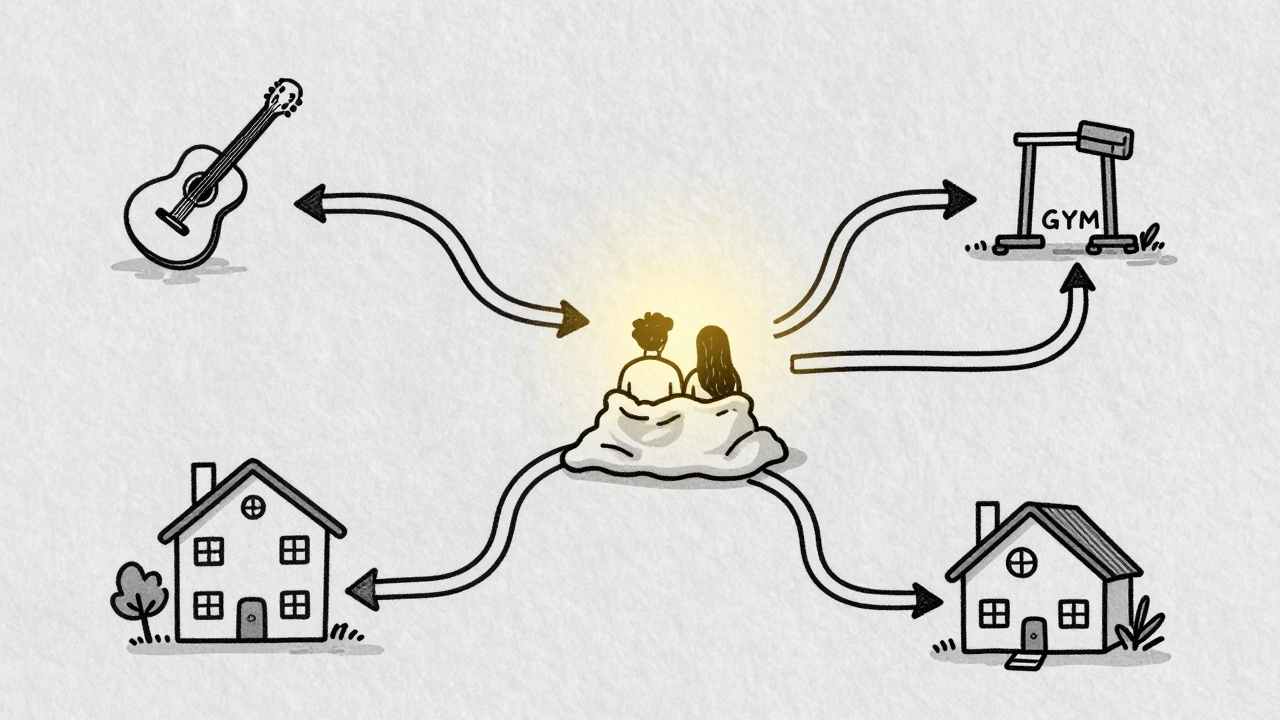
You don’t wait until your car’s engine is smoking to check the oil. Relationships work the same. Set a monthly check-in-no agenda, no pressure. Just ask:
- “How are you feeling about how we’re balancing things?”
- “Is there anything you’ve been wanting to do that we haven’t made room for?”
- “Do you feel like you’re still you, or are you starting to lose yourself?”
These conversations shouldn’t be crisis meetings. Make them calm, regular, and kind. You’ll catch small imbalances before they turn into big resentments.
It’s Not About Time-It’s About Presence
Two hours together while scrolling on your phones isn’t quality time. Five minutes of real, uninterrupted connection is.
Put your phone in another room. Look them in the eye. Ask, “What’s something small that made you happy today?” Listen like you mean it. That’s the kind of presence that rebuilds connection without needing hours.
Balance doesn’t mean equal hours. It means both people feel seen, heard, and free to be themselves-even when they’re together.
Start Small. Stay Consistent.
You don’t need to overhaul your life tomorrow. Pick one thing:
- Schedule one personal hour this week.
- Say no to one thing that drains you.
- Reconnect with one old hobby.
Then do it again next week. Slowly, you’ll rebuild your sense of self-and your relationship will get stronger because of it. Not because you gave more. But because you became more.