

Most relationship problems don’t start with big fights. They start with silence. A glance that doesn’t mean anything. A text left unanswered. A sentence cut off before it’s finished. Over time, those small moments build walls. And before you know it, you’re living in the same house, eating the same meals, but talking like strangers. The truth is, good communication isn’t about being perfect. It’s about showing up-consistently, honestly, and with patience.
Start by listening like your relationship depends on it
Most people think communication means talking more. It doesn’t. It means listening better. Real listening isn’t waiting for your turn to speak. It’s hearing what’s underneath the words. When your partner says, "I’m fine," are you hearing "I’m not fine"? If you’ve been together for more than a few months, you’ve probably heard that line before. The difference between a connection that grows and one that fades is whether you pause long enough to ask: "What’s really going on?" Try this: next time they open up, don’t jump to fix it. Don’t offer advice. Don’t say "I know how you feel." Just say, "Tell me more." Then stay quiet. Let the silence stretch. People often fill it with the real stuff-the fear, the shame, the unspoken worry. That’s where the truth lives.
Use "I" statements, not blame games
"You never listen to me." "You always cancel plans." Those sentences don’t invite change. They invite defensiveness. Your brain goes into fight mode the second you hear "you always." And once that happens, no amount of logic will help.
Instead, try: "I feel left out when plans get canceled last minute." Or: "I worry that I’m not being heard when I talk and you check your phone." This shifts the focus from fault to feeling. It doesn’t excuse bad behavior, but it opens the door for understanding. You’re not attacking. You’re sharing your experience. And that’s a lot harder to ignore.
Studies from the Gottman Institute show that couples who use "I" statements in conflict are 60% more likely to resolve issues without resentment. It’s not magic. It’s just smarter.
Schedule regular check-ins-yes, really
You wouldn’t drive a car for 10,000 miles without an oil change. Why do we expect relationships to run on autopilot? Regular check-ins aren’t therapy sessions. They’re quick, honest updates. Ten minutes, twice a week. No phones. No distractions.
Here’s a simple format that works:
- What’s one thing I did this week that made you feel loved?
- What’s one thing I could do better?
- What’s something you’re feeling nervous or excited about?
You don’t need to solve anything. Just listen. And share. These check-ins stop small frustrations from becoming big resentments. They remind you both that you’re on the same team.
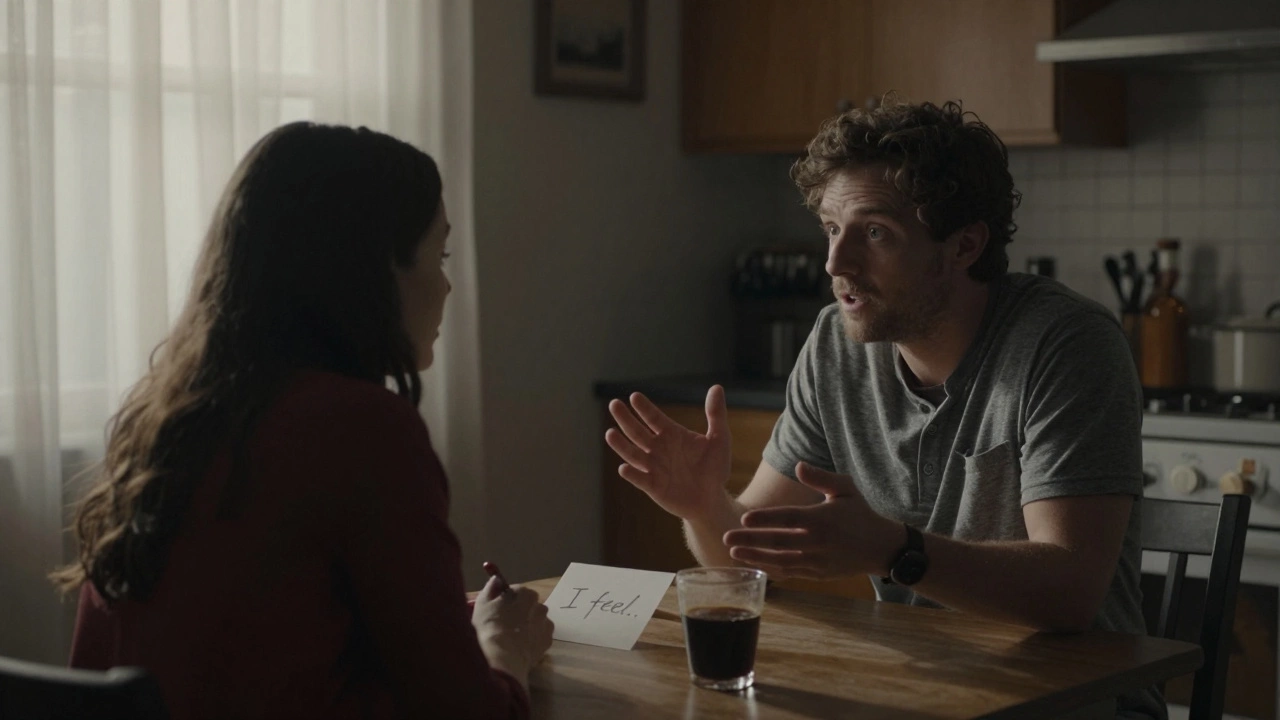
Learn your partner’s communication style
Not everyone talks the same way. Some people need space to process. Others need to talk it out immediately. Some say what they mean. Others hide behind sarcasm or silence. If you don’t know how your partner communicates, you’ll keep misreading their signals.
Ask them: "When you’re upset, what helps you feel heard?" Then pay attention. Do they shut down? Do they ramble? Do they need a walk before they can talk? Once you know their pattern, you can adjust yours. You don’t have to change who you are. But you can learn how to meet them where they are.
One couple I know-both in their late thirties-used to argue every Sunday. She needed to talk right away. He needed to sit alone for hours. They finally figured out: she’d say, "I need to talk when I’m ready," and he’d say, "I’ll come to you when I’m ready." No pressure. No guilt. Just respect. And the fights stopped.
Don’t let silence become resentment
Stonewalling is one of the biggest killers of relationships. It’s not just being quiet. It’s shutting down emotionally. Turning away. Giving the cold shoulder. It feels like punishment, but it’s usually fear in disguise.
If you’re the one shutting down, ask yourself: Am I afraid of being misunderstood? Afraid of saying the wrong thing? Afraid of the fight getting worse? Those fears are real. But they don’t serve you. The longer you stay silent, the more your partner starts to believe you don’t care.
If you’re the one on the receiving end, don’t demand they talk. That just makes them dig in deeper. Instead, say: "I miss you. I’m not mad. I just want to feel connected again." That’s not a demand. It’s an invitation. And invitations are harder to refuse.
Speak up before you explode
Most big fights start with a hundred small things you didn’t say. The dishes weren’t done. The anniversary was forgotten. They talked over you again. You let it go. Then again. And again. Until one day, you snap. "You always do this!" And now you’re in a full-blown argument about something that started three weeks ago.
Fix it before it festers. Say it when it’s small. "Hey, I noticed the bills haven’t been paid yet. Can we talk about it?" Or: "I felt a little hurt when you didn’t reply to my message. I know you’re busy, but I need to know I’m still on your mind." It’s not nagging. It’s maintenance.
Think of communication like brushing your teeth. You don’t wait until your gums bleed. You do it daily.

Physical touch matters more than you think
Words are powerful. But touch is language too. A hand on the arm. A hug that lasts a second too long. Sitting close on the couch. Holding hands while walking. These aren’t romantic gestures. They’re reassurances.
Research from the University of California shows that couples who touch each other at least five times a day report higher relationship satisfaction-even if they don’t talk much. Touch says: "I’m here. I’m not going anywhere." It bypasses the mind and speaks straight to the heart.
Start small. Hold their hand while you walk to the car. Put your arm around them when you’re watching TV. Don’t wait for a special moment. Just do it. Because connection isn’t built in grand gestures. It’s built in the quiet, everyday moments.
Apologize like you mean it
Saying "sorry" isn’t enough. A real apology has four parts:
- Ownership: "I was wrong to yell at you last night."
- Impact: "I know it made you feel small and unheard."
- Change: "I’m going to take a breath before I speak next time."
- Repair: "I’ll make you coffee tomorrow morning."
No "but." No excuses. No "I’m sorry you felt that way." That’s not an apology. That’s a deflection.
One man I spoke to said his marriage improved overnight after he started using this structure. "I used to think apologizing meant I was weak," he told me. "Turns out, it made me stronger. Because she started trusting me again."
It’s not about being right. It’s about being together.
Communication in relationships isn’t a debate. It’s a dance. Sometimes you lead. Sometimes you follow. Sometimes you step on each other’s toes. And sometimes, you just need to pause, laugh, and try again.
The goal isn’t to never argue. It’s to argue in a way that brings you closer, not farther apart. It’s not about winning. It’s about understanding. It’s about showing up-even when it’s hard.
Start with one thing today. Listen without interrupting. Say "I feel..." instead of "You always..." Touch them when you don’t have to. Apologize when you’re wrong. Don’t wait for the perfect moment. The perfect moment is now.
What if my partner doesn’t want to talk?
It’s common for one person to avoid talking, especially if they’ve been hurt before. Don’t force it. Instead, create safety. Be calm. Be consistent. Say things like, "I’m not trying to fight. I just want to understand." Give them space, but don’t disappear. Show up quietly. Over time, they’ll learn you’re not a threat. You’re a safe place.
How do I know if we need couples therapy?
If you’ve tried the basics-listening, using "I" statements, regular check-ins-and you’re still stuck in the same patterns, it’s time. Therapy isn’t a sign of failure. It’s a tool. Think of it like going to a mechanic when your car keeps making a weird noise. You don’t wait until it breaks. You get help early. Many couples see improvement in just 4-6 sessions. The key is showing up together.
Can communication improve after years of silence?
Yes. But it takes patience. Years of silence create deep habits. You can’t undo them overnight. Start with tiny steps: one honest conversation a week. One moment of touch. One apology. Don’t look for a miracle. Look for progress. A study from the University of Washington found that couples who rebuilt communication after 10+ years of distance saw emotional connection improve by 70% within 6 months-not because they changed everything, but because they started showing up differently.
What if we argue about the same thing over and over?
Repeating arguments usually mean you’re not addressing the root issue. For example, if you keep fighting about chores, the real issue might be feeling unappreciated. Ask: "What’s underneath this?" Write down what you’re really feeling each time it comes up. You’ll likely see a pattern. Then say: "I think we keep arguing about this because I feel like I’m doing more. Is that true for you too?" That opens a new door.
Is it normal to feel awkward when trying to talk better?
Absolutely. Trying new ways of talking feels strange at first. Like learning a new language. You might feel clumsy. You might say the wrong thing. That’s okay. Growth is messy. The goal isn’t perfection. It’s practice. Every awkward moment is a step forward. Keep going. Your partner will notice-even if they don’t say it.