Eisenhower Matrix Prioritizer
Add a Task
Your Priorities
- No tasks yet
- No tasks yet
- No tasks yet
- No tasks yet
You check your phone. Three emails. A Slack ping. A calendar invite for a meeting that could have been an email. You haven’t even started your real work yet, and it’s already 9:15 AM. Sound familiar? Most busy professionals are not suffering from a lack of effort; they are drowning in fragmentation. The modern workplace is designed to interrupt you, not help you focus. If you feel like you’re running on a treadmill that’s speeding up while you stay in place, the problem isn’t your speed. It’s your strategy.
Managing time when you are constantly pulled in five different directions requires more than just buying a planner. It demands a shift in how you view your energy, your attention, and your boundaries. We aren't looking for quick hacks here. We are looking for systems that actually hold up under pressure.
The Myth of Multitasking and the Power of Deep Work
Let’s start with the biggest lie in professional culture: multitasking. Science has settled this debate years ago. When you switch between tasks, you don’t do them simultaneously; you pay a "switching cost." Every time you glance at a notification, your brain takes about 23 minutes to fully refocus on the previous task. If you check your email every ten minutes, you are effectively working at half capacity all day.
To counter this, you need to embrace Deep Work, a concept popularized by Cal Newport. This is the ability to focus without distraction on a cognitively demanding task. In an economy that increasingly rewards those who can master hard things quickly, deep work is becoming increasingly rare and increasingly valuable. Shallow work-emails, meetings, administrative tasks-is easy to replicate. Deep work is what drives career growth.
- Schedule blocks: Treat deep work like a meeting with your CEO. Block out two hours in the morning where you do nothing but your most important project.
- Eliminate friction: Put your phone in another room. Close all browser tabs except the one you need. Use apps like Freedom or Cold Turkey to block social media during these hours.
- Communicate availability: Set your status to "Do Not Disturb" and let your team know you are in focus mode until noon.
The Eisenhower Matrix: Deciding What Actually Matters
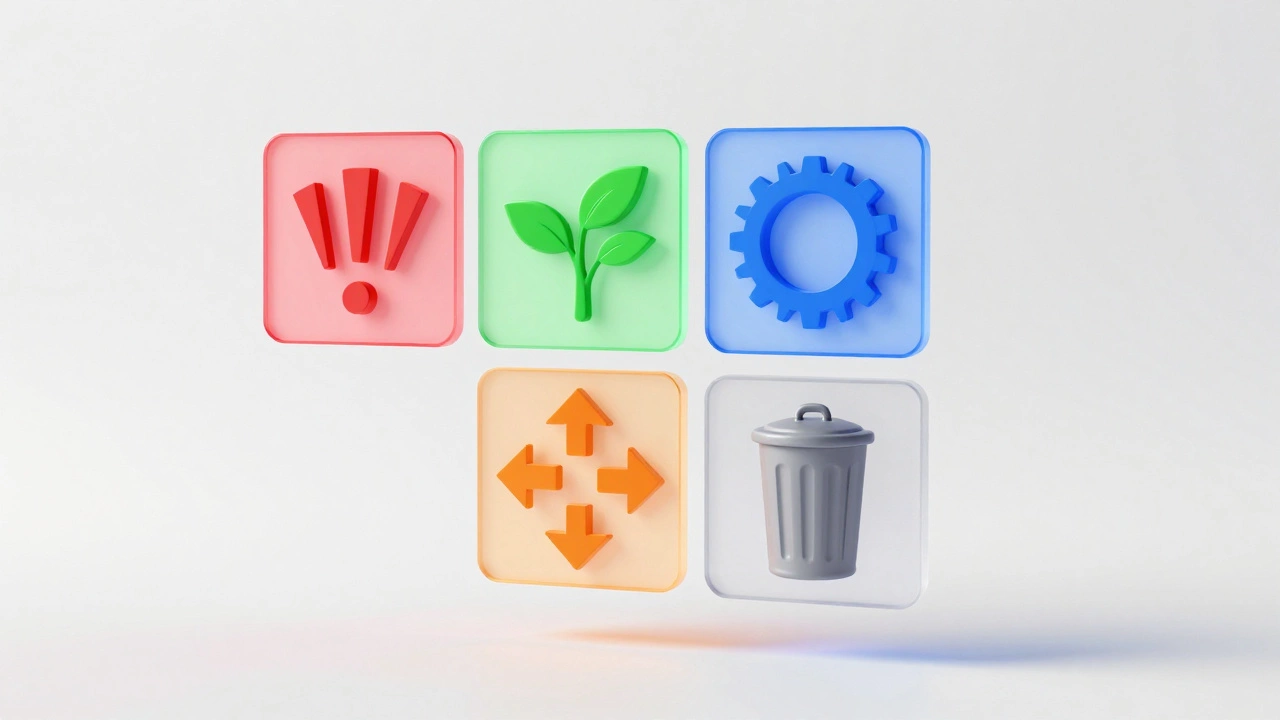
If deep work is how you execute, the Eisenhower Matrix is how you decide what to execute. Created by Dwight D. Eisenhower, this framework helps you distinguish between what is urgent and what is important. Most professionals live in the "Urgent but Not Important" quadrant, putting out fires that someone else started. That is reactive living, not strategic leadership.
| Quadrant | Characteristics | Action |
|---|---|---|
| Q1: Urgent & Important | Crises, deadlines, pressing problems | Do it now |
| Q2: Not Urgent & Important | Planning, relationship building, skill development | Schedule it (This is where success lives) |
| Q3: Urgent & Not Important | Interruptions, some emails, most meetings | Delegate it |
| Q4: Not Urgent & Not Important | Doomscrolling, busywork, trivial pursuits | Delete it |
Your goal as a professional is to spend as much time as possible in Quadrant 2. This is proactive time. It’s where you plan your quarter, learn a new skill, or build relationships. If you ignore Q2, those tasks eventually become crises in Q1, and you are stuck reacting forever. Review your to-do list every Sunday night. Move items into these boxes. Be ruthless about deleting Q4.
Energy Management Over Time Management
Here is a truth that most productivity gurus miss: time is finite, but energy is renewable. You can have eight hours free, but if you are exhausted, you will accomplish less in those eight hours than a focused colleague does in two. Circadian rhythms dictate that most people have peak cognitive performance in the late morning and a slump in the early afternoon.
Stop trying to force high-level creative work during your biological low points. Instead, align your tasks with your energy levels.
- Morning Peak: Tackle your hardest, most complex tasks. No email, no calls. Just pure output.
- Afternoon Slump: Schedule low-energy tasks here. Answer emails, file expenses, attend informational meetings. These tasks require little creative juice.
- Evening Recovery: Disconnect. Sleep is not a luxury; it is a productivity tool. Seven to eight hours of sleep improves memory consolidation and decision-making capabilities.
If you are fighting your biology, you will lose. Work with your body, not against it.
Batching and Automation: Reducing Cognitive Load
Every time you context-switch, you burn mental fuel. Task batching is the practice of grouping similar tasks together to minimize this switching cost. Instead of checking email continuously, check it three times a day: once at 10 AM, once at 1 PM, and once at 4 PM. During those windows, process everything. Delete, delegate, or respond. Then close the inbox.
Combine batching with automation. Tools like Zapier or Make can connect your apps so data moves automatically. For example, when a new lead comes in via your website, automatically add them to your CRM and send a welcome email. You shouldn’t be manually copying and pasting data. That is waste. Identify repetitive tasks that take more than 10 minutes a week and ask yourself: "Can a script or tool do this for me?"
The Art of Saying No
You cannot manage your time if you do not control your commitments. Every "yes" you give to something minor is a "no" to something major. This is the core of Boundary setting. High-performing professionals protect their time aggressively. They understand that their primary job is to deliver high-value results, not to be available 24/7.
Saying no doesn’t mean being rude. It means being clear. Try this script: "I’d love to help, but my plate is full with [Project X] right now. I won’t be able to give this the attention it deserves. Can we revisit this next month?" Or simply, "That doesn’t align with my current priorities." Most people respect clarity. Vague excuses like "I’m really busy" invite negotiation. Clear boundaries do not.

Meeting Hygiene: Cutting the Fat
Meetings are the single biggest thief of time in corporate environments. A study by Harvard Business Review found that knowledge workers spend nearly 60% of their workweek in meetings, yet report that only 40% of that time is productive. You need to audit your calendar.
- No agenda, no meeting: If an invitation doesn’t include a clear objective and desired outcome, decline it.
- Shorten durations: Default to 25-minute meetings instead of 30, or 50 instead of 60. The buffer time allows for bathroom breaks and transition time.
- The "Two-Pizza" Rule: Jeff Bezos’ rule states that a meeting should not have more people than can be fed by two pizzas. Large groups dilute accountability and extend duration.
- Async first: Ask yourself, "Could this be an email or a Loom video?" If yes, do that instead.
Weekly Reviews: The System That Keeps the System Running
Strategies fail because they are abandoned after a week. To make time management stick, you need a feedback loop. The Weekly Review, a cornerstone of the Getting Things Done (GTD) methodology, is non-negotiable. Spend 30 minutes every Friday afternoon or Sunday evening reviewing your week.
- Capture: Empty your head. Write down every open loop, idea, or task lingering in your mind.
- Clarify: Process these items. Are they actionable? If yes, what is the next physical step?
- Organize: Place tasks into your calendar or project lists.
- Reflect: Look at last week. What went well? What distracted you? Adjust your system for the upcoming week based on reality, not hope.
This ritual prevents small tasks from snowballing into anxiety. It gives you a clean slate to start each week with intention rather than reaction.
What is the best time management technique for beginners?
For beginners, the Pomodoro Technique is often the easiest entry point. It involves working for 25 minutes followed by a 5-minute break. This builds the habit of focused intervals without feeling overwhelming. Once comfortable, you can expand these intervals to 50 minutes of work and 10 minutes of rest.
How do I handle constant interruptions from colleagues?
Use visual cues like headphones to signal "do not disturb." Additionally, schedule specific "office hours" where you are available for questions. Train your team to batch their questions for those times unless it is a genuine emergency. Consistency is key; if you answer immediately every time, they will never learn to wait.
Is it better to use a digital app or a paper planner?
It depends on your workflow. Digital tools like Todoist or Microsoft To Do offer searchability, reminders, and integration with calendars. Paper planners reduce screen time and can improve memory retention through writing. Many professionals use a hybrid approach: digital for scheduling and notifications, paper for daily brainstorming and top-three priorities.
How can I stop procrastinating on difficult tasks?
Break the task down into absurdly small steps. Instead of "Write Report," write "Open document" and "Write title." Starting is often the hardest part. Also, use the "Five-Minute Rule": commit to working on the task for just five minutes. Often, the momentum carries you forward, and you’ll continue longer than planned.
Does time management help with work-life balance?
Yes, significantly. Effective time management creates clear boundaries between work and personal life. By completing high-priority tasks efficiently during work hours, you reduce the likelihood of taking work home. It also frees up mental space, allowing you to be fully present with family and friends without worrying about unfinished tasks.