
Mindset Self-Assessment Quiz
Answer these 5 scenarios honestly to see where your current mental filters might be operating.
Your Mindset Profile
Key Takeaways:
You’ve probably heard the word "mindset" thrown around in business meetings, self-help books, and Instagram quotes. It sounds like a buzzword, doesn’t it? But here’s the thing: your mindset isn’t just a vague feeling about life. It’s the operating system running in the background of every decision you make. If your OS is buggy, no amount of new apps (skills) will fix the crashes.
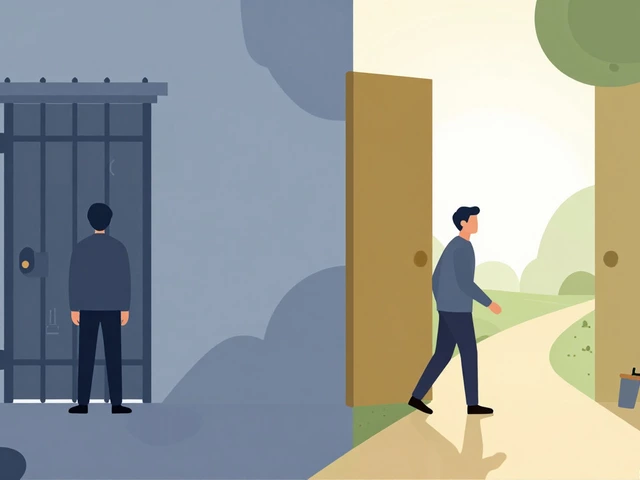
So, what is mindset in life? It is the collection of beliefs and attitudes that shape how you interpret events and react to challenges. Think of it as a filter. Two people can face the exact same problem-say, getting fired from a job. One sees it as a catastrophic failure that proves they’re incompetent. The other sees it as a painful but necessary pivot toward a better career. The event is identical. The reality they experience is completely different because their mental filters are different.
The Core Definition: More Than Just Positive Thinking
A lot of people confuse mindset with optimism. They think having a "good mindset" means ignoring bad news or forcing a smile when everything is falling apart. That’s not it. Real mindset work is about cognitive flexibility. It’s about recognizing that your initial reaction to a situation is often based on old programming, not current facts.
Psychologist Carol Dweck coined the terms Growth Mindset the belief that abilities can be developed through dedication and hard work and Fixed Mindset the belief that intelligence and talent are static traits. This distinction changed how we understand learning. If you believe your brain is like a muscle that gets stronger with use, you’ll tackle hard problems differently than someone who believes their brain is a fixed container that only holds so much water.
When you ask what mindset is in life, you’re really asking about agency. Do you feel like things happen to you, or do you feel like you happen to things? A proactive mindset assumes responsibility for outcomes, even when circumstances are unfair. A passive mindset blames external forces. Neither view changes the past, but one gives you power over the future.
Fixed vs. Growth: Spotting the Difference
To understand what mindset is in life, you need to see how these two opposing frameworks play out in real scenarios. It’s not always obvious. You might have a growth mindset at work but a fixed mindset in relationships. Here’s how they typically differ:
| Scenario | Fixed Mindset Reaction | Growth Mindset Reaction |
|---|---|---|
| Encountering a challenge | Avoids it to prevent looking stupid. | Embraces it as an opportunity to learn. |
| Obstacles in the way | Gives up easily; sees obstacles as proof of limits. | Persists despite setbacks; sees obstacles as puzzles to solve. |
| Effort required | Sees effort as fruitless if you’re truly talented. | Sees effort as the path to mastery. |
| Criticism received | Ignores useful feedback or takes it personally. | Learns from criticism and adjusts strategy. |
| Success of others | Feels threatened by others’ success. | Finds lessons and inspiration in others’ success. |
Notice that the growth mindset isn’t about being happy all the time. It’s about resilience. When a person with a growth mindset fails, they don’t say, "I am a failure." They say, "I failed this attempt." There’s a huge semantic difference there. One defines identity; the other describes an event.
Where Does Your Mindset Come From?
If mindset shapes your life, where did yours come from? It wasn’t handed to you at birth fully formed. It was built brick by brick through your environment. Early childhood experiences play a massive role. If your parents praised you only for grades rather than effort, you likely developed a fixed mindset around intelligence. You learned that being "smart" was more important than learning.
School systems often reinforce this too. Standardized testing creates a culture where answers are either right or wrong. There’s little room for experimentation. If you got a C, you were labeled "average" or "struggling," and that label stuck. Over time, you stopped trying hard things because the risk of confirming that label felt too high.
Cultural factors matter too. In some cultures, humility is prized so highly that admitting you want to improve feels like arrogance. In others, hustle culture makes rest feel like laziness. Both extremes can distort a healthy mindset. Recognizing these influences helps you separate your true self from societal conditioning. You start to see which beliefs are actually yours and which ones you inherited.

The Science Behind Neuroplasticity
Some skeptics argue that mindset is just fluff. But neuroscience backs it up. The concept of Neuroplasticity the brain's ability to reorganize itself by forming new neural connections throughout life proves that our brains change physically based on how we think and act. Every time you practice a new skill, neurons fire together and wire together. This isn’t metaphorical; it’s biological.
Research shows that people who believe their brains can grow actually perform better on difficult tasks. Why? Because they persist longer. They don’t quit when the task becomes hard. They assume the difficulty is part of the learning process. This persistence leads to more practice, which leads to actual skill acquisition. It’s a self-fulfilling prophecy, but in a good way.
Conversely, stress hormones like cortisol can shrink the prefrontal cortex-the part of the brain responsible for planning and decision-making-if left unchecked. A fixed mindset often triggers higher stress responses because every mistake feels like a threat to identity. A growth mindset buffers against this stress by framing mistakes as data. Less stress means better cognitive function. So, changing your mindset literally changes your brain chemistry.
How to Shift Your Mindset
Knowing what mindset is in life is useless if you can’t change it. The good news is that mindset shifts aren’t overnight miracles. They’re gradual practices. Here’s how to start moving from fixed to growth:
- Add the word "yet": When you catch yourself saying, "I’m not good at public speaking," add "yet." It seems small, but it opens up a timeline. It implies possibility.
- Reframe failure: Instead of asking, "Why did I fail?" ask, "What did I learn?" This shifts the focus from judgment to analysis.
- Seek constructive criticism: Ask friends or colleagues for specific feedback. Don’t ask, "How am I doing?" Ask, "What’s one thing I could do better next time?" This trains your brain to value improvement over validation.
- Celebrate effort, not just results: Did you study for three hours? Acknowledge that discipline. Even if the test score wasn’t perfect, the habit was reinforced.
It also helps to curate your input. If you surround yourself with people who complain constantly, their fixed mindset becomes contagious. Mirror neurons in our brains cause us to mimic the emotional states of those around us. Spend time with people who talk about ideas, projects, and improvements rather than gossip and complaints.

Mindset in Relationships and Career
How does this apply outside of school or sports? Let’s look at relationships. In a fixed mindset relationship, partners believe compatibility is either present or absent. If you clash, it means you’re "not meant to be." This leads to giving up quickly. In a growth mindset relationship, conflicts are seen as opportunities to understand each other better. Partners work on communication skills. They accept that love requires maintenance, not just initial attraction.
In your career, mindset determines your trajectory. Companies today value adaptability more than raw knowledge. Knowledge expires; technology changes. If you cling to the idea that you already know enough, you become obsolete. A growth mindset professional actively seeks out new tools and skills. They volunteer for projects outside their expertise. They view layoffs or industry shifts as chances to reinvent themselves, not as death sentences.
Consider the story of J.K. Rowling. She faced twelve rejections before Harry Potter was published. A fixed mindset would have said, "Twelve publishers said no; clearly, my writing is bad." A growth mindset said, "The market hasn’t found the right fit yet; I need to keep trying." The outcome wasn’t just luck. It was persistence fueled by belief in her ability to eventually succeed.
Common Pitfalls to Avoid
Be careful not to fall into the "false growth mindset" trap. This happens when people pretend to have a growth mindset while still holding onto fixed behaviors. For example, praising children for being "smart" instead of "hardworking" reinforces fixed thinking. Or assuming that simply wanting to improve is enough. Wanting isn’t working. You must engage in deliberate practice.
Another pitfall is toxic positivity. Sometimes, life is genuinely hard. Grief, loss, and trauma require acknowledgment, not just reframing. A healthy mindset allows space for negative emotions. It says, "This hurts, and I’m sad," followed by, "And I will figure out how to move forward." Suppressing pain doesn’t help; processing it does.
Finally, don’t expect linear progress. You will have days where you revert to old habits. You’ll snap at a colleague or avoid a difficult conversation. That’s normal. Mindset is a practice, not a destination. Each time you catch yourself slipping, you strengthen your awareness. That awareness is the first step toward lasting change.
Can mindset really change physical health?
Yes. Studies show that people with a positive outlook on aging live significantly longer than those with negative views. Stress reduction linked to a resilient mindset lowers inflammation and improves immune function. Your mental state directly impacts physiological processes.
Is a growth mindset the same as optimism?
No. Optimism expects good outcomes regardless of action. A growth mindset focuses on the process of improvement. You can be realistic about difficulties while believing you have the capacity to overcome them through effort and strategy.
How long does it take to change your mindset?
There is no fixed timeline. Some people notice shifts in weeks, while others take years. Consistency matters more than speed. Regular reflection and conscious practice accelerate the rewiring of neural pathways.
Can you have both fixed and growth mindsets?
Absolutely. Most people are a mix. You might have a growth mindset in your hobby but a fixed mindset in your finances. Identifying specific areas where you hold back helps target your efforts effectively.
Does mindset affect financial success?
Significantly. A fixed mindset may fear investing or negotiating salary due to fear of rejection or failure. A growth mindset views financial literacy as a learnable skill and sees negotiation as a collaborative problem-solving exercise, leading to better economic outcomes.