
Wardrobe Compatibility Checker
Test Your 3-3-3 Wardrobe
Select one item from each category to see which combinations work together according to the 3-3-3 rule.
3 Tops
3 Bottoms
3 Outerwear
Compatible Combinations
Most men own too many clothes-and still can’t find anything to wear. You’ve been there: open the closet, stare at a mountain of shirts, jeans, and jackets, and end up wearing the same three things on repeat. The problem isn’t lack of options. It’s lack of strategy.
The 3-3-3 Rule for Clothes Explained
The 3-3-3 rule for clothes is a minimalist wardrobe system designed to help men build a functional, stylish, and stress-free closet with just nine core items. It’s not about owning less for the sake of it. It’s about owning the right things-pieces that work together, fit well, and can be mixed and matched for any occasion.
Here’s how it breaks down:
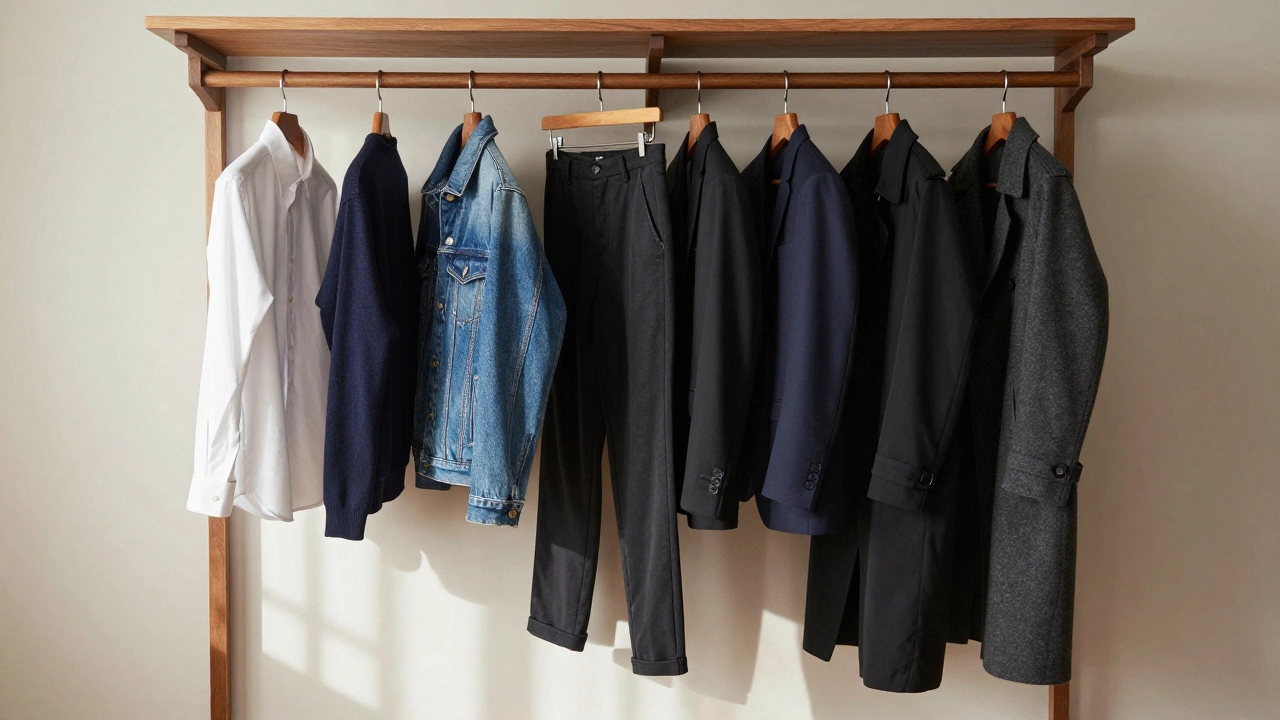
- 3 tops: A white button-down shirt, a solid-colored crewneck sweater, and a well-fitted denim jacket.
- 3 bottoms: Dark wash jeans, black chinos, and neutral-colored trousers (like charcoal or navy).
- 3 outerwear: A tailored navy blazer, a classic black trench coat, and a lightweight wool overcoat.
That’s it. Nine items. No more, no less. And yet, with smart layering and shoe choices, this setup can cover everything from a casual weekend errand to a job interview, a dinner date, or even a business meeting.
Why This Works Better Than a Bigger Wardrobe
Think about your last trip to the mall. You bought a shirt because it was on sale. Then a pair of pants because they were trendy. Then a jacket because it looked good in the mirror. Now you’ve got 12 shirts, five pairs of jeans, and three jackets you never wear. The problem isn’t quantity-it’s compatibility.
The 3-3-3 rule fixes this by forcing you to choose items that interact. Each piece must work with at least two others. That white button-down? It pairs with the denim jacket for a relaxed look, under the blazer for something sharper, and over a t-shirt for layering. The navy trousers? They go with the sweater, the blazer, and even the trench coat. No clashing. No wasted space.
Studies from the Journal of Consumer Research show that people who simplify their wardrobe make faster decisions, experience less daily stress, and report higher satisfaction with their style. It’s not magic. It’s math.
Why These Nine Items? The Science Behind the Picks
Every item in the 3-3-3 rule is chosen for function, versatility, and timeless appeal-not trends.
White button-down shirt: This isn’t just any shirt. It’s a classic cotton poplin, buttoned to the top for formality or left open over a tee for casual. It’s the one shirt you can wear to a funeral, a job interview, or brunch. Brands like Uniqlo, Brooks Brothers, and J.Crew make versions under $60 that last for years.
Solid crewneck sweater: Avoid chunky knits or logos. Go for a fine-gauge merino wool in navy, gray, or charcoal. It’s warm without bulk, drapes well under jackets, and looks polished even when worn alone. Merino wool also resists odor, so you can wear it twice before washing.
Denim jacket: Not a hoodie. Not a flannel. A denim jacket in medium wash, with a slim fit. It’s the perfect bridge between casual and smart. Throw it over the button-down and chinos? Instant weekend style. Layer it under the trench coat? Adds texture without weight.
Dark wash jeans: Look for 98% cotton, 2% elastane. They should fit snug but not tight. No rips, no fading. They’re the only jeans you need if they’re cut right. Wear them with the sweater and boots for a clean look, or with the blazer for a modern twist on business casual.
Black chinos: These aren’t the stiff, cheap ones from discount stores. They’re made from a cotton-twill blend with a slight stretch. They look like trousers but feel like jeans. They disappear under a blazer and still look sharp with a sweater.
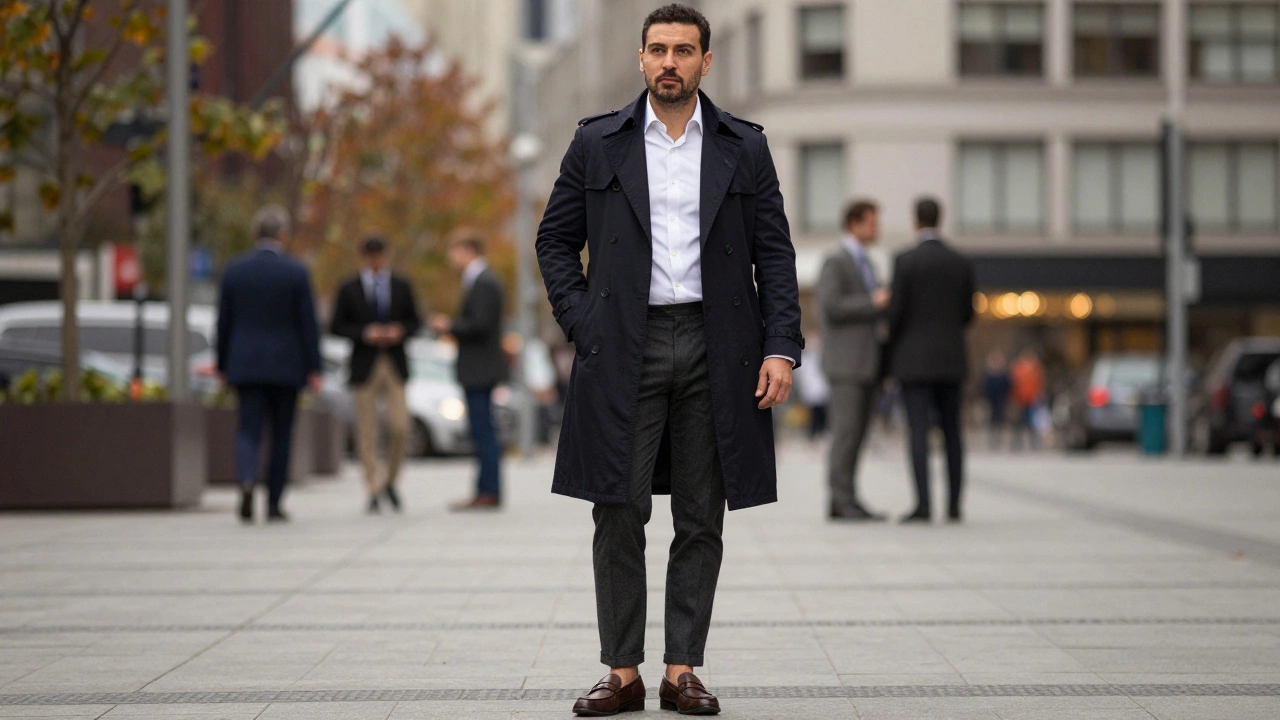
Neutral trousers: Charcoal or navy. Wool blend, flat front, no pleats. These are your formal foundation. Wear them with the button-down and loafers for a meeting. With the sweater and oxfords for a dinner. With the overcoat and boots for winter outings.
Navy blazer: This is your power piece. It should be single-breasted, with two buttons, and structured but not boxy. It’s the only jacket you need that can transition from office to evening. It looks expensive even if it’s not-especially if it’s tailored to fit your shoulders.
Black trench coat: A classic, knee-length trench from a brand like Aquascutum or a well-made version from Massimo Dutti. It’s water-resistant, timeless, and adds instant sophistication. Wear it over the blazer on rainy days, or alone with jeans and a sweater.
Wool overcoat: In winter, this replaces the trench. Go for a double-breasted, mid-thigh length in charcoal or navy. Wool holds heat, looks luxurious, and lasts decades if cared for. It’s the coat you’ll still be wearing in ten years.
What This Rule Doesn’t Include (And Why)
You might notice a few things missing: no sneakers, no dress shoes, no t-shirts, no hoodies, no casual shorts. That’s intentional.
The 3-3-3 rule is about core versatility, not every possible scenario. You still need:
- Two pairs of shoes: black oxfords and brown loafers.
- Three plain t-shirts: black, white, gray.
- One pair of athletic shorts for workouts.
- One pair of casual sneakers for weekend wear.
These aren’t part of the 3-3-3 because they’re not outerwear or layering pieces. They’re supporting actors. The 3-3-3 is the lead cast.
And no, you don’t need a suit. If you’re not in a corporate job that demands one, skip it. The blazer + trousers combo covers 90% of formal situations.
How to Start Building Your 3-3-3 Wardrobe
Don’t go out and buy all nine items at once. That’s overwhelming and expensive.
Here’s a smarter way:
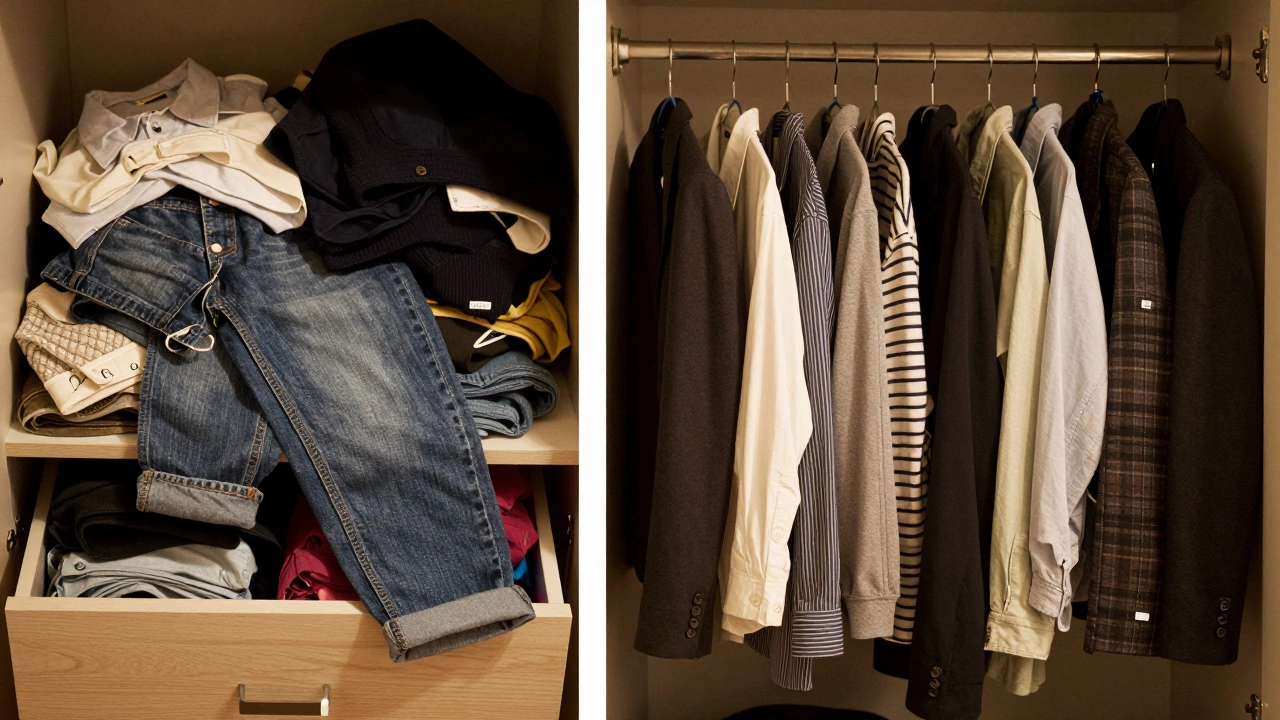
- Assess your current closet. Take everything out. Keep only what fits, is in good condition, and you’ve worn in the last six months. Get rid of the rest.
- Identify gaps. What do you wear most? What’s missing when you need to look put together?
- Start with the blazer. It’s the most transformative piece. Buy one that fits your shoulders perfectly. Tailor it if needed. This one item can upgrade your entire look.
- Add the navy trousers. Pair them with your blazer. Now you have a professional outfit.
- Build around it. Add the white shirt, then the sweater, then the denim jacket. Each new piece should connect to at least two others.
- Wait before buying outerwear. Buy the trench or overcoat only when you need it. Seasons change. Don’t rush.
It takes six to twelve months to build this properly. But once you do, you’ll never waste time choosing clothes again.
Real-Life Examples: How People Use the 3-3-3 Rule
Mark, 34, works in marketing. He used to own 18 shirts and 10 pairs of pants. He’d spend 20 minutes every morning picking something out-and still feel underdressed. After adopting the 3-3-3 rule, he kept only the white shirt, navy sweater, denim jacket, dark jeans, black chinos, charcoal trousers, navy blazer, and black trench. He added two shoes and three t-shirts. Now he gets complimented on his style. He says, “I don’t think about clothes anymore. I just feel confident.”
Jamal, 29, is a freelance designer. He travels often. He used to pack two suitcases. Now he packs a single carry-on with his 3-3-3 items, two t-shirts, two pairs of socks, and one pair of shoes. He’s been to Berlin, Tokyo, and Miami in the last six months. He never checked a bag. He never wore the same outfit twice.
Common Mistakes to Avoid
Even with a simple system, people mess it up.
- Buying too many colors. Stick to neutrals: black, navy, gray, white, beige, dark brown. One pop of color (like a burgundy sweater) is fine-but not five.
- Ignoring fit. A $200 blazer that doesn’t fit is worse than a $60 one that does. Tailoring is not an expense-it’s an investment.
- Thinking it’s boring. Minimalism doesn’t mean dull. It means intentional. The style comes from how you wear it, not how many things you own.
- Buying fast fashion. Cheap materials pill, fade, and shrink. You’ll end up replacing them in a year. Spend more on fewer pieces. They’ll last five to ten years.
What Comes Next?
Once your 3-3-3 wardrobe is solid, you can expand-carefully. Add a second pair of shoes. A second sweater. Maybe a corduroy jacket for fall. But always ask: Does this connect to at least two existing pieces? If not, skip it.
The goal isn’t to own nothing. It’s to own only what matters. Clothes should make your life easier-not harder. The 3-3-3 rule isn’t a trend. It’s a system that’s stood the test of time because it works.
Stop buying more. Start choosing better.
Is the 3-3-3 rule only for men?
No, the 3-3-3 rule works for anyone, regardless of gender. Women can adapt it by swapping the denim jacket for a tailored blazer, the chinos for tailored trousers or a pencil skirt, and the overcoat for a long wool coat. The principle stays the same: nine core items that work together. The goal is versatility, not gender-specific fashion.
Can I use the 3-3-3 rule if I work in a formal office?
Yes. The navy blazer and charcoal trousers are professional enough for most corporate environments. Add a white button-down and a silk tie if needed, but you don’t need a full suit. Many modern offices now accept blazers and trousers as business attire. The 3-3-3 rule gives you more flexibility than a traditional suit, since you can mix and match pieces without looking mismatched.
How much should I spend on each item?
There’s no fixed price, but aim for quality over quantity. A good blazer should cost $150-$300, trousers $80-$150, and a wool overcoat $200-$400. You can find solid denim jackets for $80-$120. The key is to avoid fast fashion. Spending $800-$1,200 total on these nine items is reasonable-and far cheaper than replacing five cheap jackets every year.
Do I need to buy everything at once?
Absolutely not. Start with the blazer and one pair of trousers. Then add the white shirt. Build slowly. Wait for sales. Look at thrift stores or consignment shops for high-quality used pieces. You can complete your 3-3-3 wardrobe over a year without breaking the bank.
What if I live in a very hot or cold climate?
Adjust the materials. In hot climates, swap the wool overcoat for a lightweight linen jacket and choose cotton chinos over wool trousers. In cold climates, add a thermal base layer under the sweater and choose a heavier wool overcoat. The structure stays the same-you just change the fabric weight and insulation.
If you’re tired of wasting time picking outfits, the 3-3-3 rule is the simplest fix. It doesn’t require a style degree. Just clarity. Start with one piece. Then another. Soon, you’ll realize you don’t need more clothes-you just need better ones.