
Long-distance relationships aren’t rare anymore. With people moving for jobs, school, or family, millions are keeping love alive across cities, countries, or even continents. But here’s the hard truth: long-distance relationships don’t fail because of the miles. They die because of what happens in the silence between texts, the missed calls, and the unspoken resentments.
Communication breaks down - not because of time zones, but because of avoidance
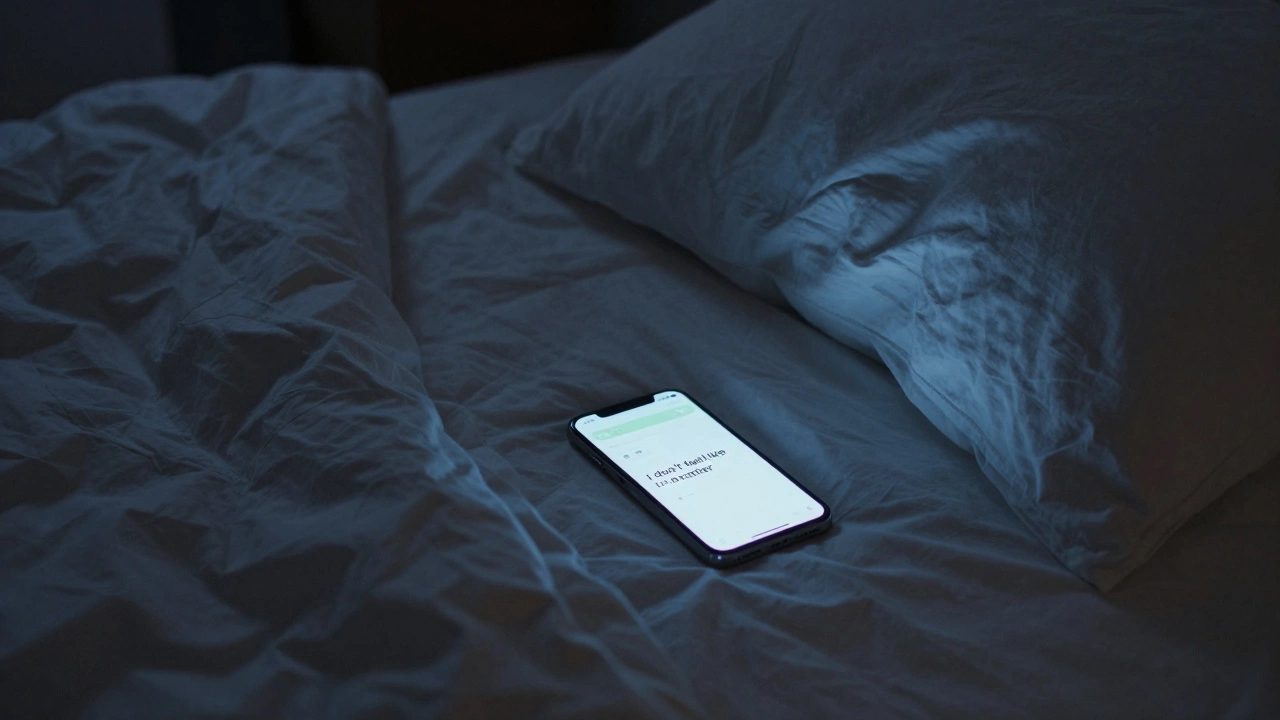
A lot of people think the problem is not having enough time to talk. That’s not it. You can have a 45-minute video call every night and still feel more alone than when you were together. The real issue? Avoidance. When you’re not sharing space, small annoyances don’t get resolved. You don’t see the look on their face when they’re upset. You don’t feel the tension in the room. So you wait. You think, "I’ll bring it up tomorrow." But tomorrow never comes. And then, after weeks of unspoken frustration, one of you snaps - not because of what happened yesterday, but because of everything that never got said. One couple I know, Sarah and Mark, lived 800 miles apart. They texted daily. Sent voice notes. Scheduled calls. But when Sarah felt ignored because Mark didn’t reply for 12 hours, she didn’t say anything. She just stopped initiating. Mark thought she was "just busy." Six months later, she broke up with him over a text that said, "I don’t feel like I matter." He had no idea she’d been quietly checking out for weeks. Communication isn’t about frequency. It’s about honesty. If something’s bothering you, say it. Not in a blame game. Just say: "I felt lonely when you didn’t reply. Can we talk about how to fix that?" That’s the kind of conversation that keeps love alive.Trust doesn’t break - it erodes
Trust isn’t about cheating. It’s about consistency. When you’re apart, your partner isn’t there to prove they’re reliable. You’re left wondering: "Do they really care?" And that doubt grows slowly, like mold. One partner might start checking their social media more. "Why did they like that post?" "Why did they change their profile picture?" Those questions aren’t about jealousy. They’re about insecurity. And insecurity thrives when there’s no routine to reassure you. A study from the University of Kansas in 2023 tracked 1,200 long-distance couples over two years. The biggest predictor of breakup wasn’t infidelity. It was perceived inconsistency. When one partner showed up unpredictably - sometimes responsive, sometimes distant - the other started emotionally withdrawing. Not because they stopped loving them. Because they stopped believing they were safe. Fixing this isn’t about giving access to your phone. It’s about building small, daily rituals. A morning text. A surprise voice note. A shared playlist. These aren’t cute gestures. They’re emotional anchors. They say: "I’m here. I’m thinking of you. You’re not alone."Life moves forward - and you stop growing together
When you live together, you grow together. You share meals, routines, arguments, and quiet Sundays. You change jobs, adopt new hobbies, meet new people. You become a team. In long-distance, you often grow apart. One person starts a new fitness routine. The other stays stuck in the same job. One makes new friends locally. The other doesn’t tell them because they don’t want to seem "unavailable." Slowly, you stop being a unit. You become two parallel lives that just happen to share a history. That’s not romantic. That’s lonely. The couples who make it don’t just talk about their day. They talk about their dreams. "What do you want to be doing in five years?" "What’s something you’ve always wanted to try?" They don’t wait for the next visit to reconnect. They reconnect every day by asking: "How are you becoming?" One woman I spoke to, Elena, moved from Chicago to Berlin for work. Her boyfriend stayed in Chicago. Instead of just sharing updates, they started a shared journal. Every Sunday, they wrote one paragraph about what they learned about themselves that week. One week, he wrote: "I started cooking because I realized I was only eating out to avoid being alone." She wrote: "I realized I was hiding my anxiety by saying I was too busy to video call." That journal didn’t fix the distance. But it kept them aligned.
Visits become rituals - not reconnection
You plan a visit. You save up. You book flights. You count down the days. And when you finally see each other? You spend the whole weekend catching up. Talking about work. Explaining what happened last month. Rehashing old fights. And then - it’s over. You’re back to texts and video calls. That’s not a reunion. That’s a performance. The problem isn’t that visits are too short. It’s that they’re treated like events, not moments. You don’t plan a visit to reconnect. You plan it because you’re supposed to. Couples who thrive don’t just schedule visits. They schedule presence. They turn one weekend into three days of being fully there. No phones. No checking work emails. No talking about logistics. Just: "What do you want to do today?" "What did you miss most?" "What’s something you didn’t tell me?" One couple I know, Lisa and Jake, started a rule: "No planning on visits." No restaurants. No sightseeing. Just walk. Talk. Sit. Listen. Sometimes they didn’t leave the apartment for 48 hours. And every time, they came back stronger.Loneliness isn’t the enemy - emotional dependency is
A lot of people think long-distance relationships fail because you miss each other too much. That’s not true. You miss them because you’re emotionally dependent. When you rely on your partner to fill the holes in your life - your loneliness, your boredom, your anxiety - you’re not in love. You’re in survival mode. The healthiest long-distance relationships aren’t about "I can’t live without you." They’re about "I’m better with you." You have your own life. Your friends. Your goals. Your hobbies. You don’t need them to feel whole. You want them because they make you feel more alive. That’s the difference. One is need. The other is choice. If you’re checking your phone every five minutes because you’re scared they’ll disappear - that’s not love. That’s fear. And fear kills relationships faster than silence.
What actually works? Three habits that keep love alive
There’s no magic formula. But there are three habits that show up in every long-distance relationship that lasts:- Weekly check-ins that aren’t about logistics. Ask: "What’s something you’re proud of this week?" "What’s something you’re scared of?" Not: "Did you eat?" "Did you work?"
- Shared experiences, not just conversations. Watch the same movie at the same time. Play an online game. Read the same book. Start a podcast together. Do something that creates a memory, not just a chat log.
- Plan the next step. Every three months, ask: "What’s our next move?" Not "When are you moving?" But "What does our future look like?" Even if it’s just "I want to live in the same city in 18 months," it gives you both something to work toward.
Final thought: Distance doesn’t kill love. Silence does.
You can survive 500 miles. You can survive time zones. You can survive missed birthdays. But you can’t survive the quiet. The unspoken fears. The unanswered questions. The growing belief that you’re not enough. Love doesn’t die because you’re far apart. It dies because you stopped showing up - not with gifts or calls, but with honesty, presence, and courage. If you’re in a long-distance relationship and you’re still here - reading this - that means you care. Now ask yourself: Are you showing up? Or are you just waiting for them to make the next move?Can long-distance relationships really last?
Yes, but not because of technology or romantic gestures. They last because both people choose to be emotionally available, honest, and consistent. A 2023 study found that couples who had clear future plans and weekly emotional check-ins were 67% more likely to stay together after two years than those who didn’t.
Is cheating more common in long-distance relationships?
No. Data from the University of Denver shows that cheating rates in long-distance relationships are actually slightly lower than in geographically close ones. The real issue isn’t opportunity - it’s emotional disconnection. When one person stops feeling seen or valued, they may seek validation elsewhere - even if they don’t intend to cheat.
How often should couples in long-distance relationships talk?
There’s no magic number. Some couples talk twice a day. Others talk once a week. What matters is quality, not quantity. A 10-minute deep conversation where you both feel heard is worth more than three hours of surface-level chat. Focus on being present, not on checking a box.
What’s the biggest mistake people make in long-distance relationships?
Assuming that love alone is enough. Love is the foundation. But trust, communication, and shared growth are the structure. If you stop building those, even the strongest love will collapse under the weight of silence and neglect.
Should we plan visits in advance or surprise each other?
Plan them. Surprises sound romantic, but they create stress. One partner might be overwhelmed with work. The other might be sick. Planning gives both people time to prepare emotionally and logistically. A scheduled visit with clear boundaries - "I’m here for you, not to fix things" - is far more meaningful than a rushed surprise.