
Relationship Health Diagnostic Tool
Relationship Diagnostic Assessment
This tool analyzes your relationship dynamics based on the scientific principles discussed in the article. Answer honestly to receive a personalized breakdown of your connection's strengths and areas for growth.
Your Relationship Diagnostic Report
Calculating...
Recommended Next Steps
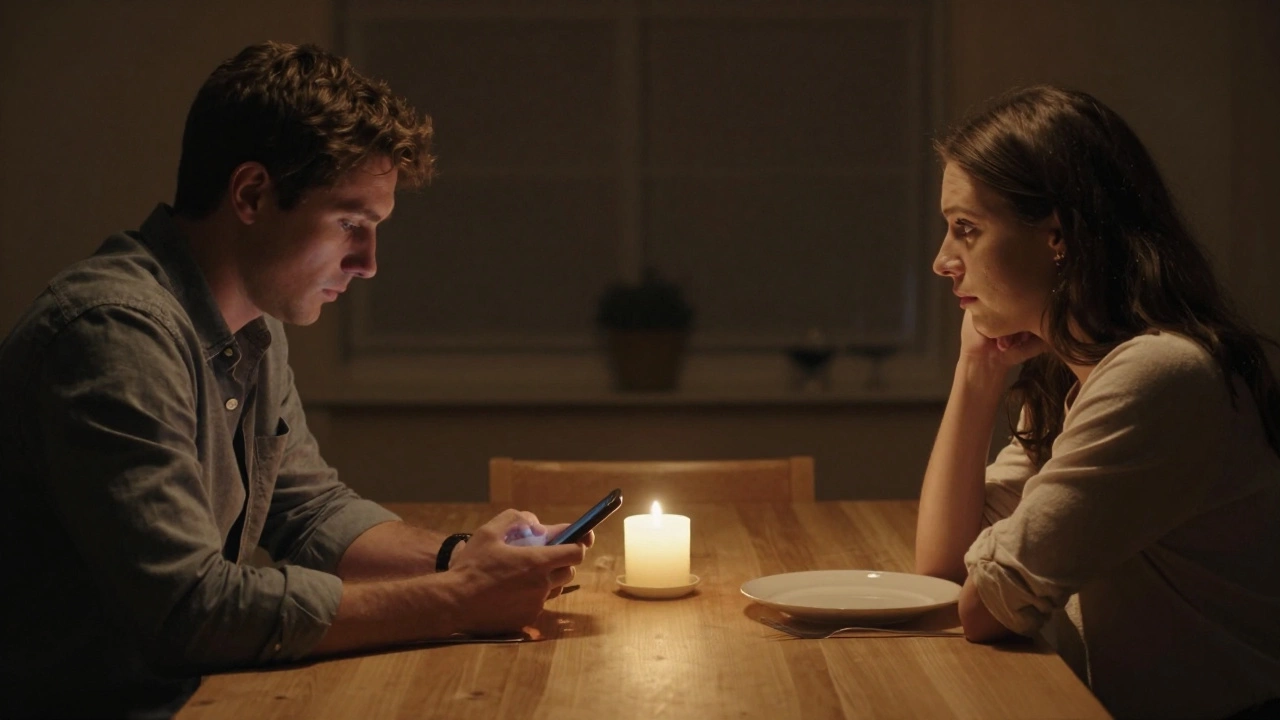
Ever stared at your partner across the dinner table and felt a million miles away? You’re not alone. In fact, nearly half of all marriages end in divorce, and even among those who stay together, many report feeling disconnected or misunderstood. It’s easy to blame bad luck or incompatible personalities, but the truth is deeper. Relationships are hard because they require us to confront our deepest insecurities, communicate needs we often don’t understand ourselves, and maintain consistency over years of change.
We grow up believing love should be effortless-a fairy tale where two people click instantly and never fight. Reality hits differently. Real connection demands work, vulnerability, and a willingness to look inward. If you’ve ever wondered why things feel so heavy despite wanting them to work, it’s time to strip away the romance and look at the mechanics. Here is what actually makes relationships difficult, and more importantly, how to navigate those rough patches without losing yourself.
The Attachment Blueprint: Why We Repeat Patterns
Your brain has a hidden manual for how to handle closeness, written during your earliest years. This is known as attachment theory, which describes how early interactions with caregivers shape our expectations in adult partnerships. Developed by psychologist John Bowlby in the 1950s, this framework suggests that if your needs were inconsistently met as a child, you might develop an anxious or avoidant style today.
Consider Sarah, who grew up with parents who were physically present but emotionally distant. As an adult, she craves constant reassurance from her partner. When he needs space, she panics, interpreting silence as rejection. Her partner, Mark, had a chaotic childhood where conflict was loud and scary. He copes by withdrawing when tensions rise. To Sarah, his withdrawal feels like abandonment; to Mark, her pursuit feels suffocating. They aren’t fighting about dishes or schedules-they are reenacting old survival strategies.
This dynamic is common. Research indicates that roughly 40% of adults have an insecure attachment style. Recognizing your pattern is the first step toward breaking it. You can’t change your history, but you can learn to pause before reacting. Ask yourself: Is my partner actually rejecting me, or am I triggering my old fear of being ignored?
The Communication Gap: Saying vs. Hearing
We assume that talking solves everything. Yet, studies show that most couples spend less than 30 seconds discussing their feelings each day. The problem isn’t just volume; it’s translation. Men and women, introverts and extroverts, logical thinkers and emotional processors-all speak different dialects of need.
Take the classic scenario: One partner says, “You never listen to me.” The other hears, “I am a terrible person.” Instead of addressing the specific behavior-like checking phones during conversations-the listener gets defensive. This is called misattribution, where intent is assumed rather than clarified. Effective communication requires active listening, which means repeating back what you heard before responding. Try saying, “It sounds like you felt dismissed when I checked my email. Is that right?” This simple shift validates their experience without admitting guilt prematurely.
Also, beware of the “four horsemen” identified by relationship researcher John Gottman: criticism, contempt, defensiveness, and stonewalling. Contempt, especially-rolling eyes, sarcasm-is the strongest predictor of breakup. It signals superiority, which kills intimacy faster than any argument. Replace judgment with curiosity. Ask, “What did you need in that moment?” instead of stating, “You always do this.”

Expectations vs. Reality: The Myth of Mind Reading
One of the biggest traps in modern dating is the belief that your partner should know what you want without you saying it. Movies sell us the idea of telepathic love, where gestures are intuitive and perfect. In reality, no one can read your mind. Expecting them to leads to resentment on both sides.
Imagine you hate surprises because they cause anxiety. Your partner plans an elaborate weekend getaway, thinking they’re being romantic. You feel trapped and stressed. They feel unappreciated and confused. Neither acted maliciously; neither communicated clearly. Healthy relationships thrive on explicit negotiation. Discuss your love languages, your boundaries around money, your views on family involvement, and your sexual needs early on. These aren’t deal-breakers to judge each other by; they are data points to build compatibility.
Furthermore, life changes. The person you dated five years ago may have different priorities now. Career shifts, health issues, or having children alter dynamics significantly. Re-evaluating expectations regularly prevents stagnation. Schedule monthly check-ins-not to audit the relationship, but to ask, “How are we doing? What’s working? What feels off?”
Individuality Within Unity: Losing Yourself
Paradoxically, trying too hard to merge can destroy a bond. Many people enter relationships seeking completion, believing their partner will fill the voids within them. But you cannot pour from an empty cup. When you sacrifice your hobbies, friends, or goals to accommodate your partner, you breed resentment. Eventually, you stop seeing them as a separate person and start viewing them as an extension of your own desires.
Maintaining individuality strengthens connection. Think of two trees growing side by side. Their roots intertwine for stability, but their trunks remain distinct, reaching for sunlight independently. Pursue your own passions. Keep your friendships alive. Have nights alone. When you return to the relationship refreshed and fulfilled, you bring more energy to the partnership. Your partner also benefits from watching you engage with the world passionately. Attraction often fades when novelty dies; maintaining your own growth keeps the spark alive.
If you find yourself constantly apologizing for existing or hiding parts of your personality to keep peace, that’s a red flag. A healthy relationship allows you to be imperfect. It encourages authenticity, not conformity.

External Pressures: Money, Family, and Time
Relationships don’t exist in a vacuum. External stressors act as amplifiers for internal cracks. Financial strain is consistently cited as a top source of marital conflict. Disagreements over spending habits, debt, or savings goals reflect deeper values differences. Similarly, extended family dynamics can create tension. In-laws offering unsolicited advice, cultural expectations around gender roles, or differing parenting philosophies can pull couples apart if boundaries aren’t set firmly.
Time scarcity is another modern killer. Between work demands, commuting, and digital distractions, quality time shrinks. Couples often fall into parallel lives-coexisting under one roof but living separate routines. Combat this by protecting shared moments. Turn off devices during meals. Plan regular date nights that involve new experiences, not just Netflix marathons. Novelty releases dopamine, reigniting the chemical bonds associated with early romance.
| Stressor | Impact | Actionable Solution |
|---|---|---|
| Financial Disagreement | Trust erosion, power imbalance | Create a joint budget with individual discretionary funds |
| In-Law Interference | Loyalty conflicts, boundary violations | Present a united front; limit contact if necessary |
| Lack of Quality Time | Emotional distance, routine boredom | Schedule weekly device-free dates |
| Differing Life Goals | Long-term incompatibility | Have honest conversations about children, location, career paths |
When to Seek Help: Therapy Isn’t Failure
There’s still stigma around couples counseling, viewed as a last resort before divorce. In truth, therapy is maintenance, like going to the gym for your mental health. Therapists provide neutral ground to unpack complex emotions and teach tools for de-escalation. Cognitive Behavioral Therapy (CBT) helps identify negative thought patterns, while Emotionally Focused Therapy (EFT) targets attachment bonds.
Don’t wait until you’re screaming or sleeping in separate beds. Go when you notice recurring arguments that go nowhere. Go when you feel lonely despite being together. Professional guidance can accelerate healing by months or years. Just ensure both partners commit to the process. One-sided effort rarely yields lasting change.
Is it normal to struggle in a relationship?
Yes, absolutely. Conflict is inevitable when two independent humans share a life. The key isn’t avoiding fights but resolving them constructively. Studies show that happy couples argue just as much as unhappy ones; they differ in how they repair afterward.
How do I know if my attachment style is hurting my relationship?
Look for repetitive cycles. Do you constantly chase affection or push people away? Do you interpret neutral actions as threats? If yes, your attachment style may be driving behaviors. Taking an online assessment or speaking with a therapist can clarify your type and help you develop secure strategies.
Can a relationship survive without physical intimacy?
It depends on the couple’s needs. For some, sex is central to bonding; for others, emotional connection suffices. Mismatched libidos require open dialogue and compromise. Never force intimacy, but explore non-sexual touch like holding hands or hugging to maintain closeness.
What should I do if my partner refuses to talk about problems?
Pressure often increases withdrawal. Instead, invite conversation gently. Say, “I’d love to understand your perspective when you’re ready.” Give them space but reaffirm your commitment. If silence persists long-term, consider individual therapy to manage your own reactions and decide if the dynamic is sustainable.
Is it better to stay together for the kids or split up?
Children absorb parental tension. High-conflict homes harm development more than amicable separations. Prioritize modeling healthy respect. If abuse exists, leave immediately. Otherwise, focus on co-parenting effectively post-split rather than preserving a toxic environment for appearances.