
The Cognitive Flexibility Self-Assessment
Are you defending truth, winning arguments, seeking approval, or finding facts? Take this quick assessment to discover your default thinking mode.
Your Dominant Mode:
Strengths
Blind Spots
Actionable Tip
You know that feeling when you realize you were completely wrong about something? Maybe it was a political stance you held for years, or the way you thought you should handle conflict in your marriage. It’s uncomfortable. It feels like admitting defeat. But here is the thing: people who can change their minds are not weak; they are cognitively flexible. In fact, research from Adam Grant’s work on rethinking suggests that the ability to update our beliefs is one of the strongest predictors of success and mental well-being.
So, how do you actually do it? How do you break free from the inertia of your own opinions? It isn’t just about being open-minded; it’s about having a system for testing your thoughts. If you want to stop defending bad ideas and start building better ones, you need to treat your brain less like a lawyer trying to win a case, and more like a scientist looking for data.
The Problem With Being Right
We are wired to protect our egos. When someone challenges an opinion we hold dear, our body reacts as if it’s under physical attack. This is known as confirmation bias, which is the tendency to search for, interpret, favor, and recall information in a way that confirms one's preexisting beliefs or hypotheses. You don’t see what’s there; you see what you expect to be there. And once you’ve committed to a view, changing it feels like losing status within your social group.
Think about the last time you changed your mind. Was it because you found new evidence? Or was it because you had no other choice? Most of us only change our minds when forced by external reality-like when a job application fails despite our confidence, or a relationship ends despite our certainty. Voluntary change is rare because it requires humility. It requires you to say, "I might be wrong," without feeling like your identity is crumbling.
Adopt the Scientist Mindset
To change your mind effectively, you need to detach your identity from your opinions. Psychologists distinguish between three modes of thinking: preacher, prosecutor, and politician. The preacher defends sacred truths. The prosecutor attacks opposing views. The politician tries to persuade the crowd. None of these modes encourage genuine learning.
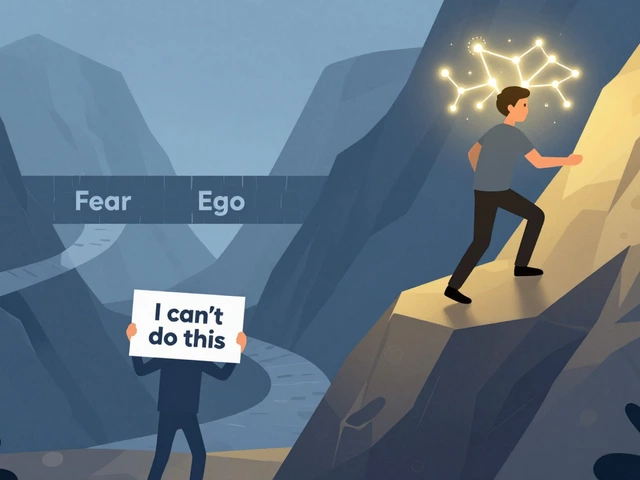
Instead, try adopting the scientist mindset. This approach treats beliefs as hypotheses to be tested rather than truths to be defended. When you think like a scientist, being wrong isn’t a failure; it’s a discovery. You’re happy to find out your hypothesis was incorrect because now you know where to look next. This shift reduces the emotional stakes of disagreement. You aren’t fighting for your soul; you’re just checking the data.
Start small. Pick a low-stakes belief. Maybe you believe that remote work is always less productive than office work. Test it. Look for data that contradicts this. Did productivity drop during the pandemic lockdowns? For many companies, it stayed flat or increased. Why? Because focus improved. By treating this belief as a hypothesis, you allow yourself to gather evidence without fear.
Seek Out Disconfirming Evidence
If you only listen to people who agree with you, you live in an echo chamber. To change your mind, you must actively hunt for information that disagrees with you. This is called seeking disconfirming evidence. It sounds simple, but it’s incredibly hard because our brains filter out noise that doesn’t fit our narrative.
Here is a practical rule: If you can’t state the opposing argument better than its strongest advocate, you don’t understand it well enough to reject it. This is often referred to as the "steel man" argument, as opposed to the "straw man." Instead of attacking a weak version of an opponent’s view, build the strongest possible version of it. Then, ask yourself: "If this argument is true, what would I have to change about my life?"
For example, if you believe that exercise is useless without a gym membership, steel-man the opposing view: "Home workouts require discipline but save money and time." Now, test that. Try a month of home workouts. Track your results. If you find you prefer them, you’ve changed your mind based on experience, not just rhetoric.

Embrace Cognitive Dissonance
When you encounter facts that clash with your beliefs, you feel tension. This is cognitive dissonance, defined as mental discomfort experienced by a person who holds two or more contradictory beliefs, ideas, or values. Most people resolve this discomfort by ignoring the new fact or rationalizing it away. They double down on their original belief to make the pain go away.
But if you want to grow, lean into the discomfort. Treat the tension as a signal that your mental model needs updating. Ask yourself: "What would have to be true for this new information to be correct?" This question opens up possibilities instead of closing them down. It invites curiosity rather than defensiveness.
Consider the debate over diet trends. For decades, fat was the enemy. Then sugar became the villain. Now, ultra-processed foods are in the crosshairs. People who stuck rigidly to one dogma struggled to adapt. Those who viewed nutrition science as evolving data adapted quickly. They didn’t feel betrayed by science; they felt relieved to have better tools.
Create Psychological Safety for Yourself
Changing your mind often means admitting you wasted time or money on a previous belief. That hurts. To mitigate this, practice self-compassion. Remind yourself that everyone operates with incomplete information. You did the best you could with what you knew at the time. Blaming yourself for past ignorance keeps you stuck in defensive patterns.
Try reframing mistakes as tuition fees. You paid for a lesson in human behavior, market trends, or personal preference. That payment bought you wisdom. Once you accept that error is part of the learning process, you become faster at pivoting. Speed matters. In a rapidly changing world, the ability to unlearn old habits and learn new ones is more valuable than raw knowledge.
| Mode | Goal | Reaction to Contradiction | Outcome |
|---|---|---|---|
| Preacher | Defend Truth | Reject & Attack | Rigidity |
| Prosecutor | Win Argument | Discredit Opponent | Polarization |
| Politician | Gain Approval | Avoid Conflict | Inconsistency |
| Scientist | Find Truth | Update Hypothesis | Growth |

Practical Steps to Shift Your Perspective
You don’t need a philosophy degree to change your mind. You just need a routine. Here are four actionable steps to integrate into your daily life:
- The 10% Rule: Assume you are wrong about any major opinion 10% of the time. Actively look for that 10%. What if your political tribe is missing a key economic insight? What if your career path has a hidden flaw?
- Ask "What Would Change My Mind?": Before entering a debate or making a decision, define your falsification criteria. Write down exactly what evidence would force you to change your position. If nothing could change your mind, you’re operating on faith, not reason.
- Diversify Your Inputs: Unfollow social media accounts that only validate you. Subscribe to newsletters from experts who disagree with you. Read books outside your genre. Exposure to diverse viewpoints expands your neural pathways and makes flexible thinking easier.
- Pause Before Reacting: When triggered emotionally, wait 24 hours before responding. Emotions hijack logic. Give your prefrontal cortex time to catch up with your amygdala. Often, the urge to defend fades, leaving room for reflection.
Overcoming the Fear of Identity Loss
The biggest barrier to changing your mind is the fear that you’ll lose your sense of self. We often tie our identities to our opinions. "I am a conservative," "I am a tech skeptic," "I am a minimalist." If you change your mind, who are you?
The answer is: you are someone who values truth over comfort. Your identity shouldn’t be a static label; it should be a dynamic process of learning. Think of yourself as a curator of experiences and insights. You collect ideas, test them, keep the useful ones, and discard the rest. This makes your identity resilient. It can withstand shocks because it isn’t brittle.
Look at historical figures who evolved. Darwin revised his theories multiple times. Einstein challenged Newtonian physics. They weren’t confused; they were rigorous. Their greatness came from their willingness to let go of cherished ideas when the evidence demanded it. You can do the same. Start today. Pick one belief you’ve held for too long without questioning it. And give yourself permission to doubt it.
Is it okay to change your mind frequently?
Yes, provided the changes are based on new evidence or deeper understanding, not just indecisiveness. Frequent shifts driven by curiosity indicate high cognitive flexibility, whereas random shifts may suggest a lack of core values. Distinguish between changing your strategy (which is good) and changing your fundamental principles (which requires careful consideration).
Why does changing my mind feel so stressful?
This stress stems from cognitive dissonance and ego protection. Our brains perceive contradictions as threats. Additionally, social pressure plays a role; we fear losing status or appearing inconsistent to others. Recognizing this biological and social reaction helps normalize the discomfort, allowing you to push through it.
Can changing your mind damage relationships?
It can cause temporary friction, especially if others rely on your predictability. However, honest communication usually strengthens bonds in the long run. Explaining why you changed your perspective shows respect for the other person’s intelligence and fosters mutual growth. Avoid sudden, unexplained reversals; instead, share the journey of your thinking.
How do I know if I'm just being influenced by peer pressure?
Check your source of validation. Are you changing your mind because the evidence convinced you, or because you want to belong to a specific group? True intellectual honesty involves evaluating arguments on their merit, regardless of who presents them. If you find yourself agreeing solely to fit in, pause and seek independent verification.
Does age affect the ability to change your mind?
While neuroplasticity decreases slightly with age, the capacity for mindset shifts remains throughout life. Older adults often have more accumulated biases due to longer exposure to certain environments, but they also possess greater wisdom and perspective-taking skills. Intentional practice in critical thinking can counteract rigidity at any age.