
Growth Mindset Challenge Simulator
Select a scenario to analyze:
How would you react?
Challenge Complete!
Here's how you handled the mindset challenges:
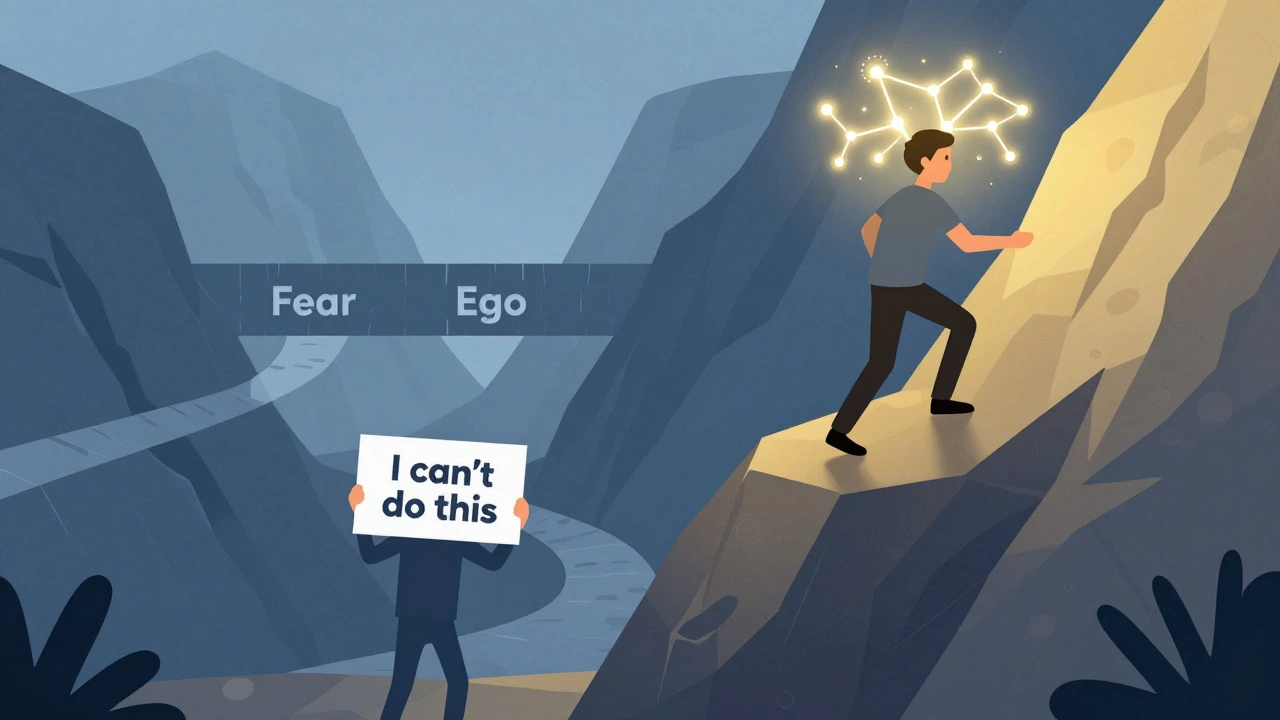
You fail at something. Maybe you miss a sales target, bomb a presentation, or simply can’t wrap your head around a new software tool. What’s your immediate reaction? If you think, “I’m just not good at this,” you’re operating with a fixed mindset, which is the belief that intelligence and talents are static traits that cannot be significantly changed. But if you think, “I haven’t figured this out yet,” you’re tapping into a growth mindset, defined by the understanding that abilities can be developed through dedication, hard work, and effective strategies. This distinction isn't just academic jargon; it dictates how you handle setbacks, learn new skills, and ultimately, how successful you become in your career and personal life.
The Science Behind the Mindset Shift
The concept was popularized by psychologist Carol Dweck at Stanford University. Her research showed that students who believed their intelligence could grow performed better academically than those who thought their IQ was set in stone. Why? Because the former group embraced challenges, while the latter avoided them to protect their ego. It turns out, your brain physically changes when you learn. This process is called neuroplasticity. Every time you struggle with a difficult task, your neurons form new connections. The harder the struggle, the stronger the connection becomes. So, feeling confused or frustrated isn't a sign of failure; it's a sign that your brain is literally building new infrastructure.
| Scenario | Fixed Mindset Reaction | Growth Mindset Reaction |
|---|---|---|
| Facing a challenge | Avoids it to prevent looking stupid | Embraces it as an opportunity to learn |
| Encountering obstacles | Gives up easily | Persists in the face of setbacks |
| Viewing effort | Sees it as fruitless (if you were smart, you wouldn't need to try) | Sees it as the path to mastery |
| Receiving criticism | Ignores useful feedback or takes it personally | Learns from criticism |
| Success of others | Feels threatened or jealous | Draws lessons and inspiration |
Step 1: Catch Your Inner Narrator
Developing a growth mindset starts with awareness. You have an inner voice that comments on your actions. Often, this voice is harsh and limiting. For example, after making a mistake in a report, you might think, "I'm so careless. I'll never get promoted." That is a fixed mindset statement. To change it, you must first catch these thoughts in real-time. Keep a small notebook or use a notes app on your phone. Whenever you feel a spike of frustration or shame, write down what you just said to yourself. Identify the fixed mindset triggers. Common ones include words like "always," "never," "talent," and "gifted." Once you identify the thought, label it. Say to yourself, "That is my fixed mindset talking." This simple act creates distance between you and the emotion, allowing you to choose a different response.
Step 2: Reframe Failure as Data
In a fixed mindset, failure is an identity. It means you are a failure. In a growth mindset, failure is data. It tells you what didn't work so you can adjust. Think of Thomas Edison testing thousands of materials for the lightbulb filament. He didn't see 10,000 failures; he saw 10,000 ways that didn't work. When you stumble, ask yourself three questions: What went wrong? What can I do differently next time? Who can help me improve? This shifts the focus from self-judgment to problem-solving. For instance, if you lose a client, don't dwell on being a bad salesperson. Analyze the pitch. Was the timing off? Did you misunderstand their needs? Use that data to refine your approach. Resilience is built by processing failure constructively rather than avoiding it.

Step 3: Embrace the Power of "Yet"
One of the simplest linguistic hacks to trigger a growth mindset is adding the word "yet" to the end of negative statements. Instead of saying, "I don't understand Python programming," say, "I don't understand Python programming yet." This small addition implies future success and acknowledges that current lack of skill is temporary. Research in educational psychology shows that students who use "yet" show increased persistence and improved grades. Try this at work. If you're struggling with public speaking, tell yourself, "I'm not confident on stage yet." This keeps the door open for improvement and reduces the anxiety associated with perfectionism. It reminds you that mastery is a journey, not a destination you arrive at instantly.
Step 4: Value Process Over Outcome
We live in a results-oriented world. We celebrate the trophy, the promotion, and the viral post. But focusing solely on outcomes makes you fragile. If you tie your self-worth to winning, losing destroys you. A growth mindset values the process-the practice, the study, the iteration. Praise effort, strategy, and focus rather than innate talent. If you're a parent or manager, avoid saying, "You're so smart." Instead, say, "I noticed how hard you worked on that project." This encourages people to repeat the behaviors that led to success. When you value the process, you become less afraid of taking risks. You know that even if the outcome isn't perfect, the effort itself has made you stronger and more capable. This leads to sustainable long-term growth rather than fleeting moments of validation.
Step 5: Seek Constructive Criticism
Criticism feels like an attack when you have a fixed mindset. It feels like proof that you aren't good enough. With a growth mindset, criticism is a gift. It provides a roadmap for improvement. Actively seek feedback from colleagues, mentors, and friends. Ask specific questions like, "What is one thing I could have done better in that meeting?" Listen without defending yourself. Don't explain why you did what you did. Just listen. Then, decide which feedback is actionable. Implement one piece of advice immediately. This demonstrates humility and a willingness to evolve. Over time, you'll find that criticism loses its sting because you no longer view it as a judgment of your character, but as information to enhance your performance. Companies like Pixar encourage brutal honesty in brainstorming sessions because they believe that critiquing ideas, not people, leads to better movies. Adopt that same spirit in your personal development.

Step 6: Learn From Others' Success
Jealousy is a fixed mindset trap. It stems from the belief that there is a limited amount of success to go around. If someone else wins, you lose. A growth mindset sees others' success as inspiration. Look at someone who has achieved what you want. Instead of thinking, "They got lucky," ask, "What did they do differently? How can I apply their strategies to my situation?" Network with high performers. Read biographies. Study their habits. Realize that their success is often the result of years of deliberate practice, not magic. By celebrating others, you create a supportive environment that encourages collective growth. You also remove the emotional baggage of comparison, freeing up energy to focus on your own progress. Remember, the grass isn't greener on the other side; it's greener where you water it.
Common Pitfalls to Avoid
- Toxic Positivity: Don't pretend everything is fine when it's not. Acknowledge the difficulty, then focus on solutions. Growth mindset isn't about ignoring pain; it's about navigating it.
- Perfectionism: Perfectionism is often a mask for fear of failure. It prevents you from starting or finishing projects. Accept that your first draft will be messy. Iterate later.
- Comparing Your Chapter 1 to Someone Else's Chapter 20: Social media highlights reels distort reality. Focus on your own trajectory. Measure progress against your past self, not others' present selves.
Integrating Growth Into Daily Life
Changing your mindset is like building muscle. It requires consistent repetition. Start small. Pick one area of your life where you feel stuck-maybe cooking, coding, or communication. Set a micro-goal. Spend 15 minutes a day practicing. Track your progress. Celebrate small wins. Over weeks and months, you'll notice a shift. Challenges won't scare you as much. You'll become curious instead of defensive. You'll realize that intelligence and talent are not ceilings; they are starting points. The goal isn't to achieve a perfect growth mindset overnight. It's to make progress. Every time you choose curiosity over judgment, you reinforce the neural pathways of growth. Keep going. You are capable of far more than you currently believe.
Is a growth mindset scientifically proven?
Yes, research by Carol Dweck and others in educational psychology supports the link between believing abilities can be developed and improved academic and professional outcomes. Neuroplasticity studies confirm that the brain changes structure and function based on experience and learning.
Can adults develop a growth mindset?
Absolutely. While mindsets are often formed in childhood, neuroplasticity exists throughout life. Adults can retrain their brains by consciously challenging fixed thoughts, seeking feedback, and embracing challenges.
What is the opposite of a growth mindset?
The opposite is a fixed mindset, where individuals believe their core abilities, intelligence, and talents are unchangeable traits. This leads to avoiding challenges, giving up easily, and ignoring useful feedback.
How does a growth mindset affect leadership?
Leaders with a growth mindset foster innovation and resilience in their teams. They encourage risk-taking, view failures as learning opportunities, and invest in employee development, leading to higher engagement and performance.
Does having a growth mindset guarantee success?
No, it doesn't guarantee success, but it increases the likelihood of achieving goals. It provides the resilience and adaptability needed to navigate setbacks and continuously improve, which are critical components of long-term achievement.