
The Atomic Growth Planner
Step 1: Define Your Growth
Enter your goals to see the power of 1% compounding progress.
Your Sustainable System
Focus on this leading indicator, not the outcome.
"1% improvement every day results in being 37x better in a year."
Key Takeaways
- Self-improvement is a process of intentional growth, not a final destination.
- It involves balancing "growth mindsets" with self-acceptance.
- Real progress happens through small, consistent habits rather than overnight transformations.
- The goal is functional improvement-bettering your life and relationships, not just your resume.
The Core Definition of Growing Yourself
At its simplest, Self-improvement is the act of improving one's own character, behavior, or skills through intentional effort. It is a broad umbrella that covers everything from learning a new language to managing your anger during a fight with your partner. While it sounds straightforward, the danger lies in the "improvement trap." This is the belief that you are fundamentally "broken" and need to be fixed. True growth isn't about fixing a broken machine; it's about evolving a living system.
Think of it like updating the software on your phone. You don't throw the phone away because the old OS had bugs; you just install a version that handles tasks more efficiently. When you focus on Personal Growth, you're essentially updating your mental operating system to better handle the stresses and opportunities of your life.
The Psychology Behind the Push
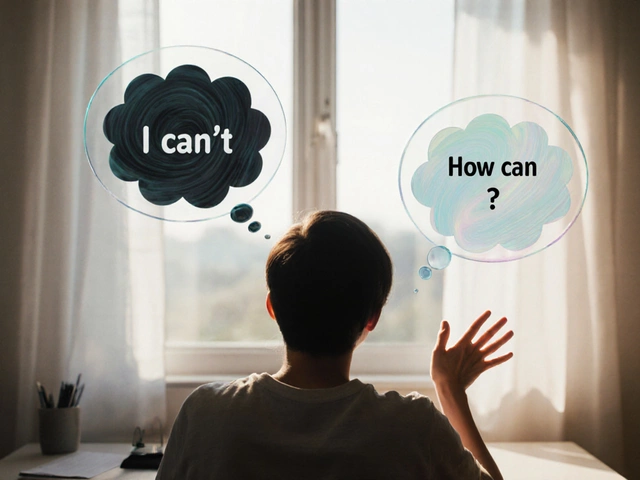
Why do some people thrive on change while others feel paralyzed by it? A lot of this comes down to Growth Mindset, a concept pioneered by Carol Dweck. People with a fixed mindset believe their intelligence and talents are static. If they fail a test or mess up a project, they think, "I'm just not good at this." Those with a growth mindset see failure as data. They believe that through effort and strategy, they can get better at almost anything.
This shift in perspective changes the meaning of self-improvement from "I need to be better" to "I can get better." The first is a judgment; the second is a possibility. When you stop judging your current state, you actually free up the mental energy required to make a change. For example, instead of saying "I'm a lazy person," a growth-oriented person says, "I haven't built a sustainable morning routine yet."

Where Most People Get It Wrong
There is a dark side to the self-help world. We often see "toxic productivity," where the drive for improvement becomes a source of anxiety. If your goal is to be the most productive person in the room, you're not actually improving; you're just optimizing for a metric. This often leads to burnout because you're treating yourself like a piece of hardware that needs to be overclocked.
Real improvement focuses on Emotional Intelligence (EQ). This is the ability to recognize and manage your own emotions while empathizing with others. You can be the most fit person in the gym, but if you can't handle a difficult conversation without shouting, your overall quality of life remains low. True self-improvement balances hard skills (like coding or budgeting) with soft skills (like patience and active listening).
| Feature | Surface-Level (The "Aesthetic") | Deep Growth (The "Actual") |
|---|---|---|
| Focus | External validation/metrics | Internal values/well-being |
| Pace | Rapid, unsustainable bursts | Slow, compounding progress |
| Motivation | Fear of being inadequate | Curiosity and desire for health |
| Success Marker | A number on a scale or bank account | Better relationships and mental clarity |
The Mechanics of Change: Habits and Systems
If self-improvement is the "what," then Habit Formation is the "how." You cannot rely on willpower to change your life. Willpower is a finite resource; it's like a phone battery that drains throughout the day. By the time you get home from a stressful job, your willpower is at 5%, which is why you end up on the couch eating crisps instead of going for that run.
The secret is to build systems. Instead of relying on motivation, create an environment that makes the right choice the easiest choice. This is often called "choice architecture." If you want to read more, put a book on your pillow in the morning. If you want to stop scrolling on your phone, leave it in another room. When you automate the behavior, you remove the need for a struggle.
Consider the concept of Atomic Habits. The idea is that a 1% improvement every day results in being 37 times better by the end of a year. It's not about the massive leap; it's about the tiny, almost invisible shift in direction. For instance, if you want to start exercising, don't commit to an hour at the gym. Commit to putting on your running shoes. Once the shoes are on, the hardest part of the system is already done.

Connecting Growth to Mental Health
You can't improve your life if you're ignoring your mind. This is where Mindfulness comes into play. Mindfulness isn't just about meditating on a cushion for twenty minutes; it's about being present in your life. It allows you to notice the exact moment you start feeling stressed or triggered, giving you a window of time to choose your reaction instead of reacting impulsively.
Integrating Cognitive Behavioral Therapy (CBT) techniques-even in a non-clinical, self-help way-can be transformative. CBT teaches you to challenge "cognitive distortions." For example, if you think, "I've failed at everything," a CBT approach asks you to find evidence for and against that statement. You'll quickly realize that while you might have failed at one specific thing, the statement "everything" is a lie your brain is telling you.
Practical Steps to Start Your Journey
So, how do you actually apply this without feeling overwhelmed? Start by auditing your current life. Don't look for what's "wrong," but look for where the friction is. Where do you feel most frustrated? Is it your health, your finances, or how you talk to your kids? Pick one area. Trying to fix everything at once is the fastest way to fail.
- Define your "Why": If you're losing weight to impress someone else, you'll quit when it gets hard. If you're doing it so you can play with your kids without getting winded, you have a reason to keep going.
- Set a "Floor" Goal: Instead of a "ceiling" goal (e.g., "I will work out for 2 hours"), set a floor goal (e.g., "I will do 5 push-ups"). The floor goal is so easy it's impossible to fail, which keeps the momentum alive.
- Track the Process, Not the Outcome: Instead of weighing yourself every day, track how many days a week you ate a vegetable. You control the effort; you don't always control the immediate outcome.
- Review and Pivot: Every Sunday, spend ten minutes thinking about what worked and what didn't. If a habit feels too hard, it's not a failure of will; it's a flaw in the system. Make the habit smaller.
Is self-improvement selfish?
Not at all. In fact, it's often the most selfless thing you can do. When you manage your anger, improve your listening skills, or get your health in order, you become a better partner, parent, and friend. You stop leaking your stress onto others and start bringing more value to the people around you.
How long does it take to see real results?
It depends on the goal, but generally, the "plateau of latent potential" is where most people quit. You might work for weeks with no visible change, then suddenly see a massive leap. This is common in fitness and skill learning. The key is to trust the system and the compounding effect rather than expecting linear progress.
What if I feel like I'm not making any progress?
You might be measuring the wrong things. If you're tracking a number on a scale but noticing you have more energy and sleep better, you are making progress. Shift your focus from lagging indicators (results) to leading indicators (the actions you take daily).
Can you overdo self-improvement?
Yes. When self-improvement becomes a way to avoid living your actual life, it's a problem. If you spend all your time reading books about how to be happy instead of actually going out and experiencing life, you're just procrastinating. The goal is to use these tools to enhance your life, not to replace it.
What is the difference between self-improvement and self-help?
Self-help is often the content-the books, podcasts, and gurus. Self-improvement is the action. Reading a book on time management is self-help; actually changing your calendar and sticking to it is self-improvement.
Next Steps for Different Stages
If you're just starting out, don't buy a bunch of planners or join an expensive bootcamp. Start with a simple journal and track one single habit for 30 days. Your goal isn't the habit itself, but proving to yourself that you can follow through on a promise.
If you've been on this path for a while and feel burnt out, it's time to shift from "adding" to "subtracting." Instead of asking what else you can do to improve, ask what you can stop doing. Remove the toxic habits, the draining friendships, or the unrealistic expectations. Sometimes the biggest improvement comes from what you leave behind.
For those who feel they've "arrived," the challenge is to maintain. Growth isn't a straight line up; it's a series of peaks and valleys. The mark of a truly improved person isn't that they never fall back into old patterns, but that they notice it faster and get back on track with less self-criticism.