
The 3C Decision Framework
Feeling stuck? Use this guided worksheet to process a current challenge through the lens of Clarity, Confidence, and Control. Fill in the prompts below to move from overwhelm to action.
Your 3C Strategy Summary
You know that feeling when you're staring at your inbox, or maybe just standing in the kitchen holding a mug of tea, and your brain feels like a browser with forty-seven tabs open? You want to make a move, but you’re stuck. Not because you don’t have options, but because you don’t know which option actually matters. This isn't laziness. It’s a lack of framework.
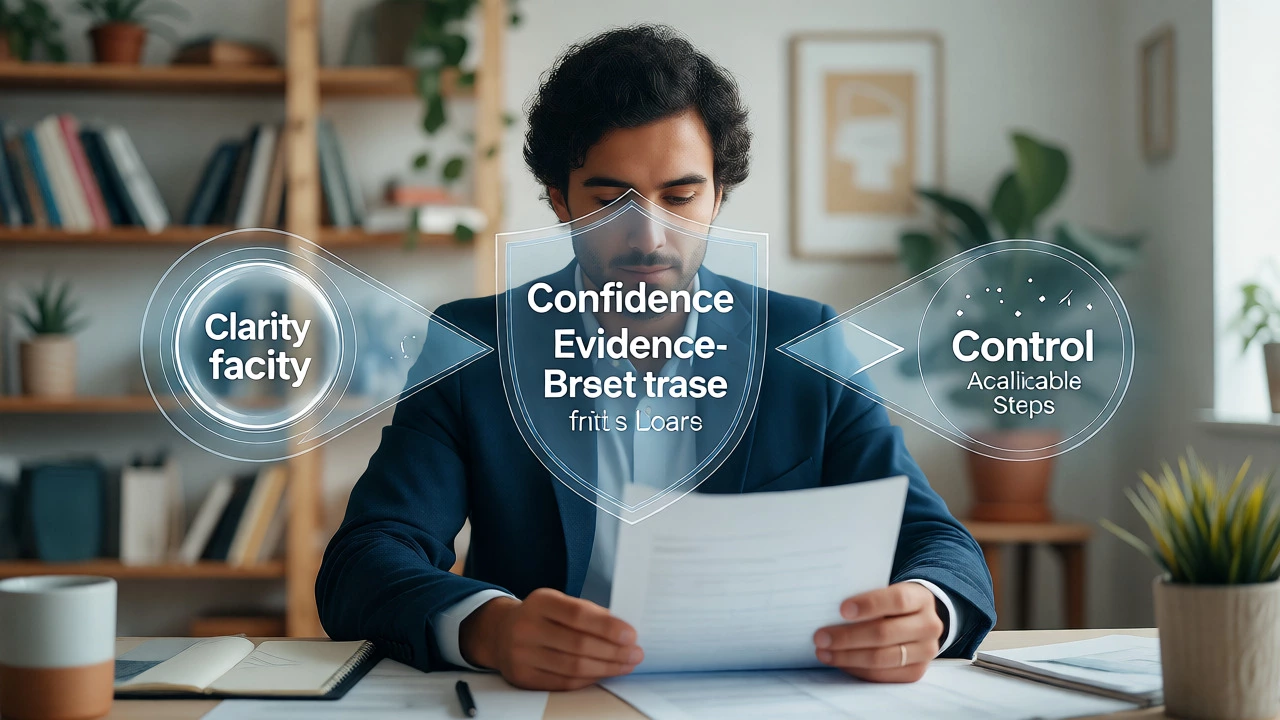
Enter the 3C Mindset, a cognitive framework designed to cut through the noise by focusing on three core pillars: Clarity, Confidence, and Control. Unlike vague self-help platitudes about "thinking positive," this approach is structural. It treats your mind less like a magic box and more like an operating system that needs regular updates and clear commands. If you’ve ever felt paralyzed by choice or anxious about outcomes you can’t influence, this model offers a direct path out of the fog.
Decoding the Three Pillars
Most people mix these three up, which is why they stay stuck. They try to build confidence without clarity, or they seek control over things that are inherently chaotic. Let’s break down what each component actually does, using real-world scenarios rather than abstract theory.
Clarity is the diagnostic phase. It’s the ability to strip away emotional clutter and see the situation for what it is, not what you fear it might be. Think of it as defining the problem before trying to solve it. In business, we call this root-cause analysis; in life, it’s asking, "What is the actual issue here?" Without clarity, you’re solving symptoms. You’re taking painkillers for a broken leg.
Once you see the problem clearly, you need Confidence. But hold on-this isn’t the Hollywood version where you feel invincible. Real confidence in the 3C model is evidence-based trust in your own judgment. It comes from small wins and preparedness. It’s the quiet voice that says, "I have handled similar situations before, and I have a plan." It’s not arrogance; it’s competence recognized.
Finally, there’s Control. This is often misunderstood. Control doesn’t mean controlling the weather, the economy, or your boss’s mood. It means controlling your response. It’s the locus of internal authority. When you focus on control, you stop wasting energy fighting reality and start allocating resources to actions you can actually take. This is the engine of execution.
| Component | True Definition (3C Model) | Common Misconception | Actionable Outcome |
|---|---|---|---|
| Clarity | Objective assessment of facts and constraints. | Having all the information before starting. | Faster decision-making with fewer regrets. |
| Confidence | Trust in one's ability to handle uncertainty. | Feeling happy or fearless. | Resilience during setbacks. |
| Control | Focusing effort on variables within your influence. | Trying to micromanage outcomes. | Reduced anxiety and higher productivity. |
Why Traditional Advice Fails Without Structure
We’ve all heard "just believe in yourself." Sounds nice, right? But if you have zero clarity on what you’re doing, believing in yourself is just delusion. If you have no control over the outcome, confidence becomes fragile. The 3C mindset works because it creates a feedback loop. Clarity informs confidence. Confidence enables the pursuit of control. And exercising control generates new data, which sharpens clarity.
Consider a freelancer in Leeds trying to land a big contract. The old way: panic, send ten generic emails, wait, get anxious, lose sleep. The 3C way:
- Clarity: Identify exactly what the client values (speed? quality? cost?). Review past successful pitches. Acknowledge the market rate.
- Confidence: Recall previous successes. Prepare a portfolio that directly addresses the identified values. Trust the preparation.
- Control: Send a tailored proposal. Follow up once. Ignore the client’s silence for 48 hours (because you can’t control their calendar).
The difference isn’t talent. It’s structure. The second person spends less energy worrying because they know exactly where their effort goes.
Implementing the 3C Framework in Daily Life
You don’t need a whiteboard or a consultant to use this. You can run the 3C check in under two minutes. Here’s how to do it when you feel overwhelmed.
First, ask: Do I have Clarity? Write down the problem in one sentence. If you can’t, you lack clarity. Break the problem down until you can. For example, instead of "My career is a mess," try "I haven’t updated my CV in two years and haven’t applied for jobs since March." See the difference? One is a mood; the other is a task.
Next, ask: Where is my Confidence? List three pieces of evidence that prove you can handle this next step. Maybe you’ve written CVs before. Maybe you have a friend who reviews them. Maybe you survived a worse job search in 2020. Anchoring confidence in facts prevents it from floating away into fantasy.
Finally, ask: What is within my Control? Draw a line. On one side, put things you can change (your application, your follow-up email). On the other, things you can’t (the hiring manager’s mood, the company budget cuts). Commit to acting only on the first list. This single habit eliminates 80% of workplace stress.
Pitfalls to Avoid
Like any tool, the 3C mindset can be misused. The biggest trap is "Analysis Paralysis" disguised as Clarity. Some people spend weeks researching a purchase of £50 headphones. That’s not clarity; that’s procrastination. Set a time limit for your clarity phase. Once you have enough info to act, move to Confidence.
Another pitfall is confusing Control with Rigidity. Control is flexible. It’s steering the ship, not welding the rudder. If the wind changes, you adjust your sails. You don’t scream at the wind. If you find yourself angry at external events, you’ve lost the Control pillar. Re-center on what you can do next.
And finally, don’t skip Confidence. Many logical people think emotion is irrelevant. But logic without drive leads to inertia. You need the emotional fuel of belief to push through the friction of action. Small wins build this. Celebrate them. Seriously. Did you send the email? Good. That’s a win. Acknowledge it. This reinforces the neural pathways associated with confident action.

Real-World Application: Career Transitions
Let’s look at a specific scenario: changing careers at age 35. This is a classic high-anxiety zone. People often fail here because they let fear dictate their moves.
Using the 3C lens, a career change looks different. Clarity involves auditing your skills honestly. What do you hate? What are you good at? What pays the bills? You might realize you don’t want to leave tech entirely, but you want to leave management. That’s a solvable problem, not an existential crisis.
Confidence comes from transferable skills. You’re not starting from zero. You’re pivoting. Remind yourself of the complex projects you managed. Those didn’t happen by accident. Your competence is portable.
Control focuses on the network. You can’t control who gets hired, but you can control how many coffees you buy. You can control the quality of your LinkedIn profile. You can control your learning schedule. By narrowing your focus to these controllable inputs, the overwhelming mountain becomes a series of manageable steps.
Building Long-Term Resilience
The goal isn’t to never feel confused again. It’s to recover faster. When you adopt the 3C mindset, you build mental muscle memory. Over time, you’ll notice that bad days last shorter. Why? Because you have a protocol. You don’t spiral; you diagnose.
This framework also improves relationships. When you’re clear about your needs, confident in your worth, and controlled in your reactions, you communicate better. You stop projecting your insecurities onto others. You become a more stable partner, colleague, or friend. Stability is attractive, and it’s practical.
Start small. Pick one low-stakes decision today-what to eat for dinner, which route to take home-and run it through the 3C filter. Notice how it feels to make a decision based on facts, self-trust, and actionable steps. It’s light. It’s efficient. And it works.
Is the 3C mindset suitable for introverts?
Absolutely. Introverts often excel at Clarity because they tend to process information internally. The framework helps channel that deep processing into actionable Confidence and Control, preventing over-analysis from turning into inaction.
How long does it take to master the 3C mindset?
You can apply it immediately, but mastery takes consistent practice. Most people report feeling more decisive within two weeks of daily use. Like any skill, it strengthens with repetition, especially during high-stress situations.
Can the 3C mindset help with anxiety?
Yes, significantly. Anxiety often stems from uncertainty (lack of Clarity) and feeling powerless (lack of Control). By explicitly defining what is known and what is within your influence, the 3C model reduces the cognitive load that fuels anxious spirals.
What if I lack confidence even after gaining clarity?
If clarity doesn’t automatically generate confidence, you may need to build evidence. Start with micro-actions. Small successes provide the data needed to trust your judgment. Confidence follows competence, so focus on building small competencies first.
Is this related to Stoicism?
It shares DNA with Stoic philosophy, particularly the concept of the "dichotomy of control." However, the 3C mindset is a modern, pragmatic adaptation focused on decision-making efficiency and psychological resilience rather than purely ethical living.