
Global Mindset Self-Assessment
You’ve probably heard the phrase tossed around in boardrooms or job interviews: “We need someone with a global mindset.” But what does that actually mean when you strip away the corporate jargon? It’s not just about having a passport full of stamps or speaking three languages. It isn’t even necessarily about living abroad.
A global mindset is a way of processing information. It’s the ability to understand and appreciate different cultures, perspectives, and contexts while making decisions that work across borders. In a world where your team might be in London, your customers in Tokyo, and your suppliers in São Paulo, this skill set has moved from being a "nice-to-have" to an absolute necessity for career growth and personal development.
Why do I need a global mindset if I never travel?
Even if you stay in one city, your digital interactions are global. You likely collaborate with remote teams, buy products from international companies, and consume media from all over the world. A global mindset helps you navigate these interactions with empathy and effectiveness, preventing misunderstandings and building stronger connections regardless of physical distance.
The Three Pillars of a Global Mindset
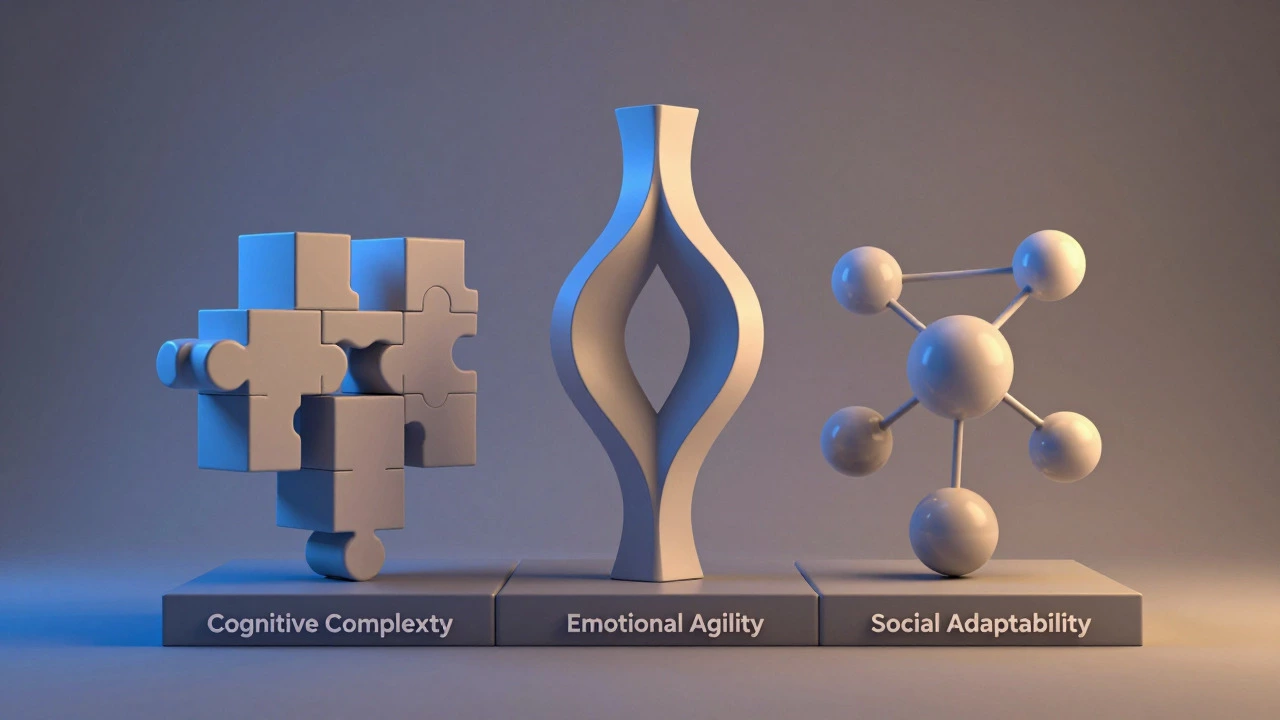
To really grasp what a global mindset is, we have to break it down. Researchers and organizational psychologists often point to three core components that make up this capability. Think of them as the legs of a stool; if one is missing, the whole structure wobbles.
First, there is Cognitive Complexity. This is simply your brain’s ability to hold multiple, conflicting ideas at once without getting frustrated. When you meet someone from a different culture who views time, hierarchy, or success differently than you do, cognitive complexity allows you to say, “That’s interesting, let me understand why they see it that way,” instead of thinking, “They’re wrong.” It’s mental flexibility.
Second, we have Emotional Agility. This refers to how you handle ambiguity and stress in unfamiliar situations. Traveling or working in a new environment can be disorienting. People with high emotional agility don’t panic when things don’t go according to their home-country script. They stay calm, adapt, and find solutions. It’s about resilience in the face of the unknown.
Third, there is Social Adaptability. This is the practical side of things: can you build trust with people who are different from you? It involves active listening, reading non-verbal cues accurately, and adjusting your communication style to fit the audience. It’s not about changing who you are; it’s about connecting authentically despite differences.
Global Mindset vs. Cultural Intelligence (CQ)
You might wonder how this differs from Cultural Intelligence, or CQ. While they overlap significantly, there is a subtle distinction. CQ is often viewed as a specific skill set related to interacting with other cultures. A global mindset is broader. It includes CQ but also encompasses a worldview that values diversity and sees global interconnectedness as an opportunity rather than a hurdle.
Think of it this way: CQ is the toolkit you use to navigate a specific cultural encounter. A global mindset is the operating system running on your computer that makes you curious about those encounters in the first place. One focuses on the interaction; the other focuses on the underlying attitude and strategic perspective.
| Feature | Global Mindset | Cultural Intelligence (CQ) |
|---|---|---|
| Scope | Broad worldview and strategic perspective | Specific behavioral and cognitive skills |
| Focus | Interconnectedness and diversity appreciation | Effective interaction in cross-cultural settings |
| Application | Decision-making, leadership, innovation | Communication, negotiation, relationship building |
| Development | Long-term mindset shift through exposure and reflection | Short-to-medium term training and practice |
Why Employers Are Obsessed With It
In 2026, very few businesses operate in a vacuum. Even small local shops source materials globally or compete with international online retailers. For larger organizations, the demand for employees with a global mindset is driven by several key factors.
First, innovation thrives on diverse perspectives. Teams that include members with different cultural backgrounds and ways of thinking tend to solve problems more creatively. A person with a global mindset can synthesize these diverse inputs into coherent strategies. They don’t just tolerate difference; they leverage it.
Second, customer expectations have changed. Consumers today expect brands to respect their cultural nuances. A marketing campaign that works in New York might offend audiences in Mumbai or Berlin. Leaders with a global mindset catch these pitfalls before they become public relations disasters. They ensure that products and services are culturally relevant.
Finally, talent mobility is higher than ever. Remote work has exploded, meaning you are likely collaborating with colleagues across time zones daily. A global mindset ensures that these collaborations are smooth, respectful, and productive. It reduces friction and builds psychological safety within distributed teams.
How to Develop Your Global Mindset
Here’s the good news: a global mindset isn’t something you’re born with. It’s a muscle you can strengthen. You don’t need to quit your job and move to another continent to start developing it. Here are practical steps you can take right now.
- Challenge Your Assumptions: Start by noticing your own biases. When you judge someone’s behavior as “rude” or “inefficient,” pause. Ask yourself: “Could this be a cultural difference? What context am I missing?” This simple habit of self-reflection builds cognitive complexity.
- Consume Diverse Media: Stop only reading news from your home country. Follow international journalists, read books by authors from different regions, and watch films from other cultures. Try to understand the historical and social contexts that shape their viewpoints.
- Practice Active Listening: In conversations, especially with people from different backgrounds, listen to understand, not to reply. Pay attention to what is *not* said. In some cultures, direct disagreement is avoided. Learning to read between the lines is a crucial part of social adaptability.
- Seek Out Micro-Experiences: If you can’t travel internationally, seek out diversity locally. Attend community events organized by immigrant groups, try cuisines you’ve never had, or learn basic phrases in a new language. These small exposures help normalize difference.
- Embrace Ambiguity: Put yourself in slightly uncomfortable situations where you don’t know the rules. Maybe it’s navigating a government office in a foreign language or joining a discussion group on a topic you know little about. Sit with the discomfort. That’s where emotional agility grows.

Pitfalls to Avoid
While developing a global mindset is beneficial, it’s easy to fall into traps along the way. One common mistake is stereotyping. Just because you’ve learned about general cultural tendencies doesn’t mean every individual from that culture fits the mold. Always treat people as individuals first. Use cultural knowledge as a starting point for curiosity, not as a definitive label.
Another pitfall is assuming that “global” means “Western.” Many people mistakenly believe that adopting American or European business practices is the gold standard. True global mindset recognizes that there are multiple valid ways of doing business. Sometimes, a slower, relationship-first approach used in parts of Asia or Latin America is more effective than a fast, transactional approach common in the US.
Finally, don’t confuse tolerance with engagement. Tolerating differences is passive. Engaging with them is active. A true global mindsets seeks out connection and collaboration, not just coexistence. It requires effort, humility, and a willingness to be wrong.
The Future of Work Requires Global Thinking
As we move further into the 2020s, the lines between national economies and cultures continue to blur. Artificial intelligence and automation are handling routine tasks, leaving humans to focus on complex, creative, and interpersonal challenges. These are precisely the areas where a global mindset shines.
Whether you are an entrepreneur looking to expand your market, a manager leading a remote team, or an individual seeking personal growth, cultivating a global mindset is one of the highest-return investments you can make. It opens doors to new opportunities, deepens your relationships, and makes you a more adaptable and resilient human being.
Start small. Be curious. Stay humble. The world is vast and wonderfully complex, and understanding it begins with opening your mind.
Can I develop a global mindset without traveling?
Absolutely. While travel provides immersive experiences, you can develop a global mindset through digital means. Engage with international news sources, participate in online global communities, learn languages via apps, and connect with people from different backgrounds on professional networks like LinkedIn. The key is intentional exposure and reflection, not just physical presence.
How does a global mindset improve leadership?
Leaders with a global mindset are better at managing diverse teams, resolving conflicts rooted in cultural misunderstandings, and making strategic decisions that consider global market trends. They inspire trust across borders and create inclusive environments where all team members feel valued, leading to higher retention and innovation.
What is the difference between ethnocentrism and a global mindset?
Ethnocentrism is judging other cultures solely by the standards of your own, often believing your culture is superior. A global mindset involves recognizing that your cultural lens is just one of many, and actively seeking to understand and value other perspectives without immediate judgment.
Is a global mindset important for introverts?
Yes. A global mindset is not about being extroverted or socially dominant. It’s about cognitive openness and empathy. Introverts often excel at deep listening and observation, which are critical components of social adaptability and emotional agility in cross-cultural contexts.
How can I measure my progress in developing a global mindset?
You can use self-assessment tools like the Cultural Intelligence Scale (CQS) or reflect on specific interactions. Ask yourself: Did I successfully navigate a misunderstanding? Did I gain insight from a different perspective? Progress is often measured by increased comfort with ambiguity and deeper, more meaningful cross-cultural connections.