

Mindset Phrase Transformer
Transform your limiting self-talk into growth-oriented language. Enter a negative mindset phrase and we'll show you a constructive alternative based on neuroscience-backed principles from the article.
Ever notice how two people can face the same situation and react completely differently? One sees a setback as a disaster. The other sees it as a lesson. What’s going on? It’s not luck. It’s not skill. It’s mindset.
Your mindset isn’t something you’re born with
You don’t wake up one day with a fixed mindset or a growth mindset. You build it-piece by piece-through what you pay attention to, what you repeat to yourself, and what you believe is possible. Your mindset is the lens you see the world through. It filters every experience, every comment, every failure. And most of the time, you don’t even realize it’s there.
Think about your last big mistake. Maybe you bombed a presentation. Maybe you lost a client. Maybe you said something you regretted. What did you tell yourself afterward? Did you say, "I’m just not good at this"? Or did you say, "I need to figure out where I went wrong"? That tiny difference in self-talk isn’t random. It’s the result of years of accumulated thoughts, experiences, and messages you’ve absorbed-from parents, teachers, social media, even ads.
The three biggest forces shaping your mindset
There are three main forces that quietly build your mindset over time. Most people never notice them. But once you see them, you can start to change them.
- Your environment - The people you spend the most time with, the content you consume, the places you go. If you’re constantly around people who complain, doubt themselves, or blame others, you’ll start thinking the same way. Your brain doesn’t distinguish between what’s real and what’s repeated. It just absorbs.
- Your habits - How you start your day matters. Do you scroll through news headlines before brushing your teeth? Do you check your phone the second you wake up? These small rituals train your brain to expect chaos, stress, or comparison before you’ve even had coffee. On the flip side, someone who writes down three things they’re grateful for, or takes a 10-minute walk in silence, is training their brain to notice opportunity, not threat.
- Your stories - We all carry internal narratives. "I’m not the type to succeed." "People like me don’t get second chances." "I’ve always been bad at this." These aren’t facts. They’re stories you’ve told yourself so many times they feel true. But stories can be rewritten.
How your past isn’t your destiny
Many people believe their mindset is locked in by childhood. That’s a myth. Yes, early experiences matter. But your brain doesn’t stop changing after age 18. In fact, neuroscience shows that your brain keeps forming new connections-called neuroplasticity-throughout your life. Every time you challenge a belief, you’re physically rewiring your brain.
Take someone who grew up hearing, "Money doesn’t come easy for people like us." That belief might have kept them from applying for promotions, negotiating salaries, or starting a side hustle. But if they later read a book, met a mentor, or had a conversation that made them question that story, something shifts. They don’t need a miracle. They just need one moment of doubt: "Wait… is that really true?"
That’s how mindset changes. Not with a big epiphany. Not with a motivational speech. But with small, repeated moments of questioning.

What you focus on, you fuel
Your brain is like a spotlight. It can only shine on one thing at a time. If you spend your days focusing on what’s wrong-what’s unfair, what’s missing, what others have that you don’t-you train your brain to scan for problems. Over time, you become a problem-spotter. You notice every flaw. Every criticism. Every sign of failure.
But if you shift your focus-even a little-you train your brain to notice something else: progress. Small wins. Unexpected help. Hidden opportunities. That’s not positive thinking. That’s pattern recognition. Your brain gets better at seeing what you look for.
Try this: For one week, write down one thing that went better than expected each day. Doesn’t have to be big. Maybe you got out of bed on time. Maybe someone thanked you. Maybe you didn’t snap at your partner. Just write it down. After seven days, look back. You’ll see a pattern you didn’t notice before. And that pattern? It’s your new mindset.
What you repeat, you become
Words have weight. Not because they’re magic. But because they’re repeated. The language you use with yourself shapes your inner world.
Instead of saying, "I’m not good at public speaking," try: "I’m still learning how to speak in front of people." The difference is subtle. But it changes everything. One locks you in place. The other opens a door.
Try replacing these common phrases:
- "I can’t." → "I haven’t figured it out yet."
- "It’s too late." → "What’s one small step I can take today?"
- "I’m not the type." → "Who would I need to become to make this happen?"
These aren’t just word games. They’re cognitive shifts. Each one interrupts an old belief and opens space for a new one.
Your mindset isn’t fixed-it’s flexible
Here’s the truth: Your mindset is not a personality trait. It’s a habit. And habits can be changed. Not overnight. Not with a single book. But with daily choices.
You don’t need to overhaul your life. You just need to notice one moment where your old mindset shows up-and choose a different response.
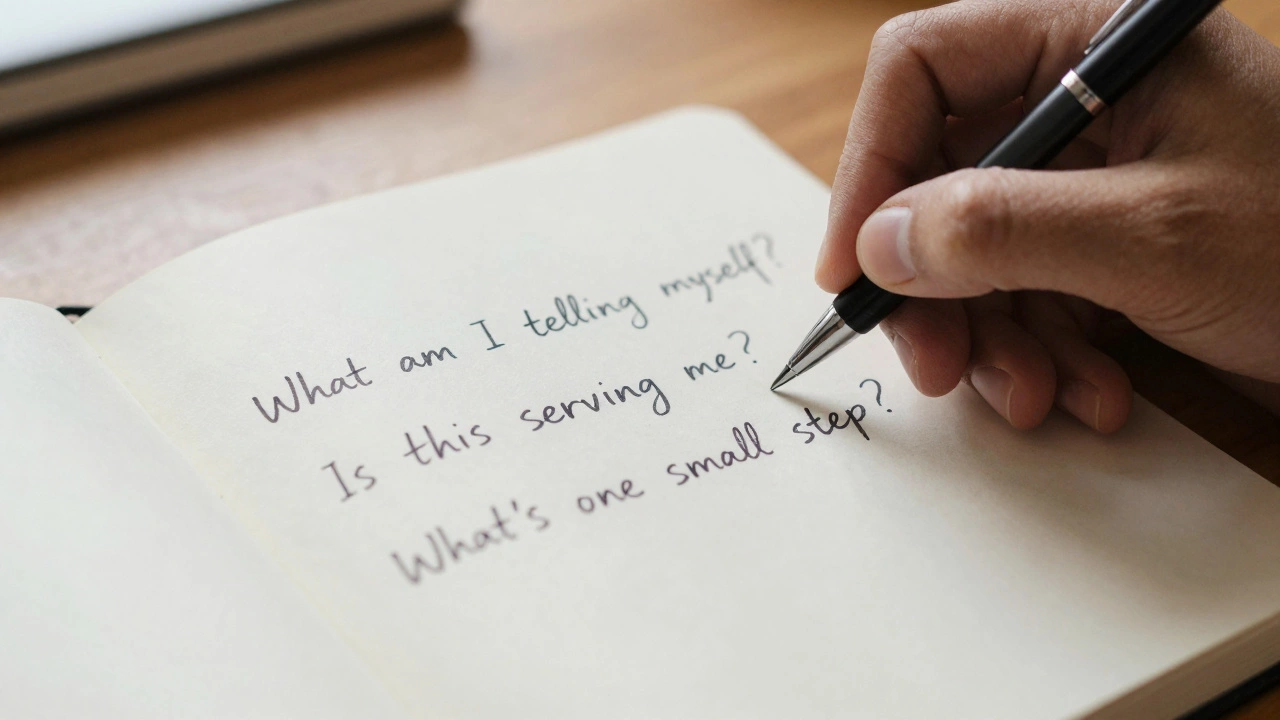
Next time you feel stuck, ask yourself:
- What am I telling myself right now?
- Is that story serving me-or holding me back?
- What’s one small thing I can do today that proves I’m capable of more?
That’s it. No grand plan. No transformation. Just one small shift. And then another. And another.
Because your mindset isn’t something you have. It’s something you do. Every day. In tiny, quiet ways. And you’re doing it right now-whether you realize it or not.
What’s your next move?
Don’t try to change everything at once. Pick one area where you feel stuck. One story you keep telling yourself. One phrase you repeat when things go wrong. Write it down. Then rewrite it. Not as a wish. Not as a fantasy. As a fact you’re choosing to believe.
Then do one thing that proves it’s true.
That’s how mindsets change. Not with a spark. But with a spark. And then another. And another.