

Beard Care Routine Builder
Answer the questions below to generate a customized beard care plan. This tool helps you determine the right frequency for washing, oiling, and styling based on your specific beard characteristics.
Ever caught yourself scratching your chin and wondering if you're actually growing a beard or just collecting dust? It’s a common frustration. You spend months waiting for that thick, luscious look, only to end up with itchy skin, patchy spots, and a face that feels like sandpaper. The truth is, having a beard isn't just about letting hair grow wild; it's about managing the ecosystem on your face. Most guys treat their facial hair like an afterthought, but the difference between a scraggly mess and a sharp, well-groomed look usually comes down to one thing: consistency.
You don't need a bathroom shelf cluttered with twenty different potions. You need a routine that works for your specific hair type and lifestyle. Whether you're in Leeds dealing with damp weather or somewhere drier, the principles remain the same. Let's break down exactly how to build a routine that keeps your beard healthy, soft, and looking its best, without wasting time or money on products that don't deliver.
The Foundation: Washing Without Stripping
Here is where most people go wrong immediately. They grab the same bottle of body wash they use for their underarms and scrub their face with it. Big mistake. Body washes are designed to strip oils from tough skin. Your facial skin is more sensitive, and your beard hair needs those natural oils (sebum) to stay flexible and shiny. If you strip them away, you get dry, brittle hair and flaky skin underneath-commonly known as beardruff.
Beard shampoo, also called beard wash, is formulated to clean dirt and food particles while preserving moisture. It typically has a lower pH level than standard soap. For most men, washing your beard two to three times a week is sufficient. Daily washing can actually cause more dryness unless you are sweating heavily from intense exercise. When you do wash, focus on the skin beneath the hair, not just the strands themselves. That’s where the itch starts.
- Daily Rinse: On non-wash days, simply rinse your beard with warm water to remove loose debris.
- Weekly Deep Clean: Use a dedicated beard wash once or twice a week to reset your skin’s balance.
- Conditioner: If your beard is longer than two inches, follow up with a beard conditioner to detangle and soften.
Hydration: The Role of Beard Oil
If washing is the foundation, beard oil is the fuel. Think of it as moisturizer for both your skin and your hair. Since sebum doesn't always reach the ends of longer hairs, oil bridges that gap. It mimics the natural oils your body produces, keeping the hair shaft pliable and preventing split ends.
Choosing the right oil depends on your skin type. If you have oily skin, lighter oils like jojoba or grapeseed absorb quickly without leaving a greasy residue. If you have dry or sensitive skin, heavier options like castor oil or sweet almond oil provide deeper hydration. Application technique matters too. Don’t just dump it on top. Warm a few drops between your palms, then work it into the skin first, pushing the hair aside. Then, smooth it through the lengths of the hair. This ensures the roots get nourished, which is crucial for healthy growth.
| Oil Type | Best For | Absorption Rate | Texture |
|---|---|---|---|
| Jojoba Oil | All skin types, especially oily | High | Light, non-greasy |
| Argan Oil | Dry, frizzy hair | Medium | Silky, smoothing |
| Castor Oil | Thickening effect, very dry skin | Low | Thick, heavy |
| Grapeseed Oil | Acne-prone skin | High | Very light |
Styling and Control: Balm vs. Wax
Once your beard is clean and hydrated, you might want some control. This is where beard balm and beard wax come in. These aren't interchangeable, though many brands blur the lines. Beard balm contains butter (like shea or cocoa) and beeswax, offering light hold and significant conditioning. It’s perfect for medium-length beards that need shape but still want to move naturally.
Beard wax, on the other hand, has a higher concentration of hard waxes. It provides strong hold for stubborn hairs, mustaches, or longer beards that refuse to stay put. If you’re trying to tame a unruly mustache or keep stray hairs off your neck, wax is your friend. But beware: using too much wax can make your beard look stiff and artificial. Start with a pea-sized amount and add more only if needed.
For a natural look, apply balm throughout the day if your beard feels dry. For special occasions or windy days, switch to wax for extra staying power. Remember, styling products should never replace oil. They are complementary tools, not substitutes.
Tools of the Trade: Brushes and Combs
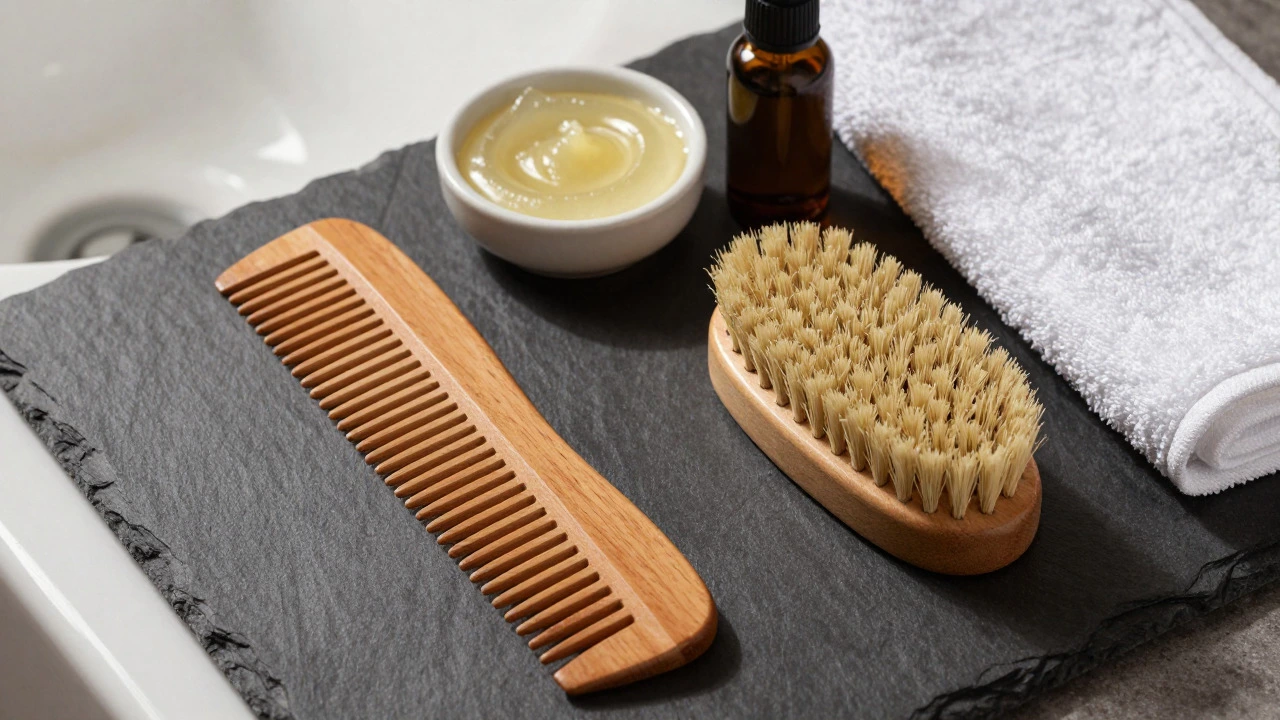
You cannot skip mechanical maintenance. Boar bristle brushes are superior to plastic combs for distributing oils evenly from root to tip. The natural bristles gently exfoliate the skin, reducing itchiness, while polishing the hair cuticle for shine. Plastic combs can create static electricity, leading to flyaways, and often snap against coarse hair.
Use a wide-tooth wooden comb for detangling when your beard is wet or freshly oiled. Boar brushes are better for daily styling and distribution. Never brush a dry, tangled beard aggressively-you’ll pull out hairs and damage the follicles. Always start at the ends and work your way up to the roots. This simple habit prevents breakage and keeps your beard looking full rather than thinning out over time.

Lifestyle Factors: Diet and Sleep
Your external routine supports what happens internally. No amount of expensive oil will fix a beard growing on a malnourished body. Facial hair requires protein, vitamins, and minerals to thrive. Ensure your diet includes adequate zinc, biotin, and omega-3 fatty acids. Foods like eggs, nuts, salmon, and leafy greens directly impact hair strength and growth rate.
Sleep is equally critical. Growth hormone releases primarily during deep sleep stages. If you’re consistently getting less than seven hours, your body prioritizes essential functions over hair growth. Stress also plays a role; high cortisol levels can push hair follicles into a resting phase, leading to shedding. Managing stress through exercise or mindfulness isn’t just good for your mind-it helps your beard retain density.
Common Pitfalls to Avoid
Even with a solid routine, certain habits sabotage progress. First, trimming too soon. Many men panic during the "awkward stage" (usually weeks 2-6) and shave it all off. Give it at least eight to twelve weeks before judging the final result. Second, ignoring the neckline. A poorly defined neckline makes any beard look unkempt. Keep it clean by shaving everything below the Adam’s apple, connecting up to the ears. Third, hot showers. Excessive heat strips natural oils faster than you think. Opt for lukewarm water when washing your face.
Finally, patience is key. Beards grow at different rates for everyone due to genetics. Some fill in fully in six months; others take years. Adjust your expectations based on your own biology, not Instagram photos.
How often should I apply beard oil?
Most men benefit from applying beard oil once a day, preferably after showering when pores are open and hair is slightly damp. If you have very dry skin or live in a cold climate, you might need to apply it twice daily. Conversely, if you have oily skin, every other day may suffice. Watch how your skin reacts and adjust accordingly.
Can I use regular hair shampoo on my beard?
It is generally not recommended. Regular shampoos contain harsh surfactants like sulfates that strip natural oils from facial skin, leading to dryness and irritation. Dedicated beard washes are milder and balanced for facial pH levels. Using regular shampoo occasionally won't ruin your beard, but making it a habit will likely cause itchiness and brittleness.
Does beard oil help with growth?
Beard oil does not scientifically stimulate new hair growth or change your genetic potential. However, it creates a healthier environment for existing hair to grow stronger and appear fuller. By preventing breakage and keeping the skin healthy, it ensures you retain the length you gain, which can make the beard look denser over time.
What is the best tool for detangling a beard?
A wide-tooth wooden comb is best for initial detangling, especially when the beard is wet or conditioned. Wood reduces static compared to plastic. Once tangles are removed, switch to a boar bristle brush to distribute oils and style the hair. Never force a fine-tooth comb through a knotted beard, as this causes pain and breakage.
How do I stop beard itch?
Beard itch is usually caused by dry skin and trapped dead cells. To stop it, exfoliate the skin beneath the beard with a gentle scrub once a week, keep the area clean with proper beard wash, and hydrate regularly with beard oil. Moisturizing the skin directly, not just the hair, is the most effective solution.