
Mindset Response Simulator
Your Mindset Profile
Growth Mindset Responses
Your Personalized Tips
You’ve probably heard the phrase a thousand times: "You just need to change your mindset." It’s everywhere. From corporate training seminars in Leeds to Instagram reels promising overnight success, the word has become a buzzword for getting ahead. But here is the uncomfortable question nobody asks: Is mindset actually good? Or is it just another tool we use to blame ourselves when things go wrong?
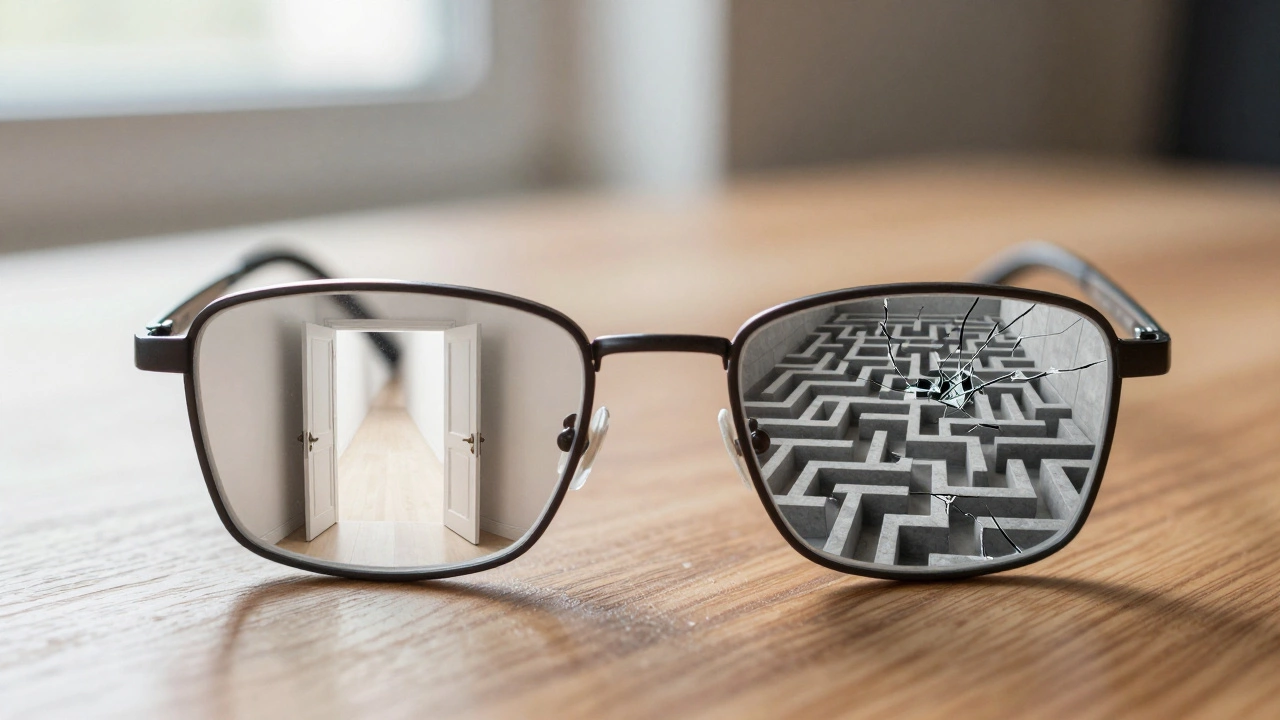
The short answer is that mindset itself isn’t inherently good or bad. It’s a lens. Like any pair of glasses, it can help you see clearly, or it can distort reality until you’re walking into walls. The problem arises when we treat "positive thinking" as a magic cure-all, ignoring the structural barriers, skills gaps, and sheer luck that play huge roles in life outcomes.
What Actually Is Mindset?
To understand whether mindset is helpful or harmful, we first have to define what it is. In psychology, Mindset is a set of attitudes, beliefs, and expectations that influence how we interpret events and respond to challenges. It’s not about forcing yourself to smile through pain. It’s about the automatic mental scripts you run when something happens.
Think of it like software running on your brain’s hardware. If the code says, "Failure means I am stupid," you will react with shame and avoidance. If the code says, "Failure means I need to adjust my strategy," you will react with curiosity and effort. Neither script is objectively "true" in a scientific sense, but one leads to stagnation and the other to adaptation.
The most famous framework for this comes from psychologist Carol Dweck at Stanford University. She identified two primary types of mindsets:
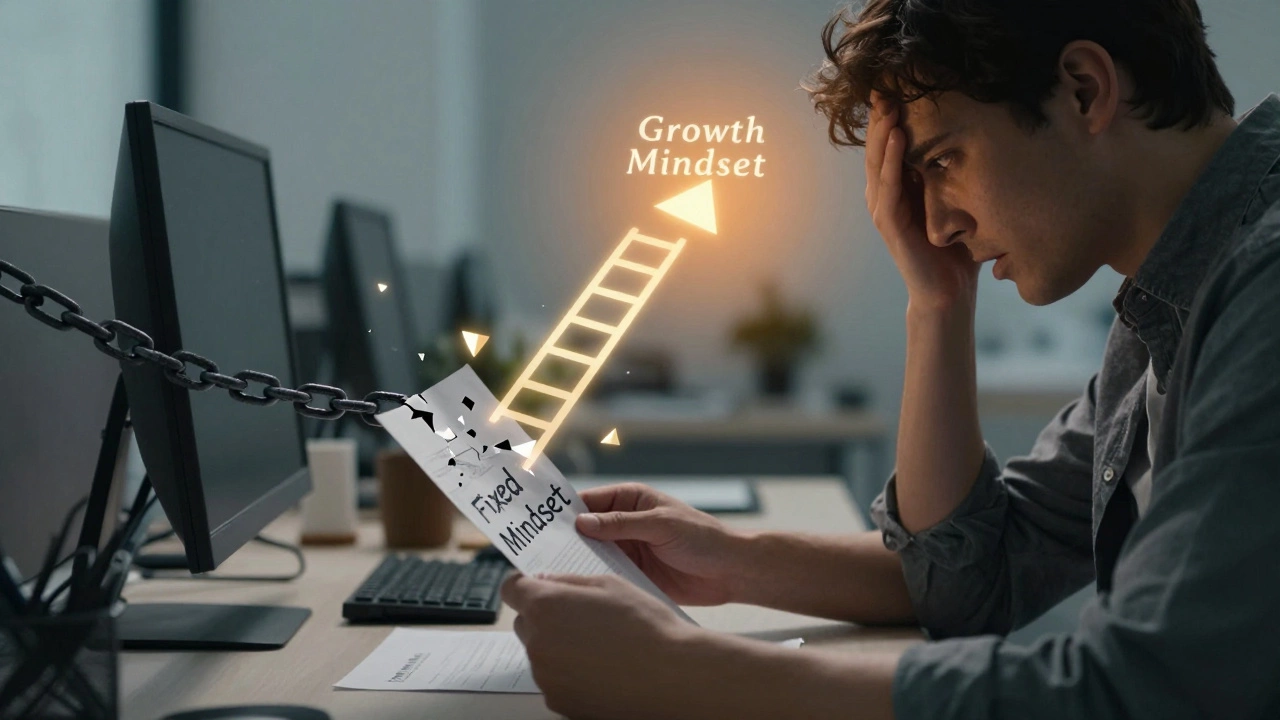
- Fixed Mindset: The belief that intelligence, talent, and character are static traits. You either have them, or you don’t.
- Growth Mindset: The belief that abilities can be developed through dedication, hard work, and learning from criticism.
Dweck’s research showed that students with a growth mindset were more likely to embrace challenges and persist after setbacks. That sounds great, right? So why do some people argue that the concept is flawed?
The Dark Side of "Positive" Mindset
Here is where the conversation gets tricky. When "mindset" is stripped of nuance and turned into toxic positivity, it becomes harmful. This happens when we assume that if you just believe hard enough, you can overcome anything. This ignores systemic inequality, lack of resources, and mental health struggles.
Imagine someone living in poverty who is told, "Just adopt a wealthy mindset, and money will come." That’s not advice; it’s gaslighting. It shifts the burden entirely onto the individual, suggesting that their circumstances are a result of their own mental failure rather than economic structures. This is often called the "just-world fallacy"-the belief that people get what they deserve. When used this way, mindset rhetoric can be cruel and counterproductive.
Furthermore, constantly trying to force a positive outlook can lead to emotional suppression. If you tell yourself you must always feel confident and optimistic, you might ignore valid feelings of fear, sadness, or anger. These emotions are data points. They tell you when something is wrong. Ignoring them doesn’t make them go away; it just makes them louder later.
When Mindset Works (And When It Doesn’t)
Mindset is most powerful when it’s paired with action. Believing you can learn to code is useless if you never open a textbook. Believing you can get fit is pointless if you never move your body. The value of a growth mindset lies in its ability to reduce the friction of starting. It lowers the barrier to entry by reframing struggle as part of the process, not a sign of inadequacy.
Consider a scenario at work. You receive harsh feedback on a project. A fixed mindset response might be: "My boss hates me. I’m not cut out for this job." This leads to disengagement. A growth mindset response is: "This feedback highlights specific areas I can improve. Let me ask for clarification on how to fix these issues." This leads to skill acquisition.
In this context, mindset is a tool for resilience. It helps you stay in the game long enough to get better. However, it cannot replace competence. You can have the best attitude in the world, but if you lack the technical skills, physical strength, or financial capital required for a task, you will still fail. Mindset is the steering wheel, but skills and resources are the engine.
| Situation | Fixed Mindset Response | Growth Mindset Response |
|---|---|---|
| Failing a test | "I'm not smart enough. I'll never understand this." | "I didn't study the right material. I need a new strategy." |
| Receiving criticism | "They're attacking me. I should hide." | "What can I learn from this to improve next time?" |
| Seeing someone succeed | "They're lucky. It's not fair." | "What did they do differently? Can I apply that?" |
| Facing a difficult task | "I'll probably mess up. I'll avoid it." | "This will be hard, but I'll get better by trying." |
The Myth of Total Control
A major pitfall in modern mindset culture is the illusion of total control. We are sold the idea that our thoughts create our reality. While cognitive behavioral therapy (CBT) shows that changing thoughts can change behavior, it does not mean we control external events. You cannot think your way out of a recession, a natural disaster, or a genetic predisposition to illness.
This distinction is crucial. A healthy mindset accepts what it cannot control and focuses energy on what it can. This aligns with Stoic philosophy, which emphasizes distinguishing between internal judgments and external facts. If you lose your job due to layoffs, blaming your "negative mindset" is inaccurate and damaging. Acknowledging the loss, grieving it, and then actively looking for new opportunities is the balanced approach.
We also need to talk about neurodiversity. For people with ADHD, autism, or anxiety disorders, the standard "growth mindset" advice can feel alienating. Telling someone with severe executive dysfunction to "just try harder" or "believe in yourself" ignores the neurological realities they face. For these individuals, mindset work must be adapted to include self-compassion and practical accommodations, not just sheer willpower.
How to Build a Useful Mindset
If you want to harness the power of mindset without falling into toxic positivity, start with honesty. Don’t pretend everything is fine when it’s not. Instead, focus on agency. Ask yourself: "What is within my control right now?"
- Identify your fixed triggers. Notice when you say, "I can't do this." Pause. Replace it with, "I can't do this *yet*." The word "yet" is small but powerful. It opens the door to future possibility.
- Separate identity from performance. You are not your grades, your salary, or your relationship status. These are metrics, not definitions of your worth. When you detach your ego from outcomes, failure becomes less terrifying.
- Seek feedback, not validation. Validation feels good but teaches nothing. Feedback feels uncomfortable but builds skill. Actively ask mentors, colleagues, or friends, "What is one thing I could have done better?"
- Practice self-compassion. Research by Kristin Neff shows that self-compassion leads to greater motivation than self-criticism. Treat yourself like you would treat a friend who made a mistake. With kindness, not contempt.
Remember, mindset is not a destination. You won’t wake up one day with a perfect growth mindset forever. You will slip back into fixed patterns, especially under stress. That’s normal. The goal is not perfection; it’s awareness. The sooner you notice you’re stuck in a fixed loop, the faster you can shift gears.
Conclusion: It’s a Tool, Not a Cure
So, is mindset good or bad? It’s neither. It’s neutral. It becomes good when it empowers you to take action, learn from errors, and persist through difficulty. It becomes bad when it’s used to deny reality, suppress emotions, or blame victims of circumstance.
Use mindset to build resilience, not to escape responsibility. Use it to fuel effort, not to replace planning. And most importantly, use it to be kinder to yourself. The best mindset is one that acknowledges the world is hard, but believes you are capable of handling it-one step at a time.
Can you change your mindset?
Yes, but it requires consistent practice. Neuroplasticity allows the brain to form new neural pathways throughout life. By consciously challenging negative thoughts and reinforcing new beliefs through action, you can gradually shift from a fixed to a growth mindset. It is not an overnight switch but a habit built over time.
Is a positive mindset always better?
No. Forced positivity can be harmful. A realistic mindset that acknowledges difficulties while maintaining hope is more effective. Toxic positivity ignores real problems and can prevent necessary action. Emotional balance, not constant happiness, is the goal.
What is the difference between fixed and growth mindset?
A fixed mindset believes abilities are innate and unchangeable, leading to avoidance of challenges. A growth mindset believes abilities can be developed through effort, leading to persistence and learning from failure. The key difference is how each views potential and effort.
Does mindset affect success?
Mindset influences behavior, which impacts success. A growth mindset encourages learning and resilience, increasing the likelihood of overcoming obstacles. However, mindset alone does not guarantee success; it must be combined with skill, opportunity, and strategic action.
How do I know if I have a fixed mindset?
Signs include avoiding challenges, giving up easily, feeling threatened by others' success, and ignoring useful feedback. If you often think "I'm just not good at this" or "I was born this way," you may be operating from a fixed mindset. Awareness is the first step to change.