
Mindset Scenario Simulator
How Your Mindset Shapes Your Choices
Test your mindset with realistic scenarios from daily life. Choose how you'd respond to different situations, then see how growth versus fixed mindsets affect outcomes.
Scenario 1: Job Rejection
You applied for your dream job but didn't get it. The recruiter sent a brief email saying your qualifications were strong but they need someone with more experience.
Scenario 2: Learning Something New
You're trying to learn a new software tool for work, but it's difficult and you keep making mistakes.
Scenario 3: Personal Project Failure
Your side business project failed after three months. You've lost some money and feel discouraged.
Your Mindset Assessment
Think about the last time you failed at something. Maybe you didn’t get the promotion. Maybe you tried to start a business and it fell apart. Maybe you kept trying to stick to a diet but gave up after a week. Now ask yourself: was it really about skill, luck, or timing? Or was it about what you believed was possible?
Most people blame external factors. Bad boss. Tough economy. No support. But the real difference between people who keep moving forward and those who stall isn’t always talent, money, or opportunity. It’s mindset. Not the kind you hear about in motivational posters. Not the vague idea that ‘thinking positive’ will fix everything. But the quiet, daily, invisible set of beliefs that shape how you respond to setbacks, how you talk to yourself, and whether you see challenges as threats or training.
Psychologist Carol Dweck spent decades studying this. She found that people with a growth mindset-those who believe abilities can be developed through effort-outperform those with a fixed mindset, even when the latter have more natural talent. In one study, students with a growth mindset improved their math scores by 30% over a school year. Students with a fixed mindset? Their scores stayed flat or dropped. The difference wasn’t the teacher. It wasn’t the curriculum. It was what they believed about their own potential.
How Your Mindset Shapes Your Daily Choices
Think of your mindset like a filter. It doesn’t change the world around you. But it changes what you notice, what you ignore, and how you react.
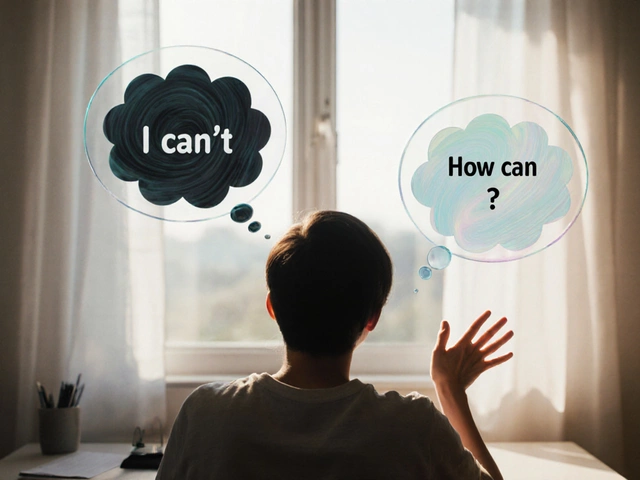
Someone with a fixed mindset hears criticism and thinks: They think I’m not good enough. They see someone else succeed and think: They’re just lucky. When things go wrong, they say: I’m just not cut out for this.
Someone with a growth mindset hears criticism and thinks: What can I learn here? They see someone else succeed and think: How did they get there? When things go wrong, they say: What do I need to try differently?
These aren’t just thoughts. They’re decisions. And decisions add up.
One person gets rejected from a job. They tell themselves they’re not qualified. They stop applying. Another person gets rejected. They ask for feedback. They update their resume. They reach out to someone in the company. One month later, they land the job.
Same rejection. Two different stories. One shaped by belief. The other by action.
The Science Behind Mindset and Real-Life Results
It’s not just theory. Brain scans show that people with a growth mindset activate different parts of their brain when facing challenges. The prefrontal cortex-responsible for planning and problem-solving-lights up more. The amygdala-the fear center-stays calmer.
Studies from Stanford, Harvard, and the University of Chicago have all shown similar results:
- Employees with a growth mindset are 47% more likely to say their company fosters innovation.
- Students with a growth mindset are twice as likely to enroll in advanced courses.
- People with a growth mindset recover from illness faster after surgery-because they believe recovery is possible, and they follow through on rehab.
Even in relationships, mindset matters. Couples who believe conflict can lead to growth report higher satisfaction over time. Those who think arguments mean the relationship is broken? They’re more likely to give up.
This isn’t about being ‘positive.’ It’s about being curious. About seeing life not as a fixed scorecard, but as a learning curve.

Where Mindset Fails (And Why ‘Just Think Positive’ Doesn’t Work)
Here’s the trap: many people think changing mindset means smiling through pain, forcing optimism, or ignoring reality. That’s not mindset. That’s denial.
Someone with chronic debt doesn’t fix their situation by telling themselves, ‘Money flows to me effortlessly.’ That’s not growth mindset. That’s fantasy.
Real mindset change means:
- Accepting the problem: ‘I’m in debt, and it’s stressing me out.’
- Asking: ‘What’s one small step I can take today?’
- Trying it. Failing. Adjusting. Trying again.
It’s not about feeling good. It’s about staying engaged.
People who make lasting change don’t wait to feel ready. They act even when they’re scared. Even when they’re tired. Even when they’re not sure it’ll work. That’s the mindset that moves the needle.

How to Shift Your Mindset (Without Magical Thinking)
You don’t need a retreat. You don’t need a coach. You don’t need to meditate for an hour a day.
Here’s what actually works:
- Notice your self-talk. For one day, write down every time you say something like ‘I can’t,’ ‘I’m not good at,’ or ‘This always happens to me.’
- Reframe it. Turn ‘I’m bad at public speaking’ into ‘I haven’t practiced enough yet.’
- Do one thing that scares you. Send the email. Ask the question. Show your work. Even if you’re terrified.
- Track progress, not perfection. Did you try? Did you learn? That’s the win.
- Surround yourself with people who ask ‘What if?’ not ‘Why bother?’ Your mindset is contagious.
One woman in Leeds started a small side business selling handmade candles. She had no experience. No money. Just a notebook and a belief that she could learn. After six months, she was turning a profit. Not because she was lucky. Because every time she failed, she asked: ‘What did that teach me?’
What Happens When You Stop Believing Your Mindset Is Fixed
When you stop thinking your abilities are set in stone, you stop fearing failure. You start seeing it as data.
You stop waiting for motivation. You start building systems.
You stop comparing yourself to others. You start measuring your own progress.
You stop asking, ‘Am I good enough?’ and start asking, ‘What’s next?’
This isn’t about becoming a different person. It’s about becoming more of who you already are-curious, capable, and willing to grow.
Life doesn’t reward the smartest. It doesn’t reward the luckiest. It rewards the ones who keep showing up, even when they don’t know the answer.
And that? That’s the power of mindset.
Can a negative mindset really ruin your life?
A negative mindset doesn’t destroy your life outright, but it quietly limits your options. It makes you avoid risks, ignore feedback, and give up too soon. Over time, these small choices add up. You miss opportunities because you assume you’ll fail. You stay in bad jobs because you think you’re not qualified. You don’t ask for help because you think you should handle it alone. It’s not that bad things happen to you-it’s that you stop trying to change them.
Is it possible to change your mindset as an adult?
Yes. Your brain doesn’t stop learning after childhood. Neuroplasticity-the brain’s ability to rewire itself-continues throughout life. Changing your mindset isn’t about a sudden epiphany. It’s about repeated, small actions: noticing your thoughts, challenging them, and choosing a different response. One study showed that adults who practiced growth mindset exercises for just 10 minutes a day over eight weeks showed measurable shifts in how they approached challenges.
Does mindset affect physical health?
Yes. People with a growth mindset are more likely to stick with exercise, follow medical advice, and recover faster from illness. Why? Because they believe their actions matter. They don’t see health as fixed. A study from Yale found that people who believed aging was influenced by lifestyle lived 7.5 years longer on average than those who thought aging was inevitable. Belief shapes behavior-and behavior shapes biology.
Can mindset explain why some people succeed despite bad circumstances?
It’s one of the biggest factors. Research on resilience shows that people who overcome poverty, trauma, or discrimination often share one trait: they believe they have agency. They don’t deny the hardship. But they don’t let it define their future. They focus on what they can control: their effort, their attitude, their next step. That belief-no matter how small-is what keeps them moving forward.
How long does it take to change your mindset?
There’s no fixed timeline. Some people shift in weeks. Others take years. It depends on how deeply the old beliefs are rooted. But you don’t need to change everything at once. One new thought. One new action. One time you chose to try instead of quit-that’s the beginning. Mindset change is like building muscle. It’s not about one big lift. It’s about consistent, small efforts over time.